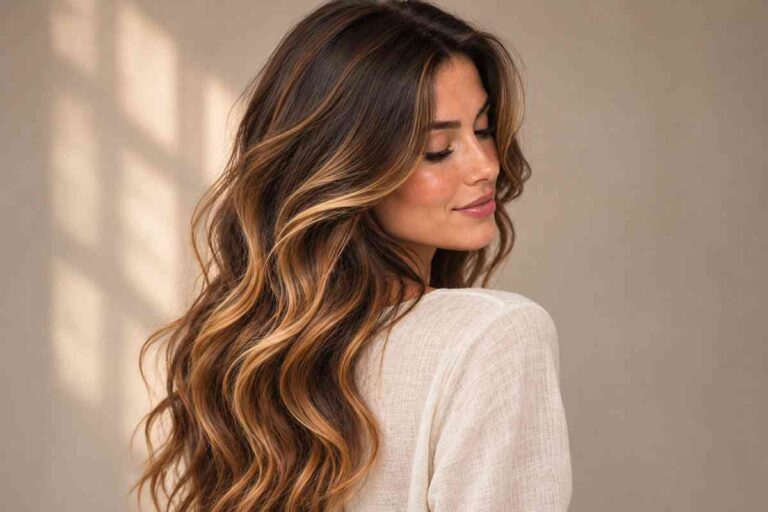
Balayage is a hair-coloring technique in which a stylist paints lightener onto selected sections of hair for a soft, blended effect. Sunglitz is a professional lightening system that can be used for this kind of highlighting. Balayage describes how the color is applied, while ombré describes a darker-to-lighter color transition. As a hairstylist, I recommend leaving chemical lightening to a professional, especially if your hair has already been colored.
What is Sunglitz?
Sunglitz is a highlighting system developed by Farouk Systems. The Sunglitz Lightening System uses lightener and an activator to lift and tone hair in one process. It was developed to create dimensional highlights in a range of tones, including looks applied with a balayage technique.
Sunglitz lighteners are formulated without ammonia. The line has been described as oil-based and made with conditioning ingredients such as silk and botanicals. That does not mean lightening is damage-free. The result depends on your hair’s condition, the developer used, and the stylist’s application. Farouk Systems provides professional guidance for strand and patch testing before a service.
My Experience with Sunglitz
As a hairstylist, I had been procrastinating on getting on board with the balayage highlighting technique. At the time, the technique was new to me and definitely out of my comfort zone. I recently took a class on the Sunglitz Lightening System and decided that maybe it wasn’t so scary. The Farouk Systems instructor was very knowledgeable, eased my trepidations, and made it look fairly simple.
I kind of dove in headfirst. My first client of the following business day was a perfect candidate for Sunglitz highlights. She likes subtle highlights, nothing streaky or too obvious, and wants as natural of a look as possible.
I found the technique to be much easier than my fears led me to believe. The results were beautiful. Seamless, pretty, and simply natural. By the end of the day, I transformed a total of five previously foil highlighted clients into Sunglitz balayage highlights.
The nice thing about Sunglitz, is the powder lighteners have been offered in different tones, including ash, beige, golden, and strawberry blonde. That gives a stylist options for creating cooler or warmer highlights to complement your skin tone and existing hair color. Ask your salon which Sunglitz shades it currently stocks.
I was also impressed with the speed at which Sunglitz delivers results. In my salon, several services that had previously taken about two hours were 30 to 45 minutes shorter using Sunglitz. That was my experience, not a guaranteed appointment time for every client.
The balayage services I performed afterward were great experiences, too. It’s fun to apply, my clients have really enjoyed the experience and the results, and we’ve all saved time in the process. Win, win.
Sunglitz Highlight Enhancing Shampoo, Conditioners, and Treatments
Color Enhancement Shampoo: Sunglitz offered tone-enhancing shampoos for beige, ash, golden, and strawberry highlights. These were designed to help maintain the appearance of the chosen shade between salon appointments. Check current availability before looking for a specific formula.
Natural Sunsealer Daily Conditioner: This Sunglitz conditioner was marketed for use after a highlighting service and for everyday detangling and conditioning at home. Ask your stylist whether it is still available or whether another conditioner would better suit your hair.
Repair and Shine Silk Leave-In Treatment: The Sunglitz leave-in treatment was intended to help detangle, smooth, and condition highlighted hair. A leave-in product can improve how hair feels and looks, but it cannot reverse the structural damage caused by lightening.
Maintaining Balayage Highlights
Balayage often grows out more softly than traditional highlights placed close to the roots, so you may be able to wait several months between full lightening appointments. Your timing will depend on your starting color, how much contrast you want, gray coverage, and how your tone changes. A gloss or toner appointment may be useful before you need new highlights. Talk to your hairstylist about a schedule that suits your hair rather than booking automatically every few weeks.
New Balayage Hairdo (What’s a Balayage, You Ask?)

A change of season can make a new hair color awfully tempting. When we’re not accidentally doing a gnarly thing to our hair, we also cut it, dye it, and braid it. Change is good, and that certainly seems to be what Lana Del Rey went for when she stepped out with a lighter hair color. Whether you love the queen of sorrow or not (hint: I do, I totally do), you can’t deny that her hair is looking absolutely magical. It was a change from the darker locks she wore around the release of Ultraviolence, the saddest album in the world. The sun-kissed color looked surprisingly natural.
The look has the softly blended effect associated with balayage, a technique that sounds as fancy as it looks. (By the way, because the French make everything sound like poetry, balayage means “to sweep.”) Have no idea what a balayage is? Now you will:
See how Lana’s hair kind of starts off dark at the roots and has a glossy look, with natural highlights all over? That’s the power of the balayage. The hair isn’t one flat color, and it doesn’t have the more noticeable dark-to-light transition often associated with ombré. The color is sort of hand-painted over the surface of the hair, ending in a more subtle effect. This deep auburn is particularly stunning on Lana, who rocks those orange stripes with ease. Here’s what you should know about this lovely look before you ask for it at the salon:
The Application
Balayage is painted onto selected strands, a bit like a painter placing light brushstrokes. Your stylist controls how noticeable the result will be. Traditional open-air balayage skips the creepy alien foil look, although some stylists combine painting with foils when extra lift is needed.
Why not go ombre?
Balayage is a technique, while ombré is a look, so you can actually have both. If you want a gentle shift rather than a dramatic change, ask your stylist about balayage or subtle ombré. Either could be the answer to your “I am so bored of my hair!” woes.
Who can wear it?
Um, you. You can wear it. Almost anyone with at least enough hair to actually dye the strands can rock it. The placement and amount of lightening can be adjusted for many hair colors and lengths, though very short cuts may offer less room for a gradual blend. Bring a reference photo and ask what is realistic for your starting color.
How much maintenance is involved?
Usually less than traditional root-to-tip highlights. Because the lighter pieces can start farther from the scalp, regrowth is often less obvious. You may still want toning, gray coverage, or a full refresh, depending on your color goals.
What do you think about the new do?