





Finding jeans that fit shouldn’t feel like solving a puzzle. Yet one brand’s size 28 can fit differently from another’s, and even two styles from the same label may sit differently on your body.
The good news? You don’t need to guess your size or order three pairs hoping one works. A measuring tape, a few minutes, and an understanding of how denim sizing works can make shopping much easier.
In this guide, I’ll walk you through measuring your waist, hips, inseam, and rise, understanding jean size labels, and using those numbers to find a more comfortable fit.
Jean Sizing at a Glance
Before measuring anything, it helps to know what the numbers on a jeans label actually mean.
| Measurement | What it means | Why it matters |
|---|---|---|
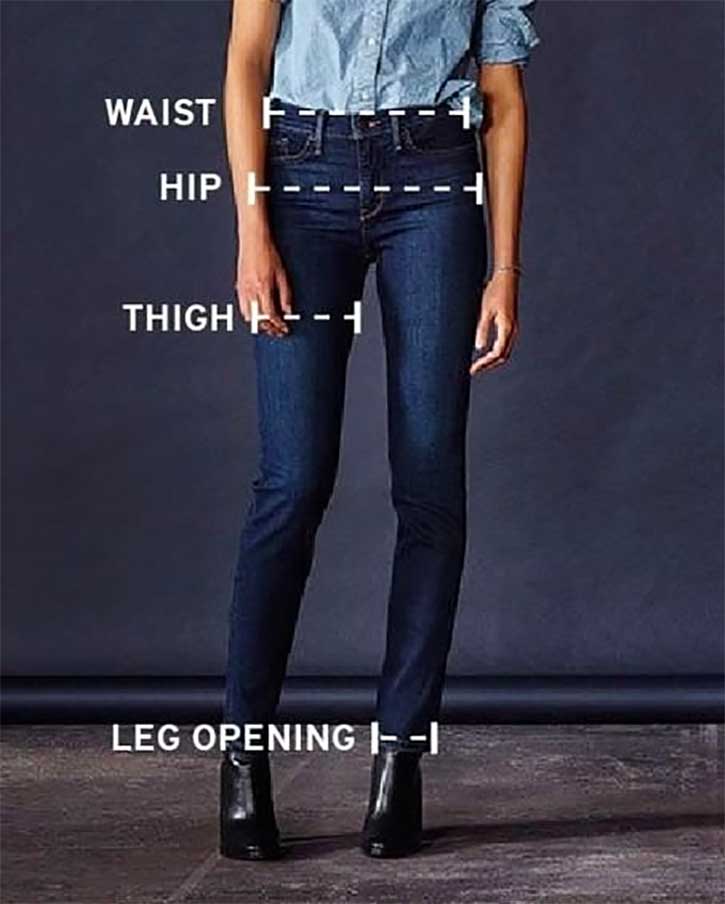
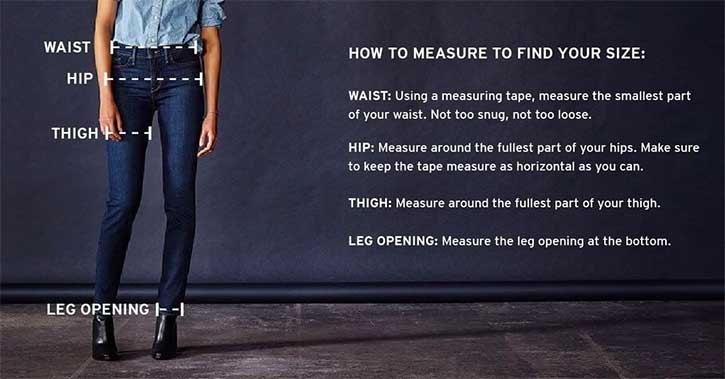
| Waist | Circumference around your waist or the waistband of your jeans | Helps determine waistband size |
| Hips | Circumference around the fullest part of your hips and seat | Helps prevent pulling or excess tightness |
| Inseam | Length from the crotch seam to the leg hem | Determines how long the jeans will be |
| Rise | Distance from the crotch seam to the top of the waistband | Determines where the waistband sits |
For example, jeans labeled W28 L30 generally indicate a 28-inch nominal waist size and a 30-inch inseam. These numbers are a starting point, not a guarantee of fit. The actual garment measurements can vary by brand and style.
1. How to Measure Your Waist for Jeans

Your waist measurement is usually the first number you’ll need when looking for jeans that fit.
Start with a flexible measuring tape. Stand naturally, relax your stomach, and follow these steps:
- Find your natural waist. Bend gently to one side. The crease that forms usually helps identify your natural waistline.
- Wrap the tape around your waist. Keep it level and comfortably snug without digging into your skin.
- Stand normally and breathe. Avoid holding your stomach in or pulling the tape too tightly.
- Write down the measurement. Record it in inches and, if useful, centimeters.
One important detail: your natural waist measurement isn’t always the same as the waistband measurement of your jeans. Low-rise and mid-rise styles sit lower on your body, where the circumference may be different. And a label marked W28 doesn’t necessarily mean the finished waistband measures exactly 28 inches.
If you prefer jeans that sit below your natural waist, measure around the area where you’d like the waistband to rest. You can then compare that number with the brand’s actual sizing instructions.
For more help choosing a comfortable silhouette, see our guide to finding the best jeans for your body type.
2. How to Measure Your Hips
Waist measurements matter, but they don’t tell the whole story. Your hip measurement can be just as important, especially when you’re shopping for fitted, rigid, or high-waisted denim.
Here’s how to measure your hips:
- Stand with your feet close together and your weight evenly distributed.
- Wrap the tape around the fullest part of your hips and seat.
- Check in a mirror that the tape stays level all the way around.
- Keep the tape close to your body without squeezing and record the number.
Suppose your waist falls into one size on a brand’s chart but your hips fall into the next size up. Don’t automatically choose the smaller pair. Consider the fabric, cut, and the brand’s fit recommendations.
Jeans with little or no stretch usually allow less room for error than stretchy denim. If your measurements fall between sizes, pay particular attention to the area where jeans typically feel tight.
And remember, your body doesn’t need to fit a particular number on a label. The jeans need to fit your body. Our guide to dressing a pear-shaped body explores more ways to balance comfort and personal style.
3. How to Measure Your Inseam

The inseam determines the length of your jeans. It’s measured along the inside leg, from the crotch seam to the bottom hem.
And here’s a tip I particularly like: if you already own a pair of jeans with a length you love, measure those first. It’s often easier than trying to measure your own inner leg.
Measure the Inseam of Jeans You Already Own
- Lay your jeans flat on a table or another smooth surface.
- Smooth out wrinkles without stretching the fabric.
- Find the point where the leg seams meet at the crotch.
- Measure along the inside leg seam to the bottom of the hem.
That distance is the inseam length of your jeans.
Measure Your Inseam on Your Body
If you don’t have a suitable pair to measure, ask someone to help. Stand upright in lightweight clothing and measure from the upper inner thigh, near the crotch, down to the point where you want your jeans to end.
Keep in mind that the length you prefer can change depending on the style of jeans and the shoes you plan to wear.
Some jeans are designed to stop above the ankle, while others are intended to fall over the top of your shoes. A wide-leg or flared style may need a different length from your favorite cropped jeans.
Many denim brands offer different inseam lengths within the same waist size. This is particularly common when shopping for men’s jeans, where labels frequently use a waist-by-length format.
4. How to Measure the Rise of Jeans
Ever tried on jeans that fit your waist and hips perfectly but still felt wrong when you sat down? The rise might be the reason.
The rise is the vertical measurement that helps determine how high your jeans sit on your torso.
You’ll generally find three categories:
- Low-rise jeans: Sit lower on the hips, below the natural waist.
- Mid-rise jeans: Usually sit between the hips and natural waist, often around or below the navel.
- High-rise jeans: Sit higher on the torso, typically near the natural waist or above it.
There isn’t one universal rise measurement for every category. What counts as high-rise can differ between brands, sizes, and individual body proportions.
How to Measure Front Rise
Lay a pair of jeans flat and measure from the crotch seam intersection straight up to the top edge of the front waistband.
That measurement is the front rise. The back rise is measured from the same crotch seam intersection to the top of the waistband at the back.
If you’re comfortable in high-waisted jeans, note the rise measurement of a pair you already like. It can be a useful reference when comparing new styles online.
5. How to Measure a Pair of Jeans

Body measurements are helpful, but comparing them with the measurements of jeans you already own can make online shopping easier.
Place a comfortable pair of jeans on a flat surface, button and zip them, and smooth out the fabric without pulling it tight.
- Waistband: Measure straight across the waistband and double the result for its approximate circumference. The waistband’s shape and stretch can affect the result.
- Hips: Measure across the widest part of the hip area and double the number. Follow the brand’s instructions when comparing garment measurements.
- Inseam: Measure from the crotch seam to the bottom of the inside leg hem.
- Front rise: Measure from the crotch seam intersection to the top of the front waistband.
- Leg opening: Measure across the bottom opening of one leg and double the number if you need its circumference.
Be aware that a brand’s body-size chart and its garment-measurement chart are not necessarily interchangeable. One describes the person the clothing is intended to fit, while the other describes the actual dimensions of the item.
How to Read Jean Sizes: W and L Explained
If you’ve ever seen jeans labeled 27/30, W29 L32, or 32×34, you already know that denim sizing has its own language.
In the common waist-by-length system, W refers to the nominal waist size and L refers to the inseam length, usually expressed in inches.
| Jeans label | Nominal waist | Inseam |
|---|---|---|
| W26 L28 | 26 inches (66 cm) | 28 inches (71 cm) |
| W28 L30 | 28 inches (71 cm) | 30 inches (76 cm) |
| W30 L32 | 30 inches (76 cm) | 32 inches (81 cm) |
| W32 L34 | 32 inches (81 cm) | 34 inches (86 cm) |
These examples explain jeans labels, not body-size recommendations. Centimeter values are rounded conversions, and the actual fit varies by manufacturer.
Some women’s jeans use US numerical sizes, such as 2, 4, 6, or 8, instead of waist-by-length labels. Others use XS, S, M, and L.
There is no universally reliable conversion between these different systems. If you’re switching brands or shopping internationally, use the size chart for that particular product rather than relying on a generic conversion table.
What If You’re Between Two Jean Sizes?
Being between sizes is completely normal. The better choice depends on the denim fabric, the cut, and how you like your jeans to feel.
- For rigid denim: Check both waist and hip measurements carefully. Denim without elastane generally has less immediate give.
- For stretch denim: Follow the brand’s fitting advice rather than assuming a smaller size will always work.
- For wide-leg or relaxed jeans: Pay attention to the waistband and seat, even if the legs are designed to fit loosely.
- For skinny or slim jeans: Check the thigh, hip, and calf fit as well as the waist.
If you’re between sizes and shopping online, look for product-specific measurements, model sizing details, and reviews that discuss fit. Check the return policy before ordering, particularly when trying an unfamiliar brand.
And don’t forget that denim can change slightly with washing and wear. Always follow the manufacturer’s care instructions instead of assuming every pair will stretch or shrink the same way.
Common Jean Sizing Mistakes to Avoid
A few small measuring mistakes can make the difference between jeans you love and a pair that spends months in your closet.
- Measuring over bulky clothing. A thick waistband or extra layers can change your numbers. Use fitted, lightweight clothing or underwear.
- Pulling the tape too tightly. Keep it snug, not restrictive. You want measurements that reflect how your body naturally sits.
- Ignoring hip measurements. Two people with the same waist measurement can need different cuts because of their hip and seat proportions.
- Assuming your size is identical in every brand. Sizing systems, fabrics, and cuts vary considerably.
- Forgetting the inseam. The right waist size won’t help much if the legs are significantly shorter or longer than you prefer.
- Confusing body measurements with garment measurements. A finished pair of jeans may measure differently from the number printed on its label.
Frequently Asked Questions About Jean Sizes
How do I know my jean size without trying jeans on?
Measure your waist, hips, and preferred inseam, then compare those numbers with the specific brand’s size chart. For an even better reference, measure a pair of jeans you already own and like. Neither method guarantees a perfect fit, but both reduce guesswork.
Is a 28-inch waist always a size 28 in jeans?
No. Some brands use nominal waist sizes that don’t exactly match the finished garment or body measurements. Rise, cut, and fabric stretch can also affect fit. Always check the manufacturer’s chart.
Should I size up or down in jeans?
There isn’t one rule for every pair. Consider whether the fabric has stretch, where the jeans feel tight, and what the brand recommends. If rigid jeans are uncomfortable in the hips or waist, sizing up or trying another cut may be a better option than expecting them to stretch significantly.
What does 30×32 mean in jeans?
In the common waist-by-length sizing system, 30×32 means a nominal 30-inch waist and a 32-inch inseam. The actual garment measurements may differ depending on the manufacturer.
How often should I measure myself for jeans?
There’s no need to measure before every purchase, but it’s worth checking your measurements when your fit preferences or body measurements change, or when you’re trying a brand with an unfamiliar sizing system.
The Bottom Line
Finding your jean size starts with four useful measurements: waist, hips, inseam, and rise. Once you understand what each one tells you, shopping for denim becomes much less confusing.
My favorite practical advice is to keep the measurements of a pair you already love. They’re a useful reference whenever you’re shopping online, comparing denim brands, or experimenting with a new fit.
And remember, the number on the label is only a starting point. Comfortable jeans that suit your body and personal style will always matter more than the size printed inside them.
For additional guidance on understanding clothing measurements, see our sweatpants sizing guide, which covers another everyday wardrobe essential.


