





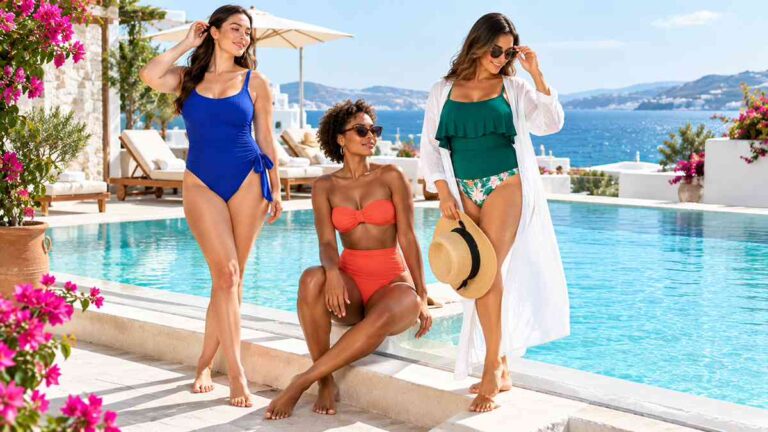
Choosing women’s swimwear gets easier when you start with fit, coverage, and what you plan to do in the water. Bikinis let you mix top and bottom sizes, tankinis offer two-piece flexibility with more midriff coverage, and one-piece swimsuits can feel secure without sacrificing style. If you’re petite or have a shorter torso, pay particular attention to body length and adjustable straps. The best swimsuit is the one you can move in comfortably, not the one a body-shape chart tells you to wear.

Women’s Swimwear Styles and How to Choose
Bikinis remain a versatile choice, especially when the top and bottom are sold separately. You can choose a cup-sized or supportive top and pair it with the rise and coverage you prefer. A two-piece also avoids the torso-length fit problems that can make some one-piece swimsuits bunch or pull.
Stylish Swimwear Cover-ups for Summer
A cover-up is useful for walking to the pool, stopping for lunch, or getting a little more coverage between swims. Try a breezy button-down, a wrap skirt, or a lightweight tunic. Check the fabric if you need something that dries quickly, and remember that a sheer cover-up may not provide much sun protection.
Short Torso Petite Swimwear
Petite sizing and short-torso sizing are not interchangeable. A shorter woman can have a relatively long torso, while a taller woman can have a short one. If a one-piece bunches at your waist or has straps that stay loose even when adjusted, look for a shorter body length or a suit with more adjustable features. A tankini or bikini can also simplify the fit.
Tankini Swimwear
A tankini pairs a longer swim top with separate bottoms, making it a practical option if you like midriff coverage but struggle with one-piece torso length. Some tops are sold by bra size, while others use letter sizes, so check the individual size chart.
Retro-inspired tankinis with wide straps, molded cups, sweetheart necklines, or a ruched front offer different combinations of support and coverage. A ruched panel adds texture, but it is not a substitute for a well-fitting band or cups. Pair the top with hipster, high-waisted, or swim-short bottoms according to your preference. If you shop the original linked collection, check current colors, sizes, and availability rather than relying on an older product description.
Bandeau Bikini
A bandeau bikini creates a clean neckline without visible shoulder straps. Look for a secure band, side boning, or optional straps if you want more stability. Some bandeau tops are cup-sized; others are sized XS through XL. For swimming or beach games, test whether the top stays in place when you raise your arms.
Striped Bikini
Stripes can give a bikini a graphic look, and diagonal or vertical lines may create a lengthening visual effect. A sliding triangle top with neck and back ties offers adjustability, but may not provide the support everyone wants. Check the lining, removable padding, and bottom coverage before ordering. The original article linked to Miami Teeny Weeny Bikini’s bikini collection, confirm current inventory and shipping terms directly with the retailer.
Fringed Bikini Top
A fringed halter bikini top adds movement and a playful retro touch. Fringe and animal prints can work as style details rather than trends you need to chase. Check how the fringe holds up in water and whether the halter ties feel comfortable around your neck, particularly if you want substantial bust support.
Print One-Piece Bandeau Swimwear
A bandeau-style one-piece offers a streamlined look, while side shirring or a built-in shaping panel can change how the fabric sits across the waist. For a petite fit, check whether the body length works before focusing on the neckline. The original retailer reference is Miami Teeny Weeny Bikini’s one-piece collection. For more color inspiration, see BluFashion’s colorful fashion trends.
One-Piece Swimsuit with Deep Plunge Neckline
A deep V-neck can create a longer-looking neckline, but its practicality depends on the cup construction and how securely the suit fits. Smocked fabric adds texture and stretch. If you want more coverage or support, look for a less dramatic plunge, adjustable straps, or built-in cups instead.
How to Find a Swimsuit That Fits
Before buying, measure your bust, waist, and hips in inches and compare them with the specific brand’s chart. If you’re choosing a one-piece, also check the brand’s torso or girth guidance when available. A suit should feel snug without painful digging, and the neckline and seat should stay in place when you bend, sit, and lift your arms.
- For a fuller bust: Look for cup sizing, underwire or a supportive shelf bra, adjustable straps, and a secure band.
- For a shorter torso: Try petite-length one-pieces, adjustable straps, or separates if the fabric bunches through the middle.
- For a longer torso: Seek long-torso sizing or a tankini if standard one-pieces pull at the shoulders or seat.
- For active swimming: Prioritize straps that stay in place, a secure back, and leg openings that do not shift.
- For more coverage: Compare high-waisted bottoms, swim shorts, skirted suits, and higher necklines. Coverage and support are separate features.
Try the swimsuit on with the hygiene liner in place and follow the store’s return policy. Fabric should recover after a gentle stretch, and lining should remain comfortable and opaque when wet. Rinse after pool or ocean use and follow the care label to help preserve elasticity.
Swimwear Ideas for Different Body Shapes
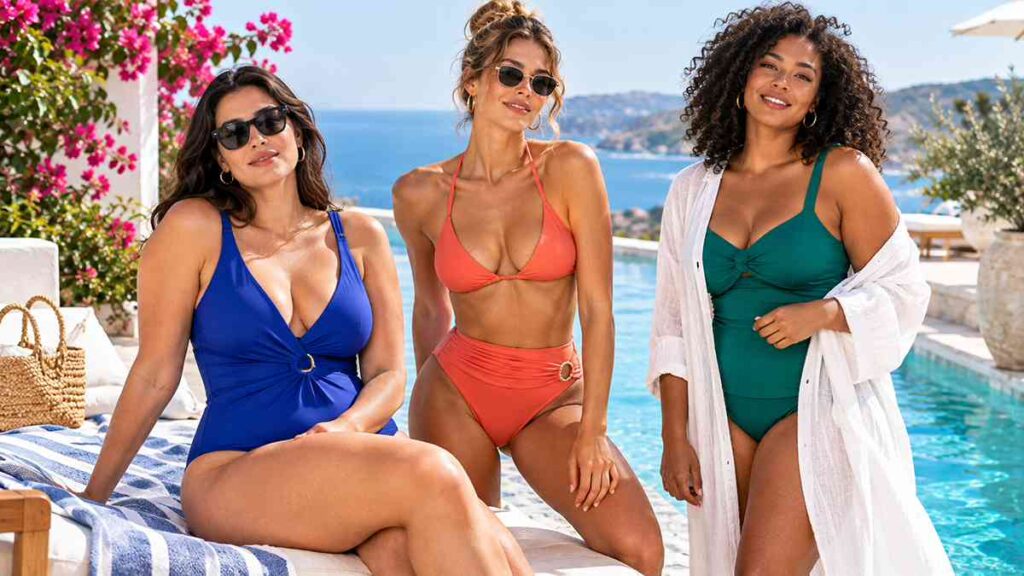
Choosing the Perfect Swimsuit to Flatter Your Shape.
Swimsuit styles can highlight different proportions, but body-type labels are optional styling shortcuts, not rules. Start with the features you enjoy wearing, then use these suggestions if you want to experiment with balance, definition, or coverage.
Best swimwear for rectangle body types
If your shoulders, bust, and hips look relatively balanced and your waist is less defined, details at the waist can create more shape. You can also ignore that goal and choose a simple, straight-cut suit if that feels more like you.
Look for swimwear with:
- Ruffled or textured tops
- Color blocking around the waist
- Waist ties or belts
- Wide-set straps
Best swimsuits for pear body types
If your hips are wider than your bust, you might enjoy a bright or textured top, or you might prefer to highlight your hips with a bold bottom. Neither approach is more correct. The key is a bottom that stays comfortable when you sit and move.
Look for swimwear with:
- Bright or printed tops
- High-cut or classic leg openings
- One-shoulder styles
- Bottoms with comfortable, secure coverage
Best swimwear for wedge body types
An inverted-triangle shape generally means shoulders or bust are broader than the hips. A printed or ruffled bottom can add visual emphasis below the waist, while a well-supported top makes a bigger difference to comfort than any color rule.
Look for swimsuits with:
- Printed or textured bottoms
- Supportive tops with adjustable straps
- Straight-across or high-waisted bottoms
- One-piece suits with a defined waist
Best swimwear for apple body types
An apple-shaped silhouette often carries more fullness through the midsection. Wrap fronts, ruching, and supportive panels are options if you like their look or feel. Choose the amount of compression you can comfortably breathe and move in.
Look for swimwear with:
- Softly ruched or wrap fronts
- V or scoop necklines
- Tankinis with adjustable hems
- Light shaping panels, if comfortable
Best swimwear for hourglass body types
An hourglass silhouette typically has a defined waist with bust and hip measurements that are relatively balanced. Matching sets, belted styles, and simple one-pieces can all work. You do not need to preserve any particular visual proportion to look good in a swimsuit.
Look for swimsuits with:
- Matching bikini separates
- Bandeau styles with adequate support
- Waist-defining details
- Any leg cut that feels comfortable
10 One-Piece Swimsuit Details Worth Considering

One-piece swimsuits come in far more than a single classic cut. Necklines, leg openings, straps, lining, and shaping panels all affect how a suit looks and feels. Here are ten useful design directions to consider, without treating any body feature as a flaw to fix.
Shopping for women’s swimwear might be the most daunting and intimidating task we go through as women. We all have problem areas we’d rather not highlight and features we want to make sure we show off. Finding swimwear that does both can be tricky.
Think about the details you want to emphasize, how much coverage feels right, and whether you will be lounging, swimming laps, or chasing waves. A beautiful suit that slips when you move is not much of a bargain.
- Define the waist: A belted or strategically color-blocked one-piece can create a more defined waist. Check that any belt stays put when wet.
- Choose fuller coverage: A scoop-neck one-piece with a classic leg or swim-short cut offers more coverage. Make sure the seat and leg openings do not ride up.
- Try a skirted suit: A skirted one-piece or adjustable swim skirt offers extra coverage at the hips. A supportive built-in bra matters more than the skirt itself.
- Create a longer leg line: A higher-cut leg opening can visually lengthen the legs. Choose the cut based on comfort and the amount of coverage you want.
- Try smoothing panels: Color blocking, lining, and gentle shaping panels can create a smooth look, but no swimsuit can credibly guarantee a particular number of pounds of visual change.
- Show some skin with cutouts: A monokini or cutout one-piece offers the look of a bikini with connected fabric. Check the fit at every opening to avoid digging or gaping.
- Highlight shoulders: A bandeau or strapless one-piece puts the neckline and shoulders in focus. Look for a secure band and removable straps if you plan to swim actively.
- Choose an open back: A low-back or Brazilian-cut suit offers less coverage. Test it while bending and sitting, and use sunscreen on exposed skin.
- Try a plunge neckline: A plunging V-neck can look striking on a smaller or fuller bust. Choose cup support and neckline depth based on your needs rather than a fixed body-type rule.
- Keep it simple: A classic black or solid-color one-piece with a comfortable lining and adjustable straps can be an easy repeat-wear option. Color is a personal choice, not a universal flattering formula.


