

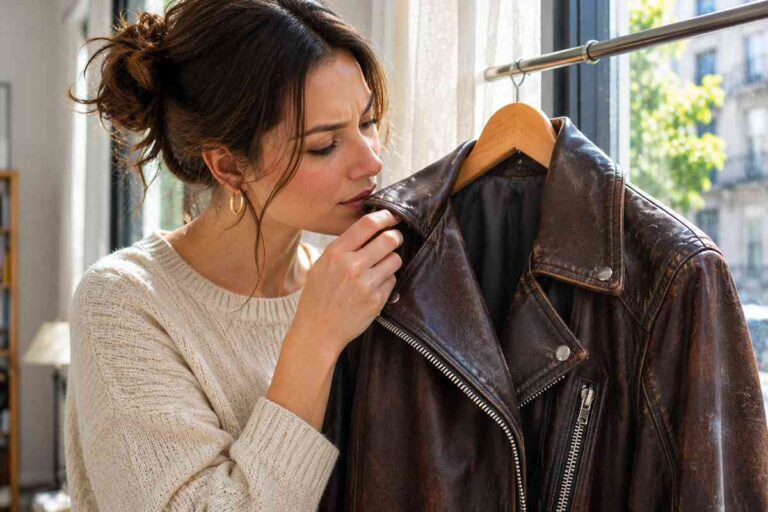
Is there anything that I can use to get rid of the smell of cigarettes from a leather jacket?
YUCK. The good news: you can usually get cigarette smoke out of leather, though it takes days rather than minutes. The smell sits in two places, the fabric lining and padding inside the jacket and the leather itself, and you may need to deal with both. Smoke leaves a sticky residue of nicotine and tar, which is why the smell can come back after a quick airing. That residue is stubborn: in one lab study, smoke-exposed fabrics still held measurable smoke chemicals 19 months later. That’s chemistry, not necessarily a smell you’d notice, but it explains why you need more than a spritz of air freshener.
Here’s the order that works, from gentlest to most involved. Stop as soon as the smell is gone.
1. Air It Out the Right Way
Empty every pocket first (old receipts and lighters hold smell too). Then put the jacket on a wide, padded hanger (wire hangers dent the shoulders) and hang it somewhere with moving air: a covered porch, a shady spot outside on a dry day, or in front of an open window. Turning it inside out for part of the time lets the lining breathe. Give it at least a full day or two. Light smoke smell from one night at a smoky bar often clears at this stage.
Keep it out of direct sun, which can fade the dye and dry out the hide, and away from radiators, heaters, and hair dryers. Heat is how a soft leather jacket turns stiff and cracked.
2. Let a Dry Absorber Do the Slow Work
If the smell is still there, shut the jacket in a closed space with something that soaks up odors. A large, clean plastic storage bin or a zippered garment bag works. Set a couple of open bowls of baking soda or activated charcoal inside, next to the jacket but not touching it, close it up, and leave it somewhere cool for two to three days. Swap in fresh baking soda or charcoal and repeat if needed.
Two rules make this safe. The jacket and the container must be completely dry before it goes in, because trapped moisture in a closed box is how leather gets mildew. And check on it every day: if you see condensation or the jacket feels damp, take it out and air it. Don’t sprinkle baking soda straight onto the leather, either. It’s alkaline, it can dry the surface and leave patchy marks, and the fine powder settles into seams and stitching.
3. Freshen the Lining
Quilted linings and padding can trap smoke, so if the jacket still smells, give the inside its own attention.
- Check the care label first. If it says the jacket should only be professionally cleaned, skip to the specialist section below. Our laundry symbols chart for clothing labels decodes the symbols if they’re unclear.
- Mix equal parts white vinegar and water. Dampen a soft cloth with it and wring it out well.
- Test it on a hidden patch of lining, such as inside a pocket, and let it dry to make sure the color doesn’t run or mark.
- Wipe the lining with the barely damp cloth, keeping it off the leather.
- Hang the jacket inside out until it’s fully dry. The vinegar smell fades as it dries.
4. Clean the Leather
Smoke residue also coats the outside of the jacket, so a gentle cleaning can help. Use a cleaner made for garment leather, applied with a soft cloth that’s barely damp, and test it first on a hidden spot such as the inside of the front facing or under the collar. Saddle soap is made for sturdy leathers like boots and tack; on a soft jacket, a garment-leather cleaner is the safer choice.
If the care label or the maker recommends conditioning, follow with a thin coat of a conditioner suited to that leather, tested in the same hidden spot. Conditioner keeps the leather supple after cleaning, but it isn’t an odor treatment and won’t cover smoke that’s still in the lining.
What Not to Do
- Don’t machine wash or soak it. Water and agitation can shrink and stiffen leather, often for good.
- Skip rubbing alcohol on the leather. It strips oils and can dry out or discolor the finish, especially on soft, unfinished leathers.
- Don’t drown it in perfume or essential oils. Fragrance on top of stale smoke usually smells worse than either one alone, and oils can leave dark spots on leather.
- Don’t run an ozone generator at home. Ozone is a lung irritant, the EPA warns about ozone generators sold as air cleaners, and ozone can also damage some materials.
When to Take It to a Leather Specialist
If the smell survives a week or two of airing, absorbing, and cleaning, or if the jacket is suede, vintage, or expensive enough that you don’t want to experiment, take it to a cleaner who specializes in leather. That’s not the same as your regular dry cleaner, so ask before you hand it over, and ask what they plan to use on it.
One honest caveat: a jacket that spent years around heavy smoking may keep a faint smell even after all of this. It usually fades a lot, but it may stay a quiet part of the jacket’s history.
Leather Bags, Shoes, and Suede
The same order works for other leather accessories, with a few adjustments. For a purse or bag, empty it, leave it open to air, then give it the closed-container treatment with baking soda or charcoal. For shoes, pull out removable insoles and wash them if they’re fabric, then tuck a breathable sachet of baking soda inside each shoe overnight. Suede and nubuck shouldn’t get any liquid at all: brush them, air them, use the dry absorber method, and go to a specialist if that isn’t enough.
A leather couch or chair is a different job. Airing and dry absorbers still help, but follow the furniture maker’s care instructions before putting any cleaner on upholstery, rather than using jacket methods.
Dealing with a secondhand find that smells musty rather than smoky? Our guide to getting thrift store smell out of clothes covers that.


