Most agates are affordable stones, but a beautiful pattern or an unusual variety can make one worth considerably more. Common cut agate often sells for a few dollars per carat or less, while exceptional collector specimens and some fire agates can command much higher prices. The trick is knowing what kind of agate you have and comparing it with similar stones.
If you’ve found an agate, inherited one, or spotted a gorgeous piece of agate jewelry, its size alone won’t tell you what it’s worth. Color, banding, condition, treatment, and cutting quality all matter. Here’s how to make sense of the prices and avoid paying a premium for something that only looks rare.
How Much Is Agate Worth?
Agate doesn’t have a single reliable market price. Ordinary material is relatively plentiful, and prices vary depending on whether you’re buying rough rock, a polished stone, a loose gemstone, or finished jewelry.
For a useful starting point, gemstone retailer GemSelect publishes the following indicative price ranges. These are examples of advertised retail pricing, not guaranteed resale values or a universal gemstone appraisal standard.
| Agate variety | Indicative price per carat | What affects the price |
|---|---|---|
| Common agate | $0.30 to $2 | Banding, color, polish, size, and appearance |
| Dendritic agate | $0.80 to $6 | Tree-like patterns, contrast, and cutting quality |
| Fire agate | $5 to $50 | Iridescent color, pattern, and skilled cutting |
These figures are a reference point, not a price tag for every agate. For example, a decorative agate slice may be sold individually, while a large rough batch may be priced by the pound. Jewelry prices also include the setting, metal, labor, and design.
For more background, see GemSelect’s agate pricing information and the International Gem Society’s guide to agate value.
Is Agate Worth Anything?
Yes. Agate has value as a decorative stone, jewelry material, and collectible mineral. But an attractive agate isn’t necessarily an expensive one.
Common tumbled stones and small decorative pieces are generally inexpensive. An agate with beautifully defined bands, unusual natural colors, or a sought-after origin can be much more desirable to collectors. Custom cutting may add considerable value, too.
Keep retail and resale prices separate. A shop’s asking price includes expenses and profit. If you’re selling an agate you already own, an achievable resale price may be lower.
How Much Is Agate Worth Per Gram?
One carat equals 0.2 grams, so a gram contains five carats. To convert an advertised per-carat price to a per-gram price, multiply by five.
For example, a stone priced at $2 per carat works out to $10 per gram. That’s a mathematical conversion, not an estimate of what an unknown agate will sell for. For large rough specimens, slices, geodes, or carvings, comparing similar pieces is usually more useful than calculating a price by weight.
What Makes an Agate Valuable?

Agate is a form of chalcedony, a microcrystalline variety of quartz. It’s best known for its bands and layered patterns, although stones sold as moss agate and dendritic agate are appreciated for their inclusion patterns rather than traditional banding.
Unlike transparent gems that are often evaluated with standardized clarity and color descriptions, agate is valued largely for its visual character. Two pieces of similar size can have dramatically different appeal.
Quality, Pattern, and Rarity
Distinctive color patterns, fine bands, and landscape-like markings can raise an agate’s value. Collectors may especially appreciate patterns that resemble eyes, fortifications, feathers, or miniature scenes.
Don’t judge a stone simply by how bright it looks. A naturally colored agate with subtle but sharply defined bands may attract more collector interest than a vividly dyed piece. The quality of the individual pattern matters more than a blanket rule about which color is best.
Type of Agate
Some types of agate are especially popular because of their distinctive appearance. These varieties are worth recognizing when comparing stones or shopping for jewelry.
| Type | Description | What to look for |
|---|---|---|
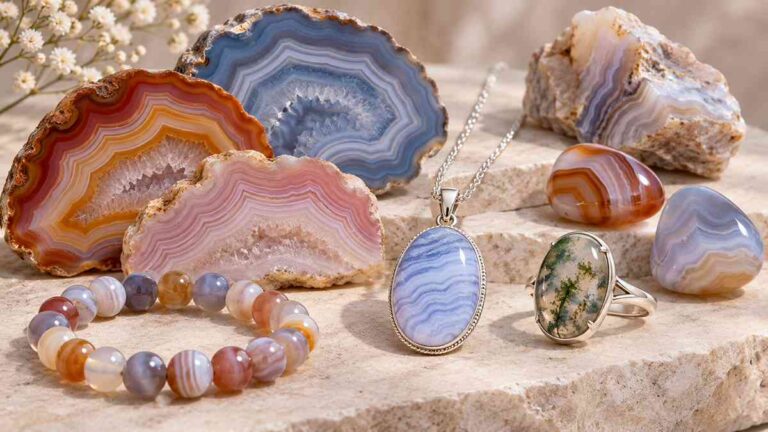
| Blue Lace Agate | Soft blue bands with a delicate, lace-like pattern | Defined banding, pleasing natural color, and a good polish |
| Moss Agate | Moss-like inclusions with an earthy appearance | Interesting inclusions, contrast, and attractive cutting |
| Crazy Lace Agate | Intricate, swirling bands and colorful patterns | Sharp patterns, balanced color, and sound condition |
| Dendritic Agate | Branching inclusions resembling trees or ferns | Distinctive scenic patterns and a well-positioned cut |
| Fire Agate | Iridescent flashes of color within the stone | Visible fire, strong color, and skilled carving |
These names describe different appearances, not guaranteed price tiers. A poorly finished piece of a collectible variety may be less appealing than an ordinary agate cut to show its natural pattern beautifully.
Natural Color vs. Dyed Agate
Agate is frequently dyed to produce vivid blue, pink, green, purple, and other colors. Dyeing doesn’t necessarily make a stone unattractive or unsuitable for jewelry. It does change what you’re buying, and it should be disclosed.
Strong, unnatural-looking color can be a reason to ask questions, particularly if color collects in cracks or along certain bands. However, appearance alone doesn’t prove whether an agate has been treated.
The Gemological Institute of America explains gemstone dyeing and notes that some dyes can be affected by solvents or prolonged sunlight. If natural color is part of a seller’s justification for a high price, ask how that claim has been established.
Size, Condition, and Market Demand
Large agates with exceptional patterns can command premium prices, but bigger isn’t automatically better. A small, beautifully patterned cabochon may be more desirable than a large piece with little visual interest.
Condition matters, too. Chips, distracting fractures, scratches, and poor polishing can affect a piece’s appeal. Buyers may pay more for a well-preserved specimen from a recognized collecting location, particularly when its origin is documented.
Market demand also fluctuates. Jewelry trends, collector preferences, and the availability of specific varieties can influence what buyers are willing to pay. A high asking price doesn’t necessarily mean the stone will sell at that price.
Understanding Raw, Tumbled, and Polished Agate Prices

How an agate is prepared for sale affects the price. A polished stone has required cutting or tumbling work, while an uncut specimen may still hide its best pattern inside.
That doesn’t mean every polished agate is worth more than every raw one. Unusual rough specimens can attract collectors, and a poor cut can reduce the appeal of otherwise attractive material.
| Aspect | Tumbled or polished agate | Raw agate |
|---|---|---|
| Appearance | Smooth surface, with patterns often easier to see | Natural surface, sometimes with patterns concealed |
| Jewelry suitability | Often ready for beads, cabochons, or settings | May need cutting and polishing first |
| Pricing | Includes processing and finishing work | Depends on material quality, specimen appeal, and potential yield |
| Main buying concern | Check polish, chips, treatment, and pattern | Check fractures, usable material, and visible features |
If you’re buying rough agate to cut, consider how much usable stone you’ll get after removing damaged areas. A cheap rough specimen isn’t necessarily a bargain if most of it has to be discarded.
Cost of Labor and Artistry
Agate’s versatility allows it to be crafted into rings, pendants, bracelets, carvings, and decorative objects. The labor and artistry involved can account for a significant part of the final price.
A custom-cut stone may be oriented specifically to reveal an unusual band or scenic pattern. A jewelry designer may also spend considerable time creating a setting around an irregularly shaped gem. When comparing finished pieces, evaluate that craftsmanship separately from the raw material’s value.
How to Estimate the Value of an Agate You Own
If you’ve picked up an interesting stone or inherited an agate collection, start with a few practical checks before putting a price on it.
- Identify the variety. Look at banding, inclusions, translucency, and any unusual visual effects. Don’t rely on color alone.
- Record its measurements. Note dimensions, weight, and whether the stone is rough, tumbled, sliced, or cut into a cabochon.
- Check the condition. Look for chips, fractures, scratches, repairs, or signs of poor polishing.
- Ask about treatment and origin. Original receipts, labels, and collection records may help substantiate claims about where the stone came from.
- Compare similar sold items. Match the variety, size, pattern, treatment, and condition as closely as possible. Completed sales are more informative than ambitious asking prices.
- Seek specialist advice when warranted. An experienced lapidary dealer, mineral specialist, or qualified gemologist may help with an unusual or potentially valuable specimen.
Be cautious about putting a price on an agate from a single photograph. Lighting can exaggerate color, photographs may hide damage, and the weight tells you little about how interesting the pattern is. For a potentially valuable collector piece, an in-person assessment may be worthwhile.
Agate in Jewelry

Agate’s aesthetic appeal and relatively modest price make it a popular choice for jewelry. From rings and necklaces to bracelets and earrings, its colors and patterns offer plenty of room for personal style.
Agate generally measures about 6.5 to 7 on the Mohs hardness scale, making it suitable for many jewelry designs. It can still be scratched or chipped by rough handling, especially in pieces worn on the hands.
Popular Agate Jewelry Items
The banded or layered appearance of agate makes it a visually appealing choice for jewelry. Different colors and patterns can produce striking pieces, even in simple settings.
- Rings: Agate rings showcase the stone’s banding patterns in a variety of styles. Look for a secure setting that protects exposed edges.
- Necklaces: Agate necklaces often feature larger statement pieces that show off the gemstone’s color and natural patterns.
- Bracelets: Beaded agate bracelets come in numerous colors and designs. Check the quality of the beads, stringing, and clasp.
- Earrings: Matching agate stones can create an attractive pair, particularly when their colors and patterns complement each other.
What to Check Before Buying Agate Jewelry
First, look closely at the actual stone. A beautiful product photograph may not show small chips, dull polishing, or differences between the two stones in a pair of earrings.
Then check the setting and metal description. A sterling silver ring and a costume-metal ring may contain similar agate, but the finished pieces won’t necessarily have the same value.
Ask whether the agate is naturally colored or dyed, especially if the color is unusually vivid. For expensive or collectible pieces, request documentation supporting claims about variety, treatment, or geographic origin.
Caring for Agate Jewelry
Proper care helps preserve the beauty of agate jewelry. The stone is reasonably durable, but its polish, possible dye treatments, and jewelry setting still need attention. Our general jewelry care and maintenance guide offers additional advice.
| Tip | Description |
|---|---|
| Cleaning | Use a soft, slightly damp cloth. Where appropriate for the setting, use a little mild soapy water. Avoid harsh chemicals and ultrasonic cleaning when treatments or construction are uncertain. |
| Storage | Store agate jewelry separately or in a soft pouch to reduce scratching and accidental impacts. |
| Regular inspection | Check for loose settings, chipped edges, damaged beads, and worn clasps. |
| Dyed stones | Avoid prolonged strong sunlight and contact with solvents that may affect some dyes. |
Is Agate a Good Investment?
Agate can be a satisfying collectible, but ordinary agate jewelry shouldn’t be treated as a reliable financial investment. The resale market depends on finding a buyer who appreciates a particular stone, and there’s no single standardized price that guarantees its future value.
If you’re collecting for enjoyment, focus on patterns you genuinely like, sound condition, and trustworthy information about the stone. For expensive specimens, keep purchase records and documentation. Buying because a seller promises a dramatic increase in value is a different proposition, and one that deserves skepticism.
Frequently Asked Questions About Agate Value
Are agates worth money if you find them outdoors?
Some are. A common piece of rough agate may have little resale value, while a specimen with exceptional natural banding, attractive color, or a desirable collecting origin may interest buyers. Identification and condition matter more than simply finding a large stone.
What color agate is most valuable?
There’s no single most valuable color. Natural patterns, contrast, rarity, and the particular variety matter more. With fire agate, the quality of its iridescent effect can be especially important. Bright dyed colors don’t automatically indicate high value.
How much do agates sell for?
It depends on the kind of agate and the buyer. Common stones often sell inexpensively, while selected varieties, finely cut gems, and collector specimens can bring higher prices. Look at recent completed sales of genuinely comparable material rather than relying on one advertised price.
Can you tell an agate’s value from a photo?
A clear photograph can help identify patterns and suggest what to research, but it cannot reliably establish treatment, internal damage, exact material quality, or market value. Measurements, condition details, and sometimes a specialist’s examination are needed.
The Bottom Line
Agate offers plenty of beauty without requiring a luxury gemstone budget. Most common pieces are modestly priced, but fine natural patterns, distinctive varieties, excellent cutting, and documented collector interest can make an individual stone worth much more.
If you’re buying, pay attention to treatment, condition, and craftsmanship. If you’re selling, compare actual sales of similar stones. The most useful question isn’t simply how much agate weighs, but what makes that particular piece desirable.

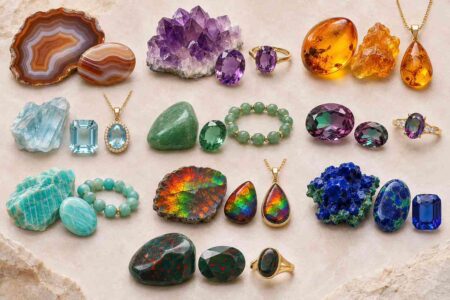
For a broader look at agate alongside other gemstones, visit our Semi Precious Stones Chart, which covers the appearance and characteristics of different stones.
✨ Discover the Magic of Alexandrite!
Intrigued by gemstones that change color? Alexandrite is a marvel of nature that you won’t want to miss. Learn about its unique properties, historical significance, and why it’s considered a gemstone like no other.
👉 Explore Our In-Depth Guide on Uncovering the Mystique of Alexandrite
Ready to uncover the secrets of Amazonite? Dive into our comprehensive guide on its healing properties, historical significance, and everyday uses. Discover why this gemstone is more than just a pretty face. Click here to learn more!
References and Further Reading
- International Gem Society: Agate Value, Price, and Jewelry Information
- GemSelect: Agate Gemstone Information and Pricing
- Gemological Institute of America: An Introduction to Gem Treatments
- Gemological Institute of America: Gem Cutters Reveal the Beauty of Chalcedony