



At-home hair removal sounds wonderfully convenient until you start comparing devices. One promises smooth skin in weeks, another advertises cooling technology, and a third has sensors that adjust the light intensity for you.
And somehow, every product page makes its device sound like the only one you’ll ever need.
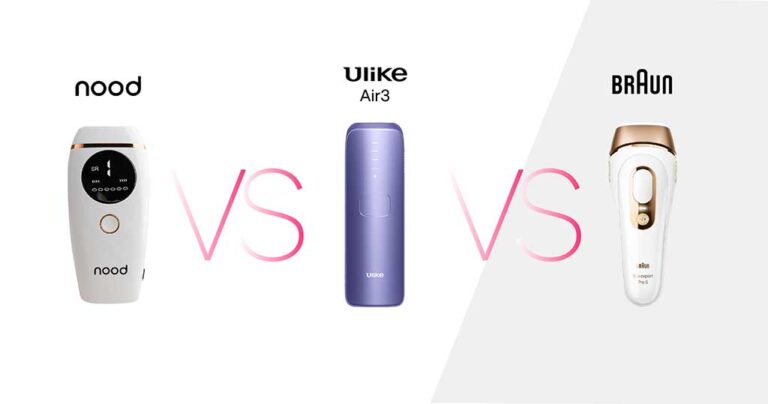
If you’ve been comparing Nood, Ulike, and Braun, I can understand the confusion. These brands all offer intense pulsed light (IPL) hair removal devices, but they don’t approach the experience in quite the same way.
Here’s the short version: Ulike Air3 stands out for its contact-cooling technology, Braun Silk-expert Pro 5 for automatic skin-tone sensing, and Nood Flasher 2.0 for its relatively straightforward design and competitive direct-to-consumer pricing.
That doesn’t automatically make any one of them the best choice for you.
Before choosing, you’ll want to consider your natural skin tone, hair color, treatment areas, tolerance for discomfort, and how often you’re prepared to use the device.
I’ve compared the published features of the three models, checked current manufacturer guidance, and looked at the important safety questions that tend to get buried beneath the marketing promises.
Here’s what matters before spending your money.
Nood vs Ulike vs Braun: Quick Comparison
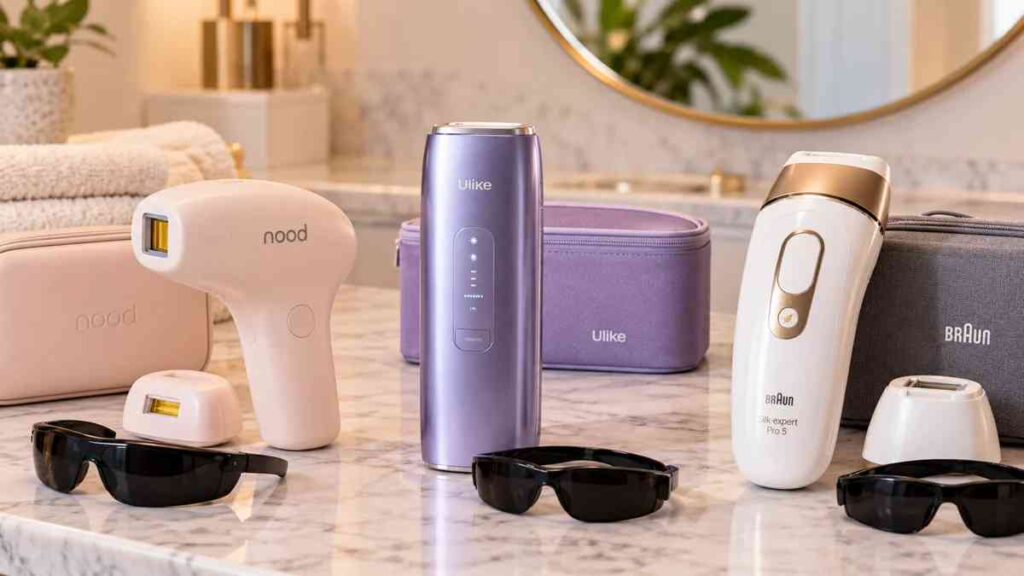
Let’s start with the features most likely to affect your decision.
| Feature | Ulike Air3 | Nood Flasher 2.0 | Braun Pro 5 |
|---|---|---|---|
| Technology | At-home IPL | At-home IPL | At-home IPL |
| Notable feature | Sapphire contact cooling | Seven intensity levels and glide mode | Automatic skin-tone sensing |
| Cooling | Yes | No comparable integrated cooling feature | No comparable integrated cooling feature |
| Skin-tone approach | Manufacturer compatibility chart | Manufacturer compatibility chart and skin safety test | Automatic sensing and adjustment |
| Treatment schedule | Brand recommends frequent initial sessions | Follow model-specific treatment instructions | Brand recommends an initial weekly course |
| Best reason to consider it | Cooling comfort | Simple operation and value | Automatic intensity adjustment |
| Biggest consideration | Hair and skin-tone restrictions | No integrated cooling and compatibility restrictions | Usually a premium-priced option |
Specifications, included accessories, schedules, and pricing can vary by market and product version. This comparison refers specifically to the Air3, Flasher 2.0, and Silk-expert Pro 5, not the brands’ newer or more expensive devices.
Do At-Home IPL Hair Removal Devices Actually Work?
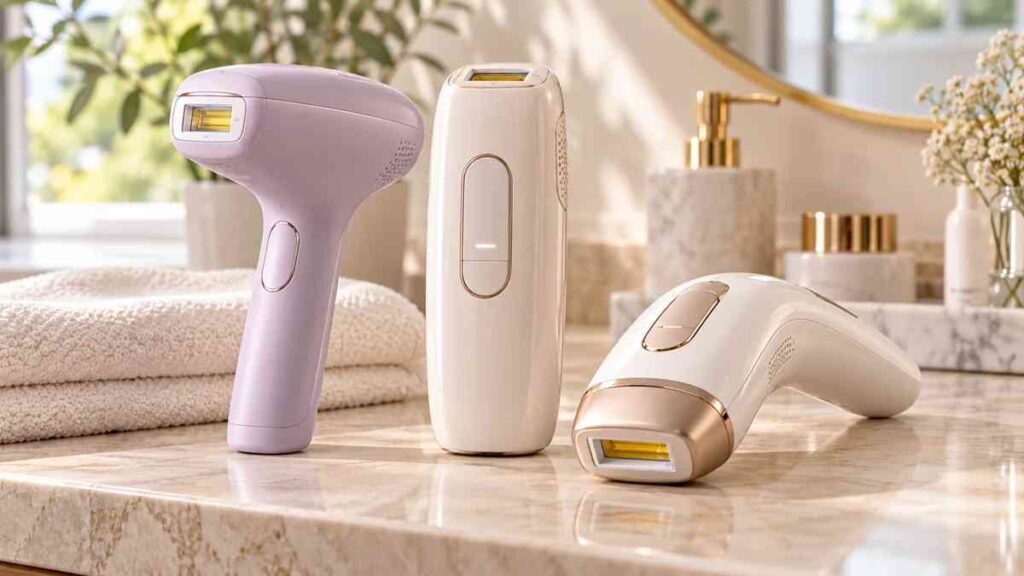
Yes, IPL can reduce unwanted hair growth when used correctly on a suitable combination of skin tone and hair color.
But there’s a distinction worth understanding before you buy.
IPL is designed for long-term hair reduction, not a guarantee that every hair will disappear permanently.
Intense pulsed light delivers broad-spectrum light that is absorbed by pigment in the hair. The energy produces heat that can disrupt the follicle’s ability to grow hair.
Because hair follicles move through different growth stages, repeated treatments are necessary.
Over time, you may notice that hair becomes finer, grows more slowly, or appears less dense.
Some hair can eventually regrow, which is why maintenance treatments may be needed.
The American Academy of Dermatology explains that home-use light-based devices generally require more ongoing treatment than professional procedures.
So if a device promises completely permanent, effortless hair removal in just a few weeks, I’d read the fine print.
IPL vs Laser Hair Removal: Are They the Same?
No. The terms are sometimes used interchangeably in advertising, but IPL and laser hair removal are different technologies.
IPL uses a broad range of light wavelengths, while a laser uses a more concentrated, specific wavelength of light.
Professional laser systems can be selected for different skin types and treatment needs. At-home IPL devices generally deliver lower-powered treatments designed for consumer use.
Neither method should be assumed suitable for every person.
If you have a darker skin tone, very light hair, or a history of pigmentation problems, professional advice may be more useful than choosing a home device based on reviews alone.
Ulike Air3 Review: Best Known for Its Cooling Technology
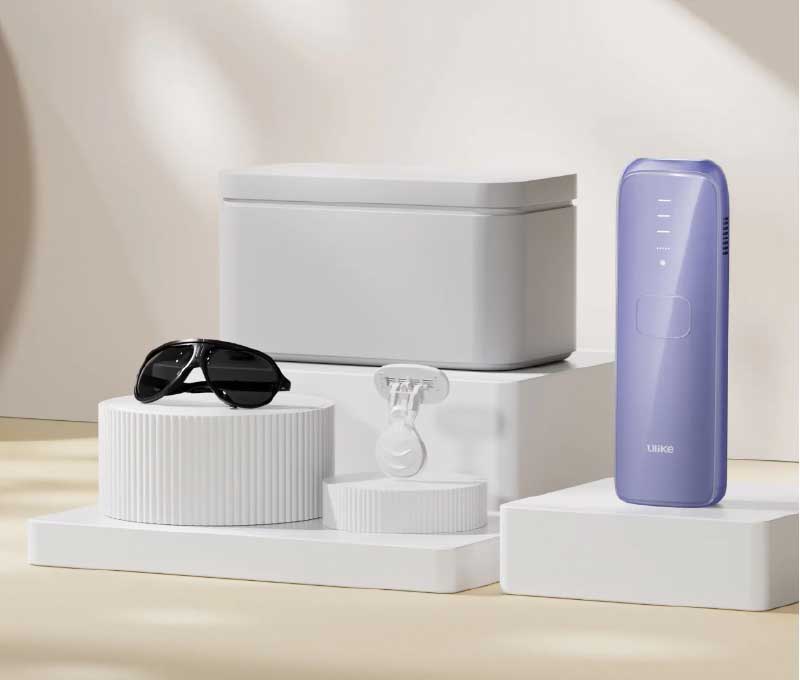
The Ulike Sapphire Air3 is the device I’d look at first if comfort were my main priority.
Its biggest selling point is Sapphire Ice Cooling, a contact-cooling feature designed to make the treatment window feel cooler against your skin.
That’s a meaningful difference from devices that rely only on their IPL settings without a comparable integrated cooling surface.
But let’s be clear: cooling doesn’t guarantee that treatment will be painless, and it doesn’t make unsuitable skin tones safe to treat.
What Makes Ulike Air3 Different?
Ulike combines IPL flashes with a cooling treatment window.
The company also advertises multiple operating modes and a glide function designed to make treating larger areas more convenient.
On its official product page, Ulike reports visible hair reduction within the first several weeks and advertises a 93% reduction after four weeks under its stated testing conditions.
That’s a manufacturer performance claim, not a result every customer should expect.
Your hair color, skin tone, consistency, and treatment area can all affect what happens.
What I Like About Ulike Air3
- Contact cooling: A useful comfort-focused feature, particularly for someone concerned about warmth during IPL treatments.
- Glide functionality: Can make treating larger permitted areas more convenient.
- Different treatment modes: Offers flexibility within the device’s approved operating instructions.
- Clear manufacturer guidance: Ulike publishes compatibility and treatment information.
What I’d Think About Before Buying
- Ulike Air3 is not suitable for every skin tone or hair color.
- Cooling does not eliminate the possibility of irritation or burns from improper use.
- Frequent initial treatments require a real time commitment.
- Manufacturer-reported percentages shouldn’t be treated as guaranteed personal results.
Ulike’s own compatibility information says that IPL works best on darker hair with suitable lighter skin tones, while very light, red, gray, and white hair can respond poorly.
Very dark skin tones may also be outside the device’s safe operating range.
My assessment: Ulike Air3 is worth considering if you have a compatible hair and skin-tone combination and would value cooling during treatment.
Nood Flasher 2.0 Review: A Straightforward IPL Alternative
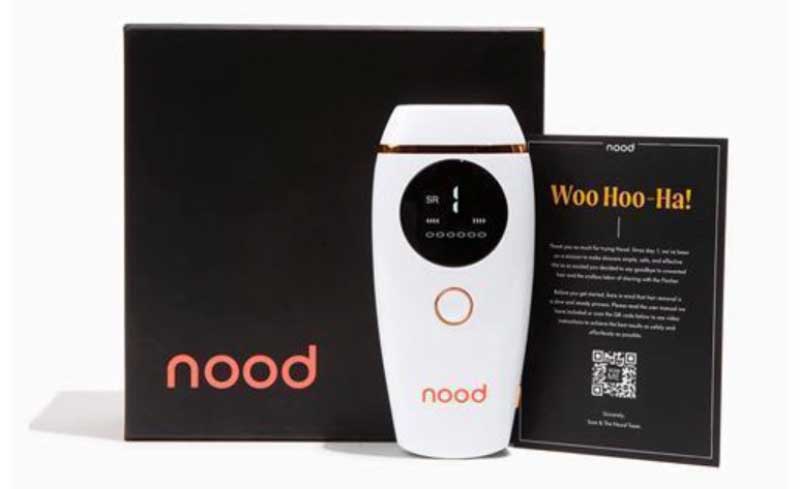
Nood’s Flasher 2.0 takes a relatively simple approach to at-home IPL.
Rather than making contact cooling the central selling point, Nood focuses on adjustable intensity, repeated treatments, and long-term reduction in hair growth.
Its official product information describes seven intensity levels and a continuous glide mode.
Those features are useful if you want a familiar handheld device without too many extras.
How Does Nood Work?
Like the other devices here, Nood uses IPL energy to target pigment in suitable hair follicles.
The manufacturer recommends treating hair that has been prepared according to its instructions and completing a skin safety test before starting.
Nood also publishes a compatibility chart.
For the Flasher 2.0, the company identifies lighter skin tones through certain light-brown tones as suitable, depending on the specific chart, and excludes darker brown-to-black skin tones.
It also excludes light blonde, red, and gray hair from its recommended range.
This isn’t a detail to skip. A device that isn’t appropriate for your coloring is unlikely to become a good purchase simply because it’s on sale.
What I Like About Nood Flasher 2.0
- Adjustable intensity: Provides several user-selectable treatment levels.
- Glide mode: Helpful for covering suitable larger areas.
- Published compatibility information: Makes it easier to check suitability before purchasing.
- Competitive pricing: Nood frequently markets the Flasher 2.0 as a more accessible entry into IPL.
What I’d Think About Before Buying
- There’s no comparable built-in contact-cooling system on this model.
- Some skin tones and hair colors are outside its recommended range.
- The manufacturer requires proper preparation and a safety test.
- Results and the amount of maintenance required vary.
Nood currently advertises the Flasher 2.0 with a 90-day hair-free guarantee under its terms, but I’d read the eligibility and refund conditions rather than assuming every purchase is automatically refundable.
My assessment: Nood is worth researching if you want an uncomplicated IPL device and the price works for you. However, check the precise skin compatibility chart before buying, and don’t assume it will match Ulike’s cooling experience.
Braun Silk-expert Pro 5 Review: Best for Automatic Skin-Tone Adjustment
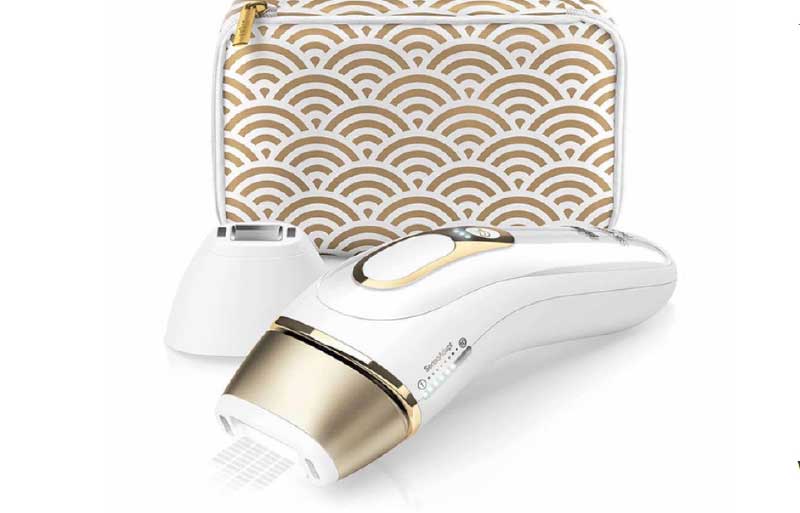
Braun takes a different approach from both Ulike and Nood.
The Silk-expert Pro 5 is particularly interesting because of its automatic skin-tone sensing technology.
Instead of asking you to rely entirely on a manually selected energy level, the device uses sensors to assess the treatment area and adjust its output within its operating range.
That can be appealing if you’re nervous about selecting the wrong intensity.
However, the sensor is not permission to use the device on skin or hair colors excluded by the manufacturer’s instructions.
What Makes Braun Pro 5 Different?
Braun advertises its SkinPro technology as a way to adapt IPL intensity automatically to the skin tone being treated.
The Silk-expert Pro 5 also offers treatment modes and interchangeable heads, although the exact accessories depend on the product bundle.
For large areas such as the legs, a wider head may help reduce the number of movements needed.
Precision heads can be useful for certain smaller areas explicitly permitted by Braun.
One particularly important detail is that Braun Silk-expert Pro 5 has an identifiable FDA 510(k) clearance, K190354.
That is much more useful information than a vague label saying a device is “FDA approved.”
What I Like About Braun Pro 5
- Automatic skin-tone adjustment: Reduces the need to manually choose every treatment level.
- Different treatment heads: Provides flexibility, depending on the bundle.
- Established product documentation: Includes compatibility and operating guidance.
- Verifiable FDA clearance: The Pro 5 model has a published FDA record.
What I’d Think About Before Buying
- Braun is often priced toward the premium end of this comparison.
- Skin-tone sensing doesn’t make every complexion suitable.
- It doesn’t offer Ulike Air3’s integrated sapphire cooling feature.
- Accessories, warranties, and package contents vary by model and retailer.
Braun states that its IPL products aren’t effective on very light blonde, red, gray, or white hair. Its guidance also excludes the darkest skin tones from relevant device applications.
My assessment: Braun Silk-expert Pro 5 is a particularly appealing choice if you prioritize automatic adjustment and want a well-documented IPL system.
Which Is Better for Sensitive Skin?
This is where I’d be cautious about choosing a single winner.
If by sensitive skin you mean that you dislike heat or find IPL flashes uncomfortable, Ulike Air3’s cooling feature may be attractive.
But if you mean you have eczema, psoriasis, unusually reactive skin, a history of pigmentation changes, or another medical skin concern, that’s a different question entirely.
A cooling plate doesn’t make home IPL automatically appropriate for a skin condition.
Braun’s automatic skin-tone sensing is useful for a different reason. It adjusts the device’s output based on the skin it detects, rather than primarily trying to make the surface feel cooler.
Nood offers adjustable settings but doesn’t include comparable integrated cooling.
These are different design choices, not proof that one brand is universally safer for sensitive skin.
If you have an ongoing skin condition or a history of adverse reactions to light-based treatments, ask a dermatologist before purchasing.
Which IPL Device Works Best for Dark Hair or Dark Skin?
All three devices depend on the interaction between light energy and pigment.
That means the contrast between hair and skin color matters enormously.
Dark Hair With Lighter Skin
This is generally the combination for which consumer IPL technology is most effective.
If your hair and skin fall within all three manufacturers’ compatible ranges, comfort features, ease of use, price, and your preferred schedule become more useful deciding factors.
Very Light Blonde, Red, Gray or White Hair
IPL tends to perform poorly on these colors because there’s less suitable pigment for the light energy to target.
I wouldn’t recommend buying any of these devices without first confirming that your natural hair color is supported.
Brown and Darker Skin Tones
Greater skin pigmentation can increase the amount of light energy absorbed by the surrounding skin, potentially increasing the risk of burns or pigmentation changes.
The exact safe range differs by device.
Don’t assume a product is suitable based on advertising photographs or a generalized description such as “all skin types.”
Check the model-specific chart and consider consulting a dermatologist experienced with laser hair removal for darker skin.
How Long Does It Take to See Results?
One of the most tempting parts of IPL advertising is the promise of results in just a few weeks.
Ulike advertises visible changes within the first few weeks for Air3. Nood and Braun also publish early-result timelines for their respective products.
But those figures are based on each company’s own testing conditions or marketing materials.
They aren’t a standardized head-to-head clinical comparison.
In practice, I’d expect the process to require multiple treatments and patience.
You may notice slower regrowth before you see a major reduction in the number of visible hairs.
And even if you’re pleased with the initial results, maintenance may still be necessary.
Follow the frequency given in your exact device manual. More frequent flashing doesn’t automatically mean better results and can increase the risk of skin irritation.
How Much Do Nood, Ulike and Braun Cost?
Prices are a moving target.
Brands frequently run discounts, bundle accessories, or introduce newer models while continuing to sell older handsets.
For example, Ulike’s official U.S. page advertised Air3 for $198, reduced from $329, when checked in October 2026. Nood’s product page displayed the Flasher 2.0 at $179, reduced from $199.
These are observed advertised prices, not guaranteed checkout prices. Availability, discounts, taxes, and regional pricing can change.
Braun Pro 5 pricing varies significantly by kit and retailer, so I’d compare the exact model number and included attachments rather than quote one universal figure.
Before buying, look beyond the headline discount.
- Check the warranty and the company’s return conditions.
- Compare the exact model number, not just the brand.
- Confirm which heads and accessories come in the box.
- Check whether shipping and returns are available in your country.
- Read the manufacturer compatibility chart before paying.
And remember that a less expensive device isn’t good value if it doesn’t suit your skin and hair.
How to Use an At-Home IPL Device More Safely
Although the details differ between models, a few preparation principles apply broadly.
Read the Exact Manual First
This isn’t the moment to rely on a random video or instructions written for an older model.
Check permitted body areas, eye protection requirements, hair preparation, treatment frequency, and skin exclusions.
Check Hair and Skin Compatibility
Use the official chart for the exact device you own.
Don’t treat recently tanned skin or assume the device can be used over tattoos, permanent makeup, dark moles, or other areas excluded by its manual.
Perform the Required Skin Test
If the manufacturer calls for a patch or skin safety test, complete it and follow the specified waiting period before starting a larger treatment.
Prepare Your Skin Properly
Most home IPL systems instruct users to remove visible surface hair and ensure the treatment area is clean and dry.
Follow your model’s instructions rather than assuming every device uses the same preparation method.
Never Improvise With Sensitive Areas
The upper lip, bikini line, genital region, and areas near the eyes have particularly important restrictions.
A device being advertised for “full-body use” does not mean that every intimate or facial area is permitted.
Use it only on areas explicitly allowed in the manual.
Stop if Your Skin Reacts Unexpectedly
If you experience significant burning, blistering, or persistent irritation, stop using the device.
Seek medical advice for concerning reactions rather than continuing treatment to meet a marketing timetable.
Are Nood, Ulike and Braun FDA Approved?
The wording matters here.
In the United States, a consumer IPL device may be marketed under an FDA clearance pathway rather than a premarket approval pathway.
These terms should not be used interchangeably.
The Braun Silk-expert Pro 5 has a verifiable clearance record, FDA 510(k) K190354.
Ulike and Nood advertise FDA-cleared products on their official websites. However, before representing a particular handset as independently verified, I would want to match its exact model designation with its applicable regulatory record.
Nor does clearance guarantee that everyone will achieve the brand’s advertised hair-reduction percentage.
Think of regulatory status as one important part of evaluating a device, not a substitute for compatibility checks or correct use.
Nood vs Ulike vs Braun: Which One Would I Choose?
If I were choosing between these three, I’d start with three questions: Is it suitable for my coloring? Which design feature matters most to me? And am I willing to follow the treatment schedule?
I’d Look at Ulike Air3 for Cooling Comfort
Ulike’s sapphire cooling is the strongest reason to consider the Air3 over these particular alternatives.
If warm flashes are a major concern and your coloring is compatible, it’s a reasonable place to start researching.
I’d Look at Braun Pro 5 for Automatic Adjustment
For someone who values automatic skin-tone sensing and clear device documentation, Braun makes a compelling case.
That doesn’t eliminate the need to check compatibility, but it’s a feature I’d take seriously.
I’d Consider Nood Flasher 2.0 for Simplicity and Price
Nood’s adjustable design and frequently discounted pricing could appeal to someone who wants a straightforward introduction to IPL.
However, I’d be especially careful to review the compatibility chart and treatment instructions before buying.
My overall conclusion: There isn’t enough reliable, independent head-to-head evidence here to crown a universal performance winner.
Ulike has the clearest comfort-related differentiator, Braun offers automatic skin-tone adjustment, and Nood competes on simplicity and price.
The best device is the one that’s appropriate for your hair and skin, fits your budget, and offers features you’ll actually use.
Frequently Asked Questions About Nood, Ulike and Braun
Is Ulike better than Braun?
It depends on your priorities. Ulike Air3 emphasizes sapphire cooling, while Braun Silk-expert Pro 5 emphasizes automatic skin-tone sensing. Neither feature alone proves better hair-reduction results for every person.
Does Nood Flasher 2.0 actually work?
Nood uses IPL technology, which can reduce hair growth for suitable users. However, results vary, and the manufacturer’s treatment instructions and compatibility exclusions are important.
Is IPL hair removal completely painless?
No device can guarantee a painless experience. Some people feel warmth, tingling, or a snapping sensation. Cooling may improve comfort but doesn’t remove every risk.
Which is better, Braun Pro 5 or Nood?
Braun offers automatic skin-tone sensing and a verifiable FDA clearance record for the Pro 5. Nood Flasher 2.0 offers adjustable intensity and is often competitively priced. The better choice depends on compatibility and the features you value.
Is IPL permanent hair removal?
Home IPL is generally best understood as a method for long-term hair reduction. Results can last, but some regrowth and maintenance treatments may occur.
Can I use IPL on my face or bikini area?
Some devices permit treatment of certain facial or bikini-line areas, but the restrictions vary by model. Never assume that internal genital areas, skin near the eyes, or every facial location are suitable.
Can IPL be used over tattoos?
No. IPL devices generally warn against treating tattooed skin because pigment can absorb light energy, increasing the risk of adverse reactions.
What if I have very dark skin or very light hair?
These characteristics can limit the safety or effectiveness of many home IPL systems. Check model-specific restrictions and consider professional advice rather than forcing a device to work outside its intended range.
The Bottom Line
Nood, Ulike, and Braun all offer ways to reduce unwanted hair at home, but I wouldn’t buy any of them on the strength of a promise that you’ll never shave again.
Ulike Air3 makes an interesting case for comfort. Braun Pro 5 brings automatic adjustment to the table. Nood Flasher 2.0 keeps things relatively straightforward.
Which one wins depends less on flashy advertising and more on your individual circumstances.
And if Ulike’s cooling technology appeals to you, the official product page for Ulike’s Sapphire Air3 has the current product details. You can also compare the brand’s wider range At Ulike Official Site.
Before purchasing, confirm that the device is suitable for your hair color, skin tone, and intended treatment areas.
That’s a much better starting point than choosing whichever product promises the smoothest skin in the fewest days.
Sources and Further Reading
- American Academy of Dermatology: Hair Removal Methods, including the limitations of at-home treatments.
- Braun: Silk-expert Pro 5 Official Product Information.
- Nood: Flasher 2.0 Official Product Information.
- Ulike: Air3 Official Product Information.
- FDA: Braun Silk-expert Pro 5 Clearance Record.