




Shoe Size Converter with Fit Notes
Get accurate shoe size conversions across all international sizing systems. Receive brand-specific fit advice and width recommendations for your perfect fit.
📏 Foot Measurement
- Place a piece of paper on a hard floor against a wall
- Step on the paper with your heel against the wall
- Mark the longest toe on the paper
- Measure from the wall to the mark
- Repeat for both feet and use the larger measurement
- Measure in the afternoon when feet are largest
👟 Brand Preference
📐 Foot Width
Your Shoe Size Conversions
International sizes and brand-specific fit recommendations
International Size Conversions
Shoe Shopping Tips
Best Time to Shop
Shop for shoes in the afternoon when your feet are at their largest. Feet naturally swell throughout the day.
Try Both Feet
Most people have one foot slightly larger than the other. Always fit for the larger foot.
Width Matters
Don't just focus on length. The right width prevents pinching, blisters, and long-term foot problems.
Consider Sock Thickness
Bring the type of socks you'll wear with the shoes, or account for thicker socks in winter boots.
The Shoe Size Converter with Fit Notes estimates shoe sizes across US, EU, UK, Japan, and Australia using your foot length. Choose a brand and width for extra fit notes, then check the specific shoe’s size chart before ordering.
Heads up
Conversions are estimates, not a guarantee of fit. Men’s, women’s, and kids’ sizing can differ, and even two styles from one brand may fit differently. Check the product’s size chart and try shoes indoors before removing tags or wearing them outside.
How to use the shoe size converter
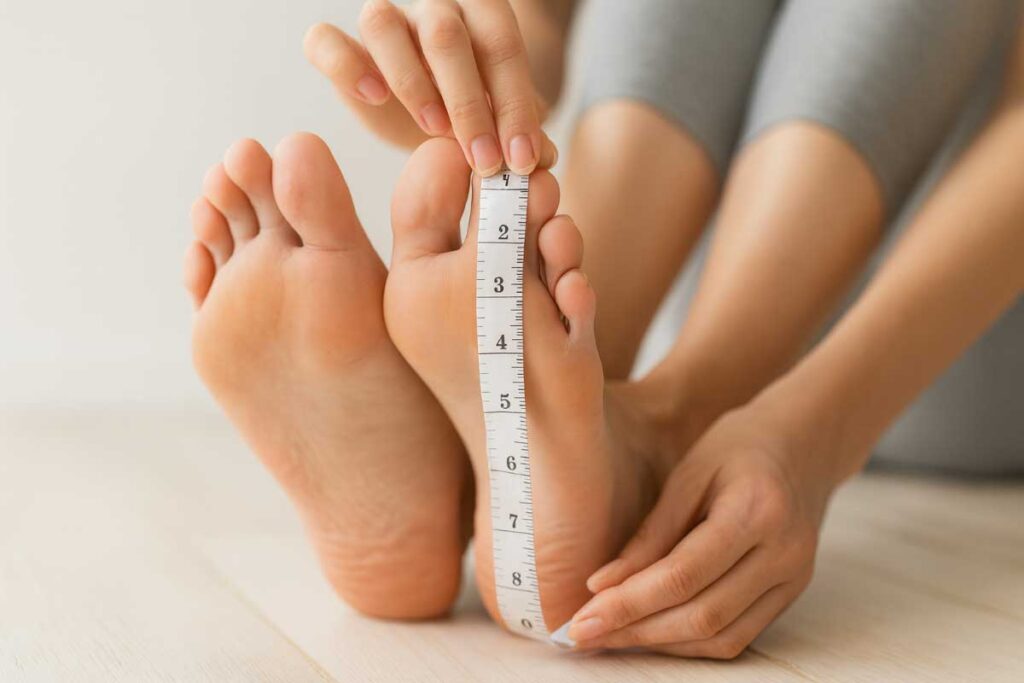
- Measure foot length. Stand on paper with your heel against a wall, mark your longest toe, and measure the distance. Repeat for both feet and use the longer measurement. Measure in the afternoon, ideally wearing the socks you plan to use.
- Pick units. Inches or centimeters.
- Choose a brand or stay generic.
- Select width. Narrow, medium, wide, extra wide.
- Tap Convert.
For clothing and accessories, try the International Size Converter for quick cross brand checks.
Your conversion results
- Sizes in five regions. US, EU, UK, Japan, Australia.
- Width guidance. Narrow vs wide callouts.
- Brand adjustments. Simple notes like runs long, try half size down.
- Fit notes to review. Treat any model or width suggestions as starting points, not confirmed availability or fit.
- Copy or print. Save your card for the next checkout.
Brand fit notes: Nike, Adidas, Converse, and more
Brand names alone cannot predict fit. Compare your foot length with the chart for the exact style, then check width options and customer fit notes. Nike, Adidas, and Converse publish different conversion charts, so a matching EU number does not always mean the same fit. For outdoor runs, our SPF Calculator can help with sunscreen planning.
- Nike. Some styles feel snug through the forefoot. Check the model’s width options before sizing up just to gain room.
- Adidas. Use the Adidas footwear chart for your heel-to-toe length. Check the individual model’s fit advice if you are between sizes.
- New Balance. Offers multiple widths in selected styles, including 2E and 4E in some men’s shoes. Availability depends on the model.
- Hoka. Fit varies by model. Check the shoe’s toe-box shape and whether a wide version is offered.
- Vans. Compare the specific skate or lifestyle style’s fit notes, especially if you need extra forefoot room.
- Converse. Converse recommends going down a half size in Chuck Taylor All Stars and Chuck 70s because they run large. Check the style-specific chart.
- Dr. Martens. Leather may soften with wear, but toes should not be cramped at purchase. Check the style’s size and width guidance.
- Clarks. Some styles come in multiple widths. Check the product listing rather than assuming the same fit across the brand.
- Birkenstock. Regular is intended for medium-to-wide feet, while Narrow suits narrow-to-medium feet. Check that your foot sits inside the footbed edge.
- Louboutin. Pointed-toe and other dress styles can feel different from sneakers. Consult the specific model’s measurements and fit advice.
- Generic path. Start with measured length, then choose the correct width. A wider shoe is usually a better first fix than a longer shoe when the toes have enough room.
For a final check, compare the result with the Nike footwear chart, Adidas shoe size chart, or Birkenstock fit guide when shopping those brands. Nike specifically notes that the CM number on a shoe label is not the same as measured foot length in centimeters.
How to double-check your foot measurement
- Keep the paper flat on a hard floor and place one edge against a wall.
- Stand with your heel lightly against the wall and mark the tip of your longest toe. Measure from the wall to the mark.
- Repeat with the other foot and use the longer measurement.
- Keep your weight on the foot while measuring, and wear your usual socks for that type of shoe.
- If you wear orthotics, try the shoe with the insert in place. Recheck toe room, heel hold, and width rather than automatically adding a half size.
For clothing measurements, see our Dress Size Calculator.
Shoe width letters explained
- B width, common women’s medium.
- D width, common men’s medium, women’s wide.
- 2E width, men’s wide.
- 4E width, men’s extra wide.
Remember: These are common US width labels, not universal measurements. Women’s medium is often B and men’s medium is often D. The same letter can mean a different fit depending on the size and brand. If the sides of your forefoot feel pinched but your toes have enough length, look for a wider option instead of automatically sizing up.
Shopping tips for a sure fit
- Try both feet, they are siblings, not twins.
- Socks matter, match thickness to your use.
- Walk indoors on a clean surface and check for heel slipping, toe pressure, or rubbing. Follow the retailer’s return conditions.
- Some materials soften with wear, but do not count on breaking in shoes that painfully squeeze your toes.
- Read return windows before you click buy.
See more time savers on the Tools Hub before you order.
Example: checking a Converse conversion
Suppose your longer foot measures 9.75 inches (about 24.8 cm). Enter that measurement, choose Converse, and select the width that best describes your foot.
Use the resulting regional sizes as a shortlist, not as interchangeable labels. Compare them with the official Converse size guide, selecting the correct men’s or women’s chart and the specific Chuck or standard sneaker style.
Fit note: Converse says Chuck Taylor All Stars and Chuck 70s run large and recommends a half size down. Apply that advice to the size shown on the appropriate Converse chart, not to an assumed universal conversion.
Width check: If the shoe presses against the sides of your forefoot, compare available widths or another style. Going longer may create heel slip without solving the pressure.
FAQs, international sizing and widths
Why do sizes differ by region?
US, UK, EU, Japanese, and Australian labels use different conventions. Brands can also map the same foot length to different regional sizes.
How accurate are brand adjustments?
They are general guidance, not measurements of every shoe. Use the official chart and fit notes for the exact model.
If I am between two sizes, which do I pick?
Check the brand’s instructions and try both sizes if possible. Your toes need room without excessive heel movement. Width can matter as much as length.
How do kids and men’s conversions differ from women’s?
Kids’, men’s, and women’s US sizes use different scales. Select the correct category on the brand’s chart; do not assume a fixed conversion works for every brand.
When should I size up for insoles?
Try the shoes with your actual insoles or orthotics. If they reduce usable space, compare a larger size or a deeper, wider style instead of automatically going up half a size.
Do widths match across brands?
Not exactly. B, D, 2E, and 4E are common US labels, but actual fit varies by brand, size, and shoe shape.
Save or print your results for reference, then confirm the size against the brand’s current chart before checkout. If you have tried the style, sharing an accurate fit note can help other shoppers.
More sizing tools
- Find your exact band and cups with our Bra Size Calculator.
- Unsure which bra shape to pick, scan Balconette vs Plunge for a quick neckline match.
- Build a lean closet with our Capsule Wardrobe Cost Per Wear calculator, buy fewer pieces that earn their keep.
- Ring Size Finder, measure at home
- Swimsuit Size Chart and Support Picker
- Big event coming. Lock your smooth fit. Get sized
- Buying a gift, check their number in seconds, Hat Size Calculator