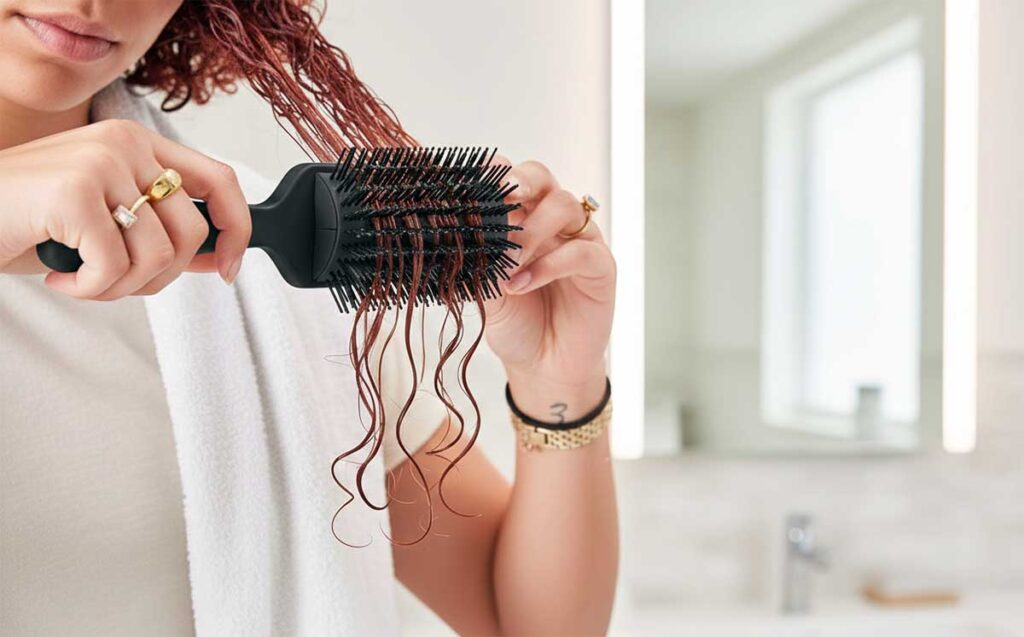
A curl brush shapes how your hair reacts the moment styling starts, especially when natural hair and extensions sit together in the same style. The way strands move through a tool can decide whether hair cooperates or fights back before products even have a chance to work. That first interaction tends to set the mood for the rest of the routine.
Why does the right styling tool affect hair health over time?
Daily brushing puts pressure on the same areas again and again, usually around the edges and the crown. When a tool grabs instead of gliding, those spots take the hit first. Many women notice more loose hair in the sink or a sore scalp after styling, even when everything else in the routine stays the same. With extensions installed, the natural hair underneath carries extra weight, so rough brushing shows up faster and lasts longer.
How does brush design change the way curls and extensions behave?
Design decides whether curls stay together or break apart while styling. Some tools separate sections too aggressively, leaving natural hair defined in one way and extensions sitting differently. That difference becomes obvious once hair dries. When contact feels even from roots through the ends, curls tend to line up instead of competing with each other, which makes blended styles look more natural without extra fixing.
What makes styling extensions feel different from styling natural hair?
Extensions add bulk, and that bulk changes how hair responds when brushed. Detangling often becomes more time-consuming near the base of the style, where your natural hair carries the added extensions. Many women feel resistance there first. When a tool moves smoothly through both textures, styling stays controlled instead of turning into a stop-and-start process that tempts rushing through tight spots.
Can one tool support definition without overworking the hair?
Overworking usually happens when results do not show up right away. Going over the same section repeatedly can stretch curls and disturb their pattern. When definition forms early in the session, hands naturally back off. Hair is left alone to settle, which often keeps styles fuller and more consistent throughout the day.
Why does convenience matter for consistent hair care?
Hair routines live inside real schedules, not ideal ones. Styling happens before work, late at night, or between responsibilities. When brushing feels manageable, it gets done with more patience instead of shortcuts. That steady care often shows up in how hair holds up between installs and how styles look later in the week.
For women who want styling to feel smoother while caring for natural hair and extensions, explore tools designed with textured hair in mind at Heat Free Hair.
- About the Author
- Latest Posts

I’m Iskra Banović, editor of Blufashion and the voice behind its fashion, beauty, and lifestyle stories. Fashion, beauty, and lifestyle are my playground, but I’m just as likely to share the messy side of it all, like the time I tested a “must-have” skincare gadget and ended up with glitter stuck in my hair. I love turning trends and everyday finds into something useful (and fun) for real people.