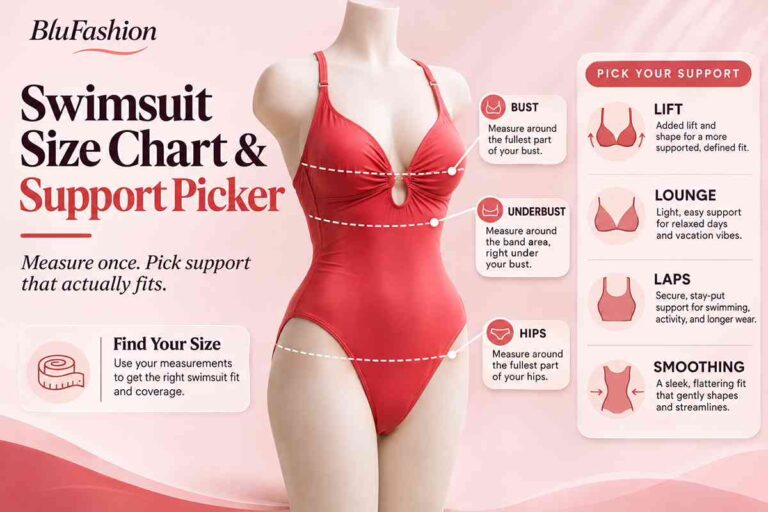
A swimsuit that looks perfect on the hanger can still slip at the straps or pinch at the hips. Start with three numbers, your underbust, fullest bust, and hips, and the swimsuit size calculator below gives you a starting size for tops, bottoms, and one-pieces. Then check it against the chart of the brand you’re actually buying.
Fit a bikini top to your band and bust and the bottom to your hips. A one-piece has to work for bust, waist, hips, and torso length at once. Then match the support to your day, from a soft triangle for lounging to a secure cross-back for laps. The calculator gives you guidance, not a universal size, because no two brands cut the same.
Swimsuit Size Calculator
Enter body measurements taken over a thin, unpadded bra or no bra. You get a starting size for tops, bottoms, and one-pieces from a published US chart, plus the support features to look for.
How the Swimsuit Size Calculator Works
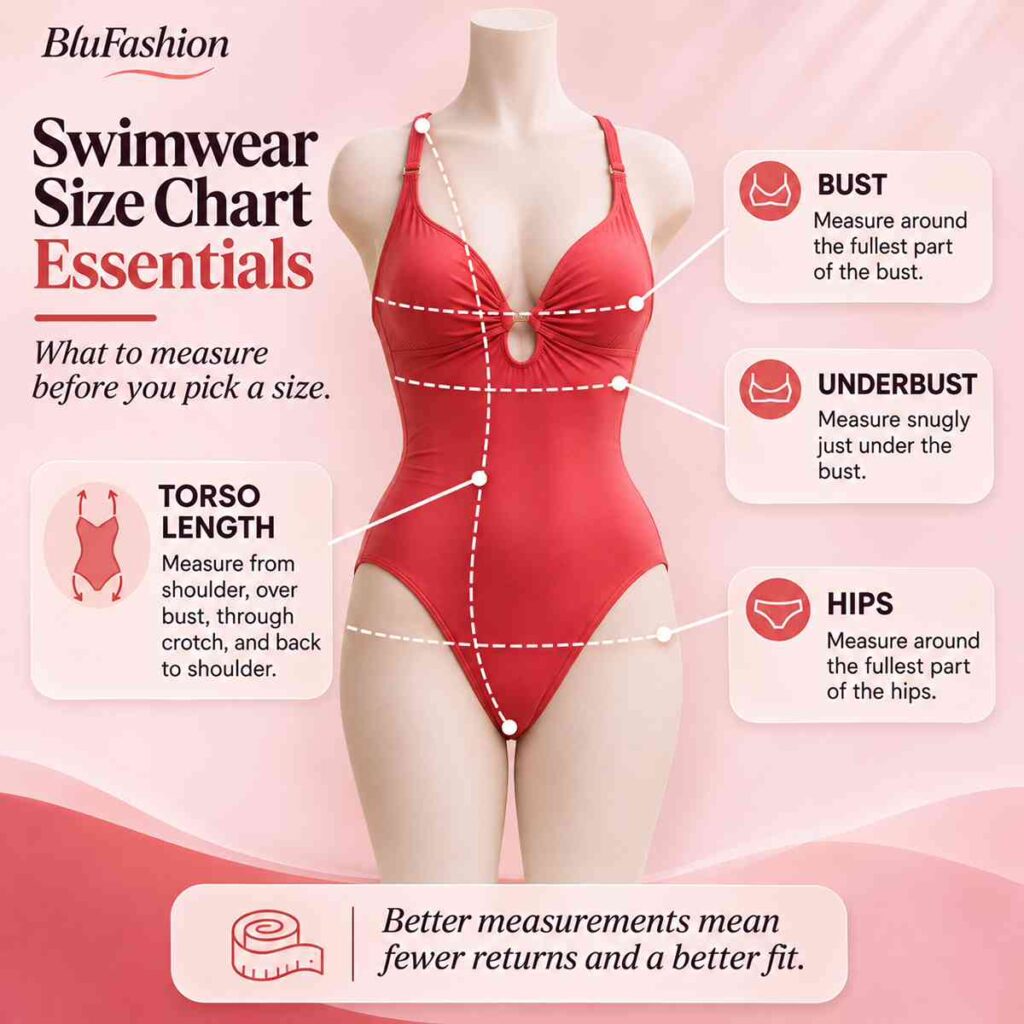
You enter your underbust, bust, and hips, plus your waist and torso loop if you’re shopping for a one-piece. Your current bra size is optional but worth adding, since it’s the best starting point for a bra-sized swim top. Then you tell it how you’ll wear the suit, how much tummy shaping you want, and how much coverage you like in a bottom.
The calculator reads your top size from your bust and your bottom size from your hips. For a one-piece, it starts from the size that goes around both, checks your waist and torso against it, and tells you plainly when your measurements disagree instead of pretending one size settles it. The sizes come from Nike’s published women’s swimsuit chart, a clear US chart that runs from XS to 3X and lists all four measurements. If a measurement falls outside that chart, the calculator says so rather than guessing the nearest size. Other brands cut the same letter to different numbers, so treat the result as a starting point for reading the chart of the suit you’re buying.
Instead of a number score, you get a support level (light, medium, or firm) and the features that deliver it, along with two or three styles to try. If your bust measures a lot larger than your underbust, it will also tell you to shop bra-sized tops.
What I learned: Cup volume without band tension felt wobbly in the water, so now I always look at both.
Swimsuit Size Chart: One Brand’s Numbers
Here is the chart the calculator reads, Nike’s women’s swimsuit sizing in inches (body measurements, not garment measurements). Nike publishes regular and plus sizes as two separate charts, so they’re split here too. Use them to see roughly where you land, but treat another brand’s S, M, or L as its own thing.
Regular Sizes (XS to 2XL)
| Size | US | Bust | Waist | Hips | Torso loop |
|---|---|---|---|---|---|
| XS | 0 to 2 | 31.5 to 33.5 | 24 to 26 | 34.5 to 36.5 | 55 to 57.75 |
| S | 4 to 6 | 33.5 to 35.5 | 26 to 28 | 36.5 to 38.5 | 57.75 to 60.5 |
| M | 8 to 10 | 35.5 to 37.5 | 28 to 30 | 38.5 to 40.5 | 60.5 to 63.25 |
| L | 12 to 14 | 37.5 to 40.5 | 30 to 33 | 40.5 to 43.5 | 63.25 to 66 |
| XL | 16 to 18 | 40.5 to 43.5 | 33 to 36 | 43.5 to 46.5 | 66 to 68.5 |
| 2XL | 20 to 22 | 43.5 to 46.5 | 36 to 39 | 46.5 to 49.5 | 68.5 to 70.25 |
Plus Sizes (1X to 3X)
| Size | US | Bust | Waist | Hips | Torso loop |
|---|---|---|---|---|---|
| 1X | 16W to 18W | 44 to 48 | 38 to 42 | 47 to 51 | 68 to 69.75 |
| 2X | 20W to 22W | 48 to 52 | 42 to 46 | 51 to 55 | 69.75 to 71.5 |
| 3X | 24W to 26W | 52 to 56 | 46 to 50 | 55 to 59 | 71.5 to 73.25 |
The two systems overlap: a 45-inch bust fits both 2XL and 1X, because Nike runs plus sizes as a separate system. If you land in both, compare the regular and plus versions of a suit. If you’re smaller than XS or larger than 3X on this chart, use a brand whose own chart covers your measurements.
How to Measure for a Swimsuit
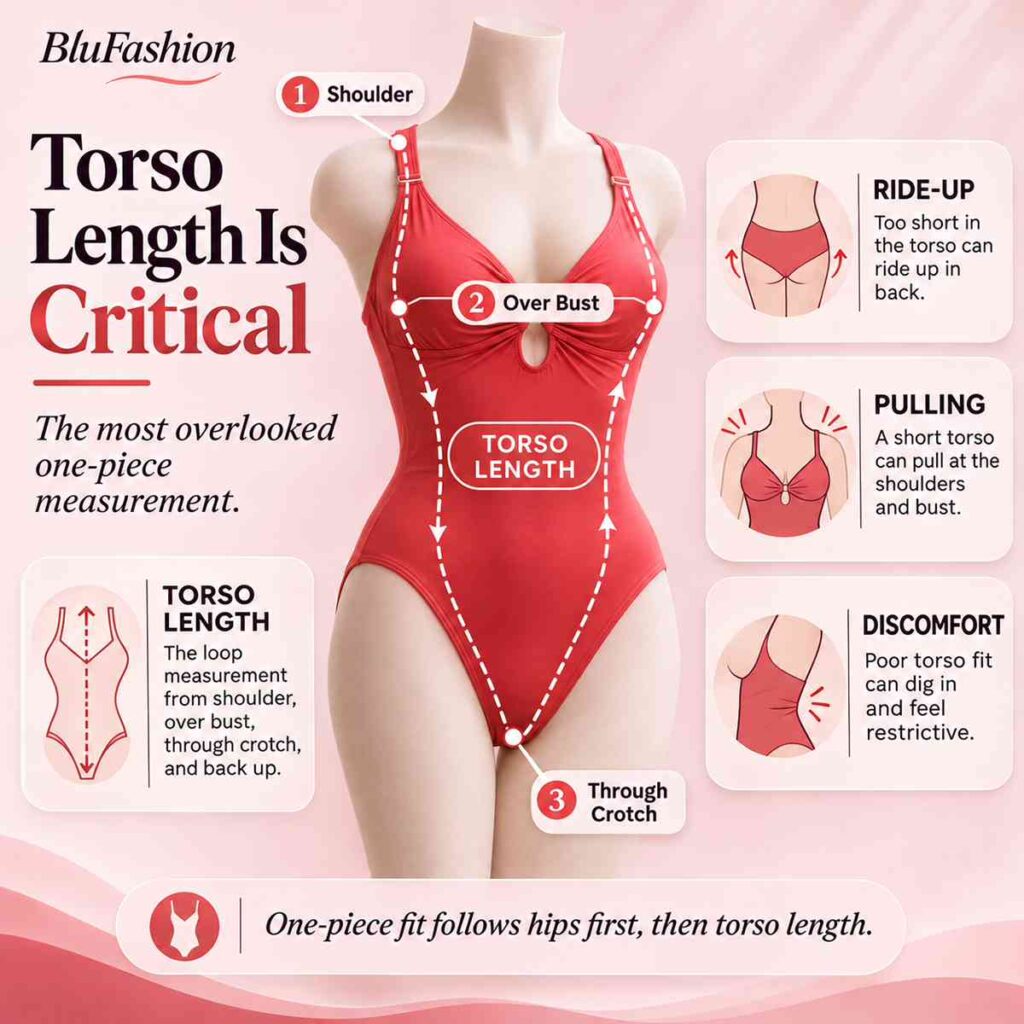
Use a soft tape, stand relaxed, and keep the tape level all the way around. Measure over a thin, unpadded bra or no bra.
Underbust and Bust
- Underbust: wrap the tape directly under your bust, snug and level.
- Bust: measure over the fullest point without squashing anything.
- Cup letters: some US fitting methods count roughly 1 inch per cup step, but cup letters depend on the brand and its band-sizing method. Don’t assign yourself a cup from bust minus underbust alone. Start from a bra that fits well, or use the bra size and sister size calculator.
Tiny miss: I once measured in a sports bra and lost an inch at the bust. Now I use a thin, unpadded bra or nothing.
Waist and Hips
For your waist, bend to one side to find the natural crease, stand up straight, and measure around that point. For hips, stand with your feet together and measure around the fullest part of your hips and seat. Hips decide your bikini bottom size; for a one-piece they’re one number of four.
Torso Length for One-Pieces
Start at the top of one shoulder, halfway between your neck and shoulder joint. Run the tape down over the fullest part of your bust, between your legs, and up your back to the same spot. Keep it comfortably close to your body. This loop is the number most people skip, and it’s usually the reason a one-piece pulls at the shoulders or sags through the middle. Height doesn’t predict it well: a tall woman can have a short torso, and the other way around.
The Dry-Fit Rule: Snug on Land, Secure in the Water
This is the rule I wish someone had told me years ago: swim fabric relaxes in water. A suit should feel comfortably snug when you try it on dry. Not pinching, not leaving deep marks, just secure. If it feels relaxed or a little loose in your bedroom mirror, it’s likely to sag, gap, or slip once you get wet.
Fabric matters too. Ribbed and textured fabrics often stretch out faster and snap back less than smooth nylon-elastane blends, so give them extra scrutiny for snugness in the fitting room. If you swim laps in a chlorinated pool several times a week, look for suits sold as chlorine resistant, since chlorine wears down standard swim fabric over time. Rinse every suit in cool fresh water after wearing it and let it air dry; skip the dryer.
Sizing Bikini Tops: Letter Sizes vs. Bra Sizes
Swim tops come in two systems. Letter sizes (S, M, L) are cut for a range of busts and leave the band and cup to stretch and ties. Bra-sized tops are sold by band and cup, like 32F or 36DD, and are built like a bra with a real band and shaped cups.
If you wear a D cup or larger, bra-sized swimwear almost always fits and supports better than generic S/M/L tops. A letter-size top has to stretch over more volume with the same amount of fabric, so it tends to flatten, gape at the sides, or ride up at the back. Start from the bra size you wear every day.
Sister Sizes for Bra-Sized Tops
If the cups of a bra-sized top fit but the band is too loose or too tight, a sister size keeps the same cup volume on a different band. This only applies to bra-sized tops, not S/M/L.
- Band too loose: go down a band and up a cup, 34D to 32DD.
- Band too tight: go up a band and down a cup, 34D to 36C.
Worked example: Say you measure 33 inches under the bust, 37 inches around the bust, and 41 inches at the hips. On Nike’s chart that’s an M top and an L bottom, so separates in two sizes will fit better than forcing one size on both. Another brand’s M and L may be cut to different numbers, so check its chart too. If you already wear a well-fitting 34D, a 34D bra-sized top is the better bet, and if its band floats once you’re wet, try 32DD.
If you shop across regions, run your size through the international clothing size converter before you compare brand charts.
Sizing Bikini Bottoms: Hips, Leg Cut, and Coverage
Your hip measurement gets you to the right size, but it’s only half the story. Two bottoms in the same size can sit completely differently because of the cut.
- Coverage: cheeky cuts have the least fabric in back, moderate covers most of the seat, and full coverage covers all of it. A cheeky bottom that’s a touch small shows it immediately, so if you’re between sizes, the larger one usually sits better.
- Leg cut: a high leg sits above the thigh crease, so the elastic doesn’t dig in when you sit or walk. A lower leg covers more but can cut in if the size is snug.
- Rise: high-waist bottoms need to fit your waist too, so check the brand’s waist number, not just hips.
- Between sizes: tie-side bottoms are the easiest fix. You set the fit yourself, and you can retie once they’re wet.
Separates let you buy the top and bottom in different sizes, and most brands sell them that way. Keep the bottom true to your hips and size the top on its own.
Sizing One-Piece Swimsuits
A one-piece needs bust, waist, hips, and torso length to work together, and when they all point to the same size on the brand’s chart, you’re done. When they don’t, no single rule settles it. The size that goes around both your bust and hips is a sensible place to start, but the smaller area may feel loose, so follow the brand’s own advice: Nike, for example, says to go by your hip measurement when waist and hips disagree. If your torso runs long, look for long-torso styles or switch to a two-piece; sizing up just for length usually loosens the bust. If your bust and hips land two sizes apart, separates will be easier to fit than any one-piece.
Lesson learned: I once sized up for tummy control and lost hold at the bust. Going back to my true hip size with a firm mesh lining looked cleaner and stayed put.
Pick a Style for Your Day
Lounging: Triangle and Bralette Tops
Soft cups and easy ties are made for sun and short dips. Fit the underbust first: if the cups float, tighten the tie before you move up a size. Look for adjustable ties, removable cups, and double-layer fabric.
Note: I once sized up for coverage and got side gaping. I stayed in my size and picked a triangle with more side fabric instead.
Lift: Balconette and Longline Tops
Underwire and a wider band spread the weight, so the straps stop digging in once you’re wet. Start at your true bra size, and if the back band floats, sister down: 34D to 32DD. Look for underwire, wider straps, a back clasp, and a longline band if you want more hold.
My miss: I chose narrow straps and they cut in by noon. Wider straps fixed it without changing the size.
Not sure whether a balconette or a plunge suits your shape? The balconette vs. plunge comparison shows the difference in coverage and lift.
Laps: Racerback and Cross-Back Tops
Crossed or locked straps pull the weight onto your back instead of your neck. Stay true to your band, and if you’re a D cup or larger, choose a higher center front so everything stays put on turns. Look for cross-back straps and firm elastic at the ribs.
Pool day: I kept yanking a halter between laps. In a cross-back, I forgot I was wearing it.
Smoothing: One-Pieces and High-Waist Bottoms
Power mesh panels smooth your middle without strangling it. Stay in your measured size and choose light or firm shaping by how it feels when you sit down, not just when you stand. Look for a lined front and a medium or high leg opening so the suit doesn’t cut in. If you want shapewear-level control under clothes as well, the shapewear size finder uses a similar measure-first approach.
What Actually Adds Support
The calculator’s support level (light, medium, or firm) points you to features, not a score. These are the ones that make a real difference:
- A firm band: a top that’s loose around the ribs won’t hold, whatever else it has. A hook clasp or a longline band holds better than a pull-on or a thin tie.
- Underwire or molded cups: they keep shape and separation when the fabric is wet and heavy.
- Wider or cross-back straps: wider straps dig in less, and cross-back straps spread the load across your back. A halter puts it all on your neck, which is fine for an hour by the pool and tiring on a long day.
- A higher center front: keeps fuller busts contained when you twist, dive, or turn.
- Power mesh or double lining: adds hold through the body and keeps light colors from going sheer.
None of these rescue the wrong size. A suit with every feature on this list still slips if the band is loose. Worried a balconette will feel stiff? An unlined underwire top gives the lift with a lighter feel.
Try-On Checks Before You Keep It
Raise your arms a few times, bend forward, and do a gentle squat. Watch for straps that slip, a back band that rides up, a waistband that rolls, or pressure that feels uncomfortable. Most stores won’t take back swimwear that’s been worn in the water, so make these dry checks count. If a retailer offers free returns on unworn swimwear, ordering two top sizes can save a second round, but check the hygiene-liner and return rules first.
Fit Notes for Special Cases
- Long torso: prioritize torso length in a one-piece, look for long-torso versions, or pick a two-piece.
- Nursing: cross-front styles or clip-down straps help without changing your size.
- Post-surgery: look for pockets for breast forms, higher centers, and soft linings.
- Plus sizes: secure the band first, then adjust the cup with sister sizes. Don’t size up bottoms if your hips already fit.
FAQs
Do I size up for tummy control?
Not automatically. Stay in the size your measurements point to and get the control from the lining: light shaping or a firm power mesh panel. Sizing up usually loosens the bust and band.
What size swimsuit should I buy if I’m between sizes?
It depends on which measurement puts you between sizes. Follow the brand’s own advice first; Nike, for example, says to go smaller for a snugger fit or larger for a looser one. With separates, size the top and bottom on their own and fine-tune with ties or adjustable straps. Whichever size you try, it should feel snug but comfortable when dry, with no pinching at the bust, waist, or legs.
Do swimsuits stretch out over time?
Yes. Chlorine, salt water, sweat, and body oils gradually wear down the stretch. Rinse your suit in cool fresh water after every wear, wash it by hand, lay it flat to air dry, and skip the dryer. If you swim in a pool often, chlorine-resistant fabrics hold their shape longer.
Triangle tops never work for me. Is there a fix?
Tighten the underbust tie first, then pick a triangle with more side coverage. If you still fight it, try a longline, balconette, or cross-back top instead.
How do I convert swimsuit sizes across regions?
Use the international clothing size converter to map US, UK, and EU sizes, then check the brand’s own swimsuit chart.
More Sizing Tools
- Bra Size and Sister Size Finder: confirm your band and cup before you shop bra-sized swim tops.
- Balconette vs. Plunge: compare shapes and coverage at a glance.
- International Clothing Size Converter: map US, UK, and EU sizes before you read a brand chart.
- Shapewear Size Finder: find your shapewear size by measurement.