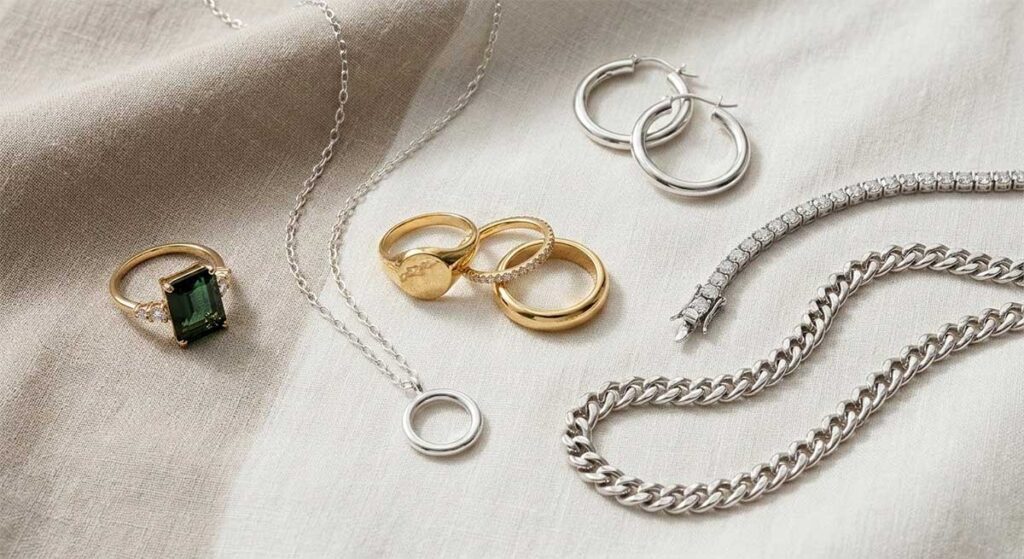
I’ve noticed something funny happens when people walk into a high-end jewelry store. They lose their vocabulary. You stare down at a velvet tray holding a $4,000 ring, and the salesperson starts dropping words like “pavé,” “vermeil,” “inclusions,” and “gallery rail.” Instead of asking what those mean, we see this a lot: people just nod. They pretend to understand. The jewelry industry loves this dynamic because a confused buyer is an easy mark.
A good jewelry glossary should do more than define words. It should make the whole category feel less slippery. This guide is your complete translation manual, stripping away the velvet rope pretension so you can decode the jargon, reference the details, and shop with absolute confidence.
Because that is the real trick with jewelry. It is emotional, visual, sentimental, and just technical enough to be dangerous. One tiny word can change how a piece wears, what it is worth, and whether it still looks good six months later or ends up living in a drawer with your regrets.
Popular Terms at a Glance
If you just need a quick translation while standing at the jewelry counter, start here:
- 14K vs. 18K: 14K gold is 58.3 percent pure gold, making it harder and more durable for daily wear. 18K is 75 percent pure gold, giving it a richer color but making it slightly softer.
- 925: The standard stamp for sterling silver, meaning the piece is 92.5 percent pure silver.
- Carat vs. Karat: Carat measures the physical weight of a gemstone. Karat measures the purity of gold.
- Pavé: A setting style where tiny stones are set so closely together that the metal barely shows, creating a paved look.
- Vermeil: A thick layer of gold bonded specifically over a sterling silver base.
- Bezel Setting: A metal rim that wraps around the stone for extra protection.
- Hallmark: A tiny stamp that tells you what a piece is really made of.
- Cushion Cut: A soft square shape with rounded corners, romantic and quietly dramatic.
Browse by Category
Use these links to jump directly to the section you need:
- Metals and Materials
- How to Read Jewelry Stamps
- Jewelry Types and Styles
- Jewelry Anatomy and Construction
- Settings and Techniques
- Craftsmanship and Design
- Gemstone Cuts and Shapes
- Beyond the 4 Cs: Stone Grading
- Chains, Hardware, and Finishes
The Style Truth About Jewelry Terminology
What surprised me was how often jewelry terms are treated like decoration when they are actually the instruction manual. Language in this industry is highly functional. The right terms help you spot value, compare quality, and avoid bad purchases. If you understand the vocabulary, you shop with your eyes open. If you do not, you are trusting adjectives to do the heavy lifting. And frankly, adjectives are charming little liars.
A ring is never just a ring. It is a setting, a metal choice, a wear pattern, a maintenance plan, a vulnerability profile, and sometimes a tiny financial trap in excellent lighting. That is why learning the language matters. Not so you can sound clever at the counter, but so you can tell the difference between something beautiful and something beautifully marketed.
The Complete Jewelry Glossary
Metals and Materials
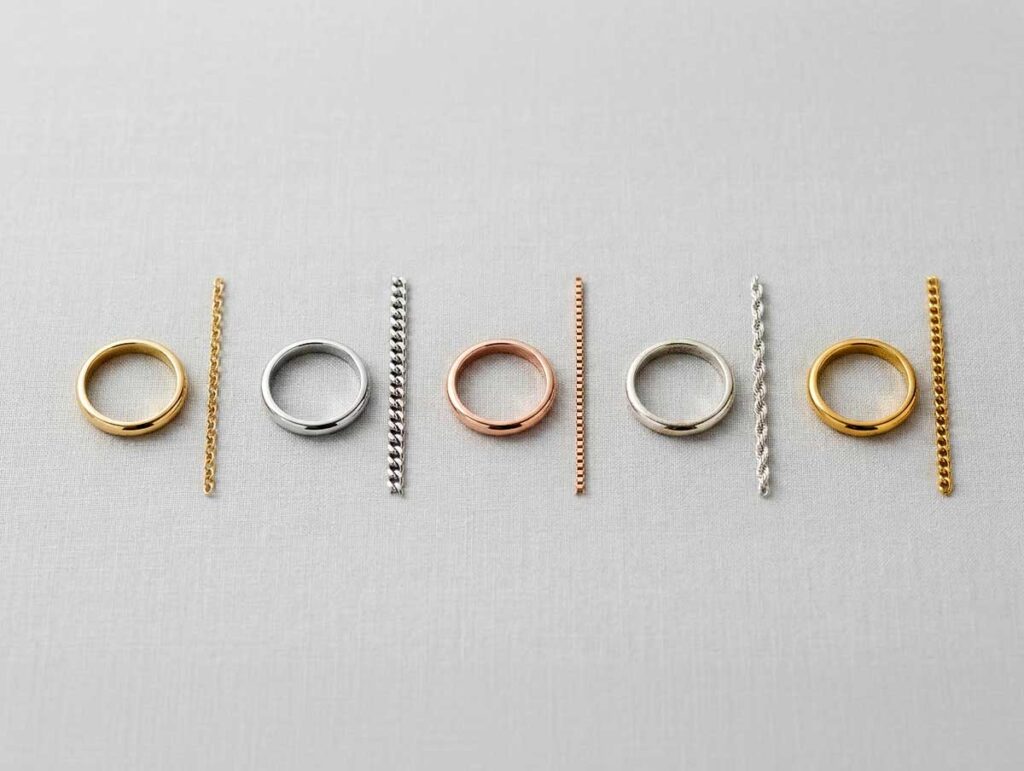
The stone usually gets all the attention, but the metal does the daily work.
- Alloy: Pure gold and silver are too soft for daily wear. They get blended with other metals to increase strength and durability.
- Gold-Filled: A solid layer of gold mechanically bonded to a base metal. It contains much more real gold than simple plating and resists tarnishing beautifully.
- Gold-Plated: A very thin layer of gold applied over a base metal. It can look lovely at first, but it wears down faster than vermeil or gold-filled jewelry.
- Karat: A measure of gold purity. 24K is pure gold, 18K is 75 percent gold, and 14K is 58.3 percent gold.
- Carat: A measure of gemstone weight. One carat equals 200 milligrams. This has nothing to do with gold purity, even though people mix the two up constantly.
- Platinum: A dense, naturally white precious metal prized for durability and heft.
- Rhodium Plating: A finish applied to white gold to give it a bright, icy appearance.
- Sterling Silver: A beautiful silver alloy containing 92.5 percent pure silver. It will tarnish over time. That is normal, not a character flaw.
- Vermeil: A thick layer of gold over a sterling silver base. It is a smarter middle ground if solid gold is outside your budget.
- Solid Gold: Jewelry made from a gold alloy throughout, not just coated on the surface.
- Base Metal: A non-precious metal used underneath plating or bonding, often brass, copper, or steel.
How to Read Jewelry Stamps
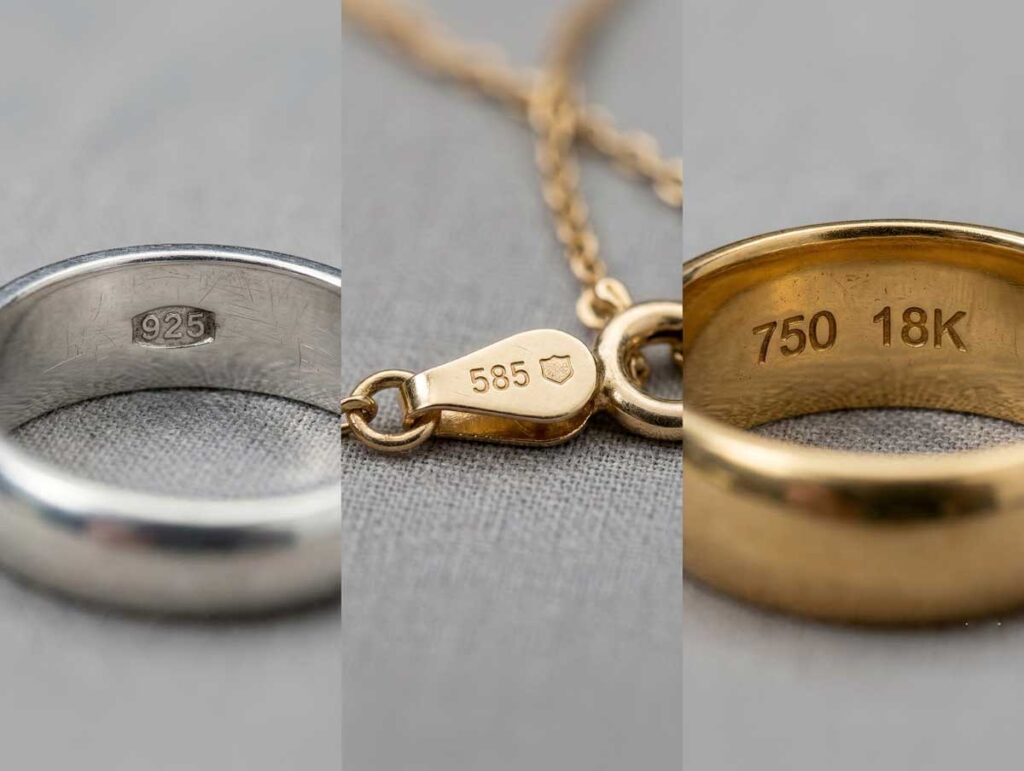
Those tiny stamps inside a ring band or on a clasp are the receipt you wear.
- 925: Indicates sterling silver.
- 585: Indicates 14K gold.
- 750: Indicates 18K gold.
- 950: Usually indicates platinum, meaning it is 95 percent pure.
- GP, GEP, or HGE: These stand for Gold Plated, Gold Electroplated, and Heavy Gold Electroplate. They mean the piece has a very thin layer of gold over a base metal.
- Hallmark: The official stamp that verifies metal purity and sometimes identifies the manufacturer.
- Maker’s Mark: A stamp used to identify the brand, workshop, or designer behind the piece.
- Assay Mark: A stamp that shows the metal has been tested for purity according to recognized standards.
How to read jewelry stamps without spiraling
Start with the number first. That usually tells you the metal purity. Then look for letter markings like GP or HGE, which often signal plated jewelry rather than solid precious metal. After that, check for any maker’s mark, especially if you are buying vintage or estate jewelry.
Tiny stamp, big plot twist.
Jewelry Types and Styles
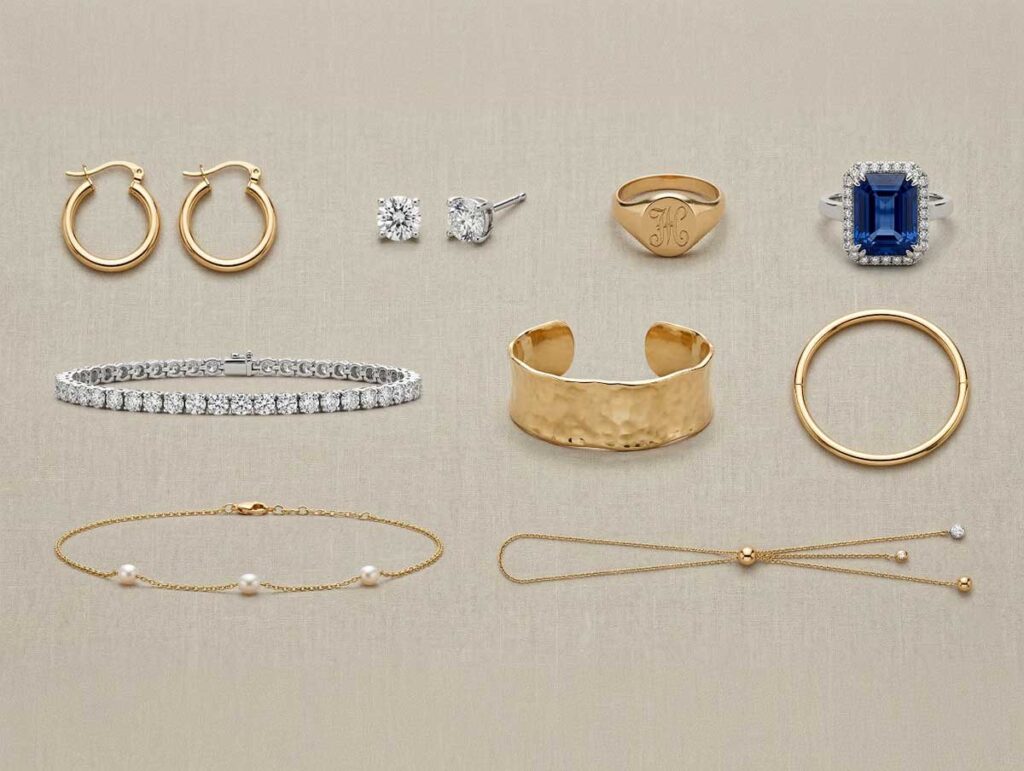
Knowing the exact name of what you want saves you hours of scrolling.
- Bangle: A rigid bracelet that slips over the hand without a clasp.
- Choker: A necklace designed to sit tightly against the neck, usually 14 to 16 inches long.
- Cocktail Ring: A large, dramatic statement ring designed to catch the eye from across a room.
- Cuff: A rigid bracelet with an open gap, allowing you to slide it directly onto the wrist.
- Charm: A small decorative piece that hangs from a bracelet or necklace, often symbolic or personal.
- Drop Earrings: Earrings that hang down below the earlobe and usually remain stationary.
- Eternity Band: A ring set with stones all the way around the band, often associated with anniversaries or symbolism.
- Hoop Earrings: Circular or semi-circular designs ranging from tiny everyday staples to massive statement pieces.
- Huggie: A tiny hoop that sits right against your earlobe.
- Lariat Necklace: A long necklace without a clasp. You style it by looping or tying it through itself.
- Pendant: A decorative piece that hangs from a chain.
- Signet Ring: A ring with a flat top surface, often engraved with initials, symbols, or a crest.
- Stackable Rings: Slim bands designed to be worn together for a layered look.
- Stud Earrings: Earrings that sit directly on the earlobe without hanging.
- Tennis Bracelet: A flexible, continuous line of identically cut stones.
Jewelry Anatomy and Construction
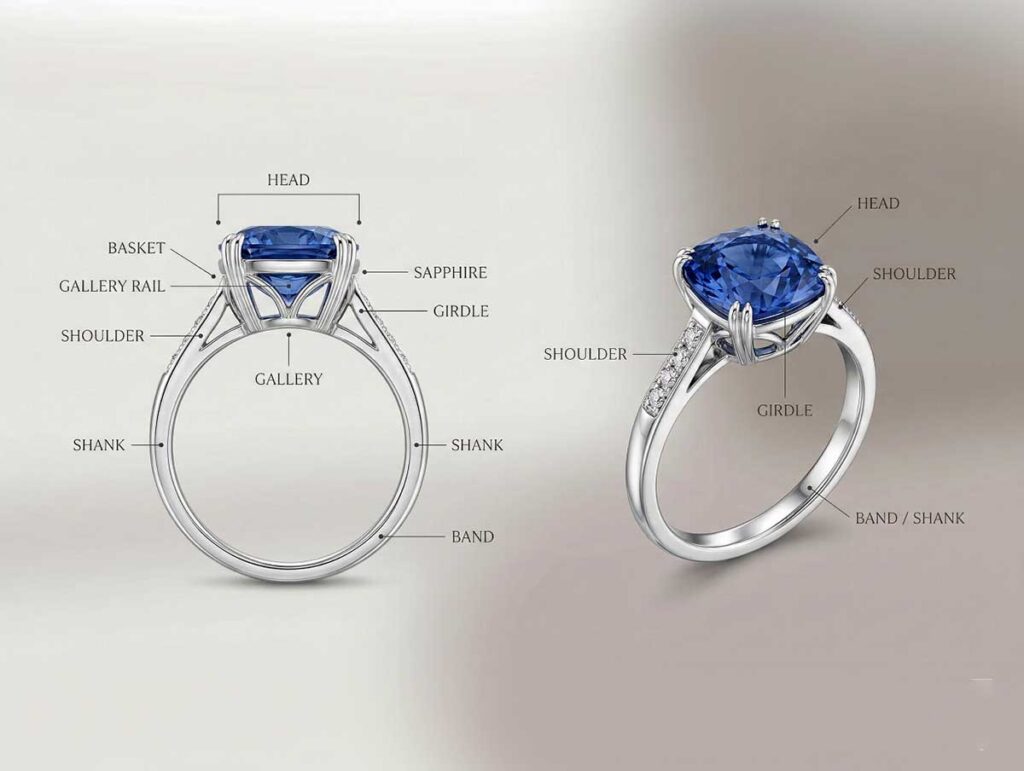
The technical parts that keep your jewelry intact.
- Band: The part of the ring that wraps around your finger.
- Basket: The metal structure that cradles the gemstone.
- Gallery: The architectural underside of a ring setting. A well-designed gallery lets light hit the stone from below.
- Gallery Rail: A horizontal bar of metal that wraps around the prongs halfway up the basket, adding structural integrity.
- Girdle: The widest edge of a gemstone where the top and bottom meet.
- Head: The entire top portion of the ring that holds the center stone.
- Mounting: A piece of jewelry that is fully manufactured but does not yet have its center stone set.
- Shank: Another term for the band of the ring.
- Shoulder: The top sides of the ring band where it meets the center setting.
Why anatomy matters in real life
I learned pretty quickly that these are not just workshop words. They tell you where a ring is likely to feel delicate, where repairs may happen, and what kind of wear and tear it can handle. If a piece looks gorgeous from above but the basket and gallery are flimsy, the romance may not survive your grocery run.
Settings and Techniques
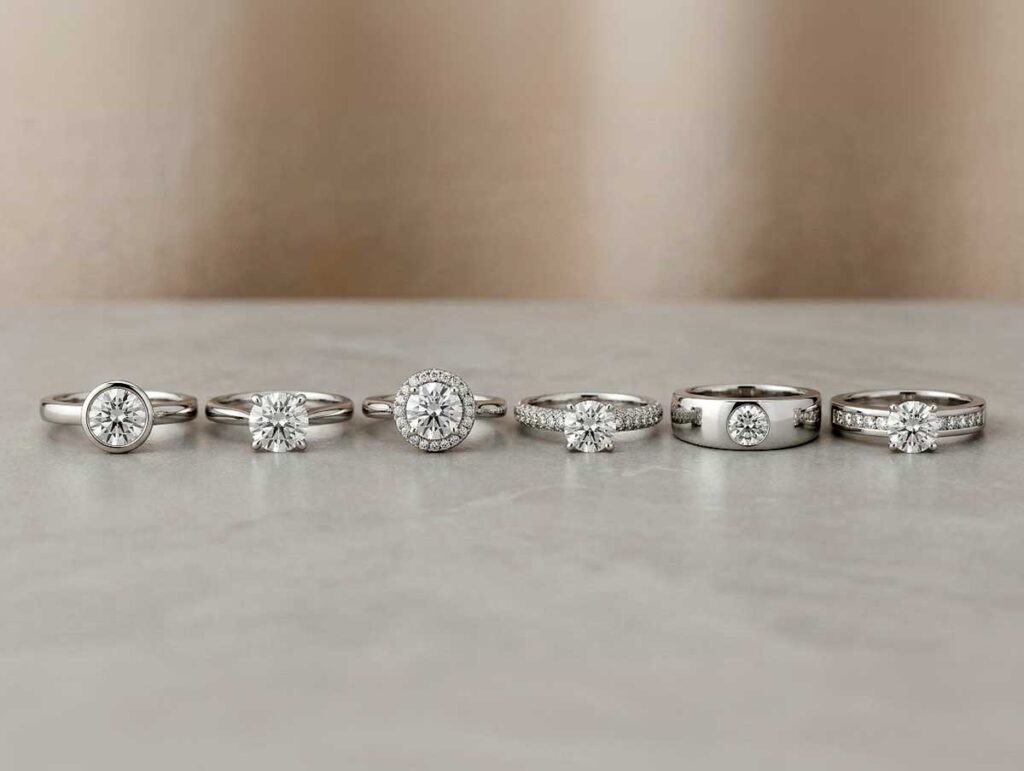
The setting dictates how a piece handles the realities of your daily life.
- Bezel Setting: A metal rim that fully surrounds the stone. This is one of the most secure settings available.
- Burnish Setting: A technique where metal is pushed around the stone so it sits securely and neatly within the surface.
- Channel Setting: Stones are suspended between two strips of metal. It is incredibly secure and will not catch on your clothes.
- Cluster Setting: Smaller stones are grouped tightly together to resemble a larger, single diamond.
- Flush Setting: Also known as a burnish setting. The stone is sunk directly into the metal band so it sits entirely flat.
- Halo: A circle of smaller stones surrounding the center stone. It makes the main diamond look much larger.
- Invisible Setting: Stones sit side by side with no visible metal holding them from the top.
- Pavé: Small stones set incredibly close together, creating a surface that looks paved with sparkle.
- Prong Setting: Small metal claws hold the gemstone in place, letting in maximum light.
- Side Stones: Smaller accent stones placed next to or around a center stone.
- Solitaire: A setting style that features one main stone and very little visual distraction.
- Three-Stone Setting: A design with one main center stone and two side stones.
- Tension Setting: A dramatic style where the gemstone appears suspended between the ends of the metal band.
The practical truth about settings
A prong setting is beautiful and classic, but it is also a little needy. A bezel or flush setting is calmer, tougher, and less likely to snag your sweater or pick a fight with your hair. The mistake usually happens when people buy a setting for the photo, not for their life.
Craftsmanship and Design
The details that give a piece its character.
- Beveled: An angled cut applied to the edge of a metal band to give it a modern, geometric look.
- Engraving: The process of carving designs or letters into the metal.
- Filigree: Delicate, lace-like ornamental work made from twisted wire.
- Handmade vs. Cast: Cast jewelry is created by pouring liquid metal into a mold. True handmade jewelry is fabricated from raw metal wire and sheet, usually resulting in a denser, stronger piece.
- High Polish: A bright, mirror-like metal finish.
- Matte Finish: A low-shine surface that softens reflection and hides scratches better than a glossy finish.
- Milgrain: Tiny metal beads used to decorate the edges of a setting, giving it a vintage, detailed look.
- Polish: The act of refining and smoothing the metal surface.
- Satin Finish: A soft, brushed texture that falls between matte and glossy.
- Patina: A natural darkening or coloring of metal caused by oxidation over time.
Why craftsmanship terms matter
This is where jewelry stops being just shiny and starts having a point of view. Filigree feels romantic. Milgrain feels old-soul. A matte finish feels understated and a little cooler than it needs to be. These are not just technical details, they are style clues.
Gemstone Cuts and Shapes
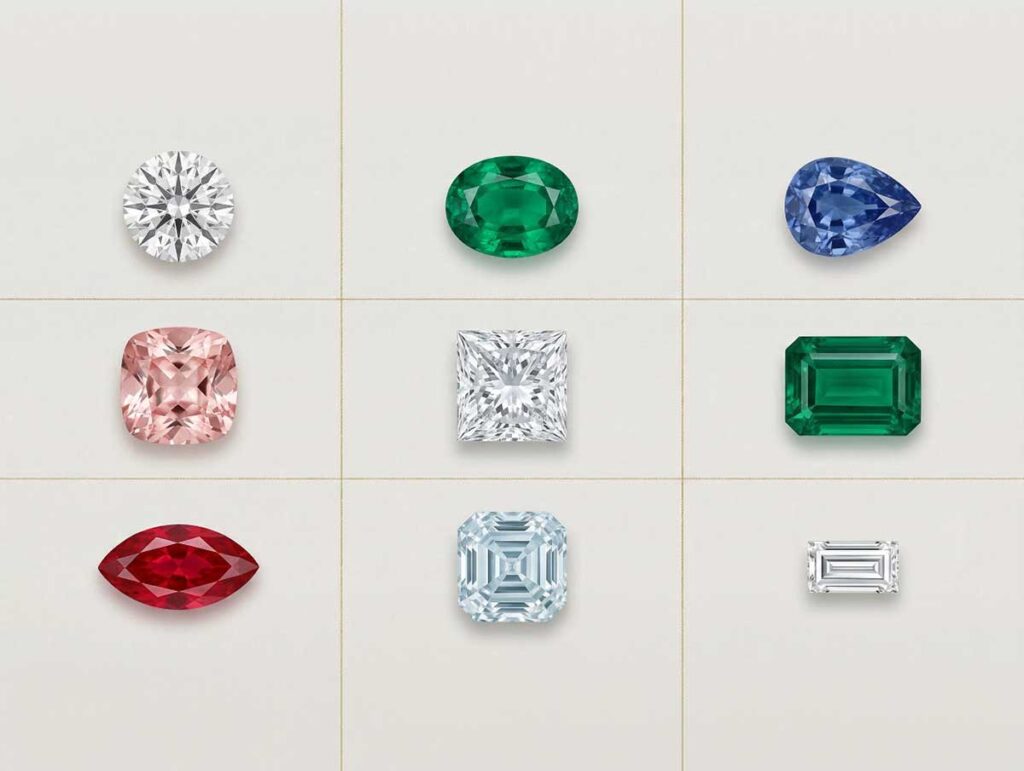
The shape defines the personality of the ring.
- Asscher Cut: A square shape with stepped facets. It demands high clarity because you can see right into the center of the stone.
- Baguette: A slim rectangular cut, often used as an accent stone.
- Brilliant Cut: A faceting style designed to maximize sparkle and light return.
- Cabochon: A gemstone polished into a smooth rounded dome rather than faceted.
- Cushion Cut: A square or rectangular shape with rounded corners, resembling a pillow.
- Emerald Cut: Rectangular with step cuts. Elegant and understated.
- Fancy Cuts: Any diamond shape that is not a standard round brilliant.
- Marquise Cut: An elongated shape with pointed ends. It makes fingers look longer.
- Oval Cut: An elongated circle. It offers the brilliance of a round diamond but takes up more real estate.
- Pear Cut: Shaped like a teardrop. The delicate tip needs a protective prong.
- Princess Cut: A sharp, modern square. It delivers incredible sparkle.
- Round Cut: The classic circular shape known for maximum brilliance.
Shape versus cut, the thing people mix up all the time
Shape is the outline, oval, pear, princess, cushion. Cut is how well the stone has been proportioned and polished. A beautiful shape can still be badly cut. That distinction saves people money all the time.
Beyond the 4 Cs: Stone Grading
Understanding how stones are evaluated keeps you from paying for invisible details.
- Blemish: An external flaw or scratch on the surface of a gemstone.
- Carat Weight: The physical weight of the stone.
- Clarity: Refers to how many internal inclusions or external blemishes a stone has.
- Color: In diamonds, this grades the absence of color. The less yellow tint a white diamond has, the higher its value.
- Cut: The quality of a gemstone’s proportions and polish. This is the one area where you should never compromise.
- Fire: The flashes of colored light you see when a diamond moves.
- Flawless: A stone with no visible inclusions or blemishes even under 10x magnification.
- Fluorescence: A glowing effect some diamonds show under UV light. It can sometimes make a lower-color diamond look whiter.
- Inclusion: A natural internal feature within a gemstone.
- Lab-Grown Diamond: A diamond created in a controlled environment with the same core physical structure as a mined diamond.
- Luster: How light interacts with the surface of a stone, most commonly used when evaluating pearls.
- Mohs Hardness: A scale from 1 to 10 measuring how easily a stone scratches. Diamonds are a 10. Pearls are a 2.5, which is why you never wear them to do the dishes.
The truth about the 4 Cs
People love to obsess over clarity because it sounds expensive. In real life, cut is usually the one that changes how alive a stone looks. The sparkle you notice across the room rarely comes from a grading report flex. It comes from light behaving properly.
Chains, Hardware, and Finishes
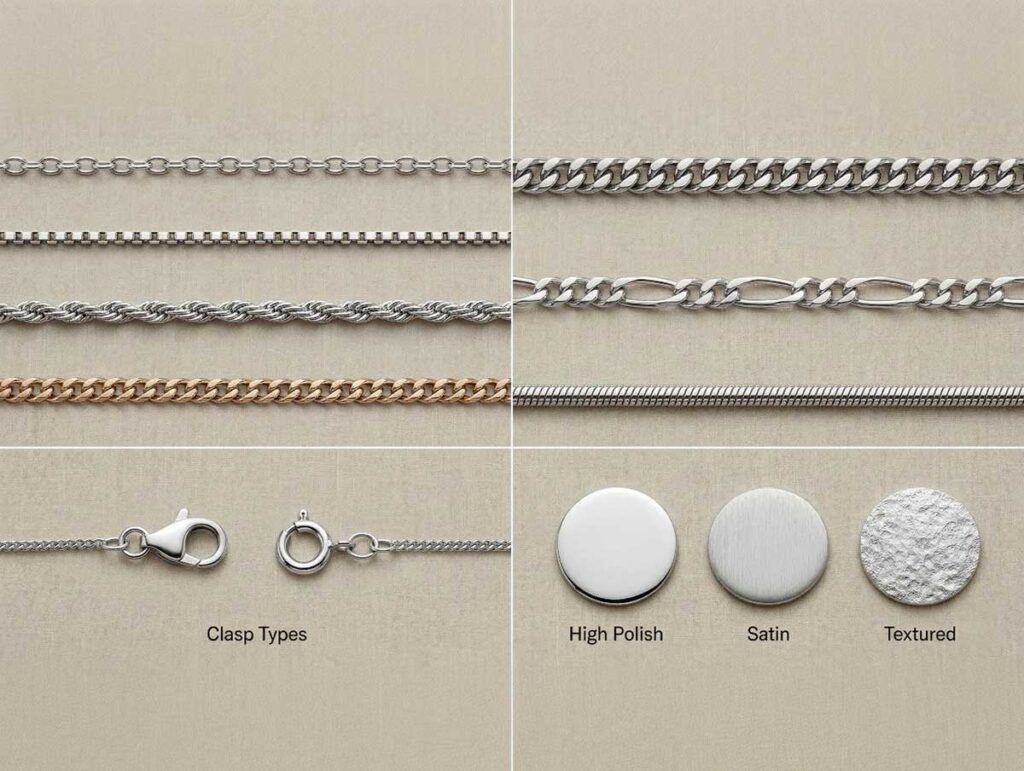
Because losing an expensive piece due to a weak clasp is a specific kind of heartbreak.
- Box Chain: Square links connected to form a smooth geometric box.
- Cable Chain: The standard issue. Simple oval links connected together.
- Curb Chain: Flat, interlocking links that lie perfectly flush against the skin.
- Extender: An extra bit of chain added near the clasp to adjust necklace or bracelet length.
- Figaro Chain: A pattern of two or three small circular links followed by one elongated oval link.
- Findings: The functional components of jewelry, such as clasps, jump rings, and earring backings.
- Florentine Finish: A heavily textured metal surface created by engraving parallel lines in crosshatching patterns.
- Herringbone Chain: Flat, liquid metal that looks incredibly expensive but kinks easily if you sleep in it.
- Huggie: A tiny hoop that sits right against your earlobe.
- Lobster Clasp: A sturdy, self-closing clasp operated by a small spring-loaded lever.
- Patina: A natural darkening or coloring of metal caused by oxidation over time.
- Rope Chain: Small links twisted together to resemble a spiraled rope.
- Satin Finish: A soft, matte metal finish that diffuses light rather than reflecting it.
- Snake Chain: Tightly woven metal rings that form a smooth, flexible tube resembling snakeskin.
- Spring Ring Clasp: A common circular clasp that opens when you pull back a tiny lever.
The overlooked heartbreak section
Chains and clasps do not get enough attention because they are not glamorous. But they are the reason a necklace survives daily life or ends up lost forever somewhere between your coat collar and the back seat of a car. Pay attention to the hardware. It is doing more emotional labor than the pendant.
How to Read Product Descriptions Without Getting Played
The mistake usually happens when people assume beautiful photography equals quality. In real life, vague listings often hide behind pretty styling.
Look at the metal before the sparkle. Knowing if a piece is solid 14K gold, vermeil, gold-filled, or just plated brass tells you exactly how it will age. Next, check the setting style against your habits. A delicate prong setting might look incredible on a screen, but it might not survive if you type heavily, sleep in your jewelry, or lift weights. A flush or bezel setting tends to be calmer and sturdier.
Watch for missing information. Silence is not luxury. Sometimes it is just missing data in a silk robe. If a product description does not clearly state the metal type, stone type, dimensions, chain length, or care instructions, keep your money in your pocket.
Then check the stamps. A hallmark, purity number, or plating code often tells you more truth than a paragraph of marketing copy.
A quick shopping checklist
Before you buy, ask yourself:
- What is the base metal?
- Is the piece solid, plated, vermeil, or gold-filled?
- What setting is holding the stone?
- Is the chain or clasp sturdy enough for daily wear?
- Does the product page explain dimensions and care?
- Do the stamps match the seller’s claims?
That little checklist can save you from a very pretty mistake.
Common Questions About Jewelry Terms
What is the difference between 14K and 18K gold?
14K gold is a mix of 58.3 percent pure gold and other durable alloys. It is tough and great for everyday wear. 18K gold is 75 percent pure gold. It has a richer, warmer color but is slightly softer and more prone to scratching.
What do 925 and 750 mean on jewelry?
These are hallmarks indicating metal purity. 925 means the piece is sterling silver. 750 means the piece is 18K gold.
What is the difference between a pavé and a halo setting?
Pavé refers to tiny stones set closely together along the band of a ring to create a continuous line of sparkle. A halo is a specific circle of small stones that surrounds the center gemstone.
What is the most durable ring setting?
A bezel or flush setting provides the most protection for daily wear because the metal completely surrounds and guards the fragile edges of the gemstone.
What is the difference between gold vermeil and gold-filled?
Vermeil is a thick layer of gold plated specifically over a sterling silver base. Gold-filled involves a much thicker, solid layer of gold mechanically bonded to a base metal like jeweler’s brass. Gold-filled is generally more durable and tarnish-resistant than vermeil.
Does sterling silver tarnish?
Yes. Tarnish is a natural chemical reaction between the silver alloys and sulfur in the air or chemicals on your skin. It cleans off easily with a proper polishing cloth.
What is the difference between shape and cut in a diamond?
Shape refers to the outline, like oval, pear, or princess. Cut refers to how well the stone has been proportioned and polished to reflect light.
Are lab-grown diamonds real diamonds?
Yes. They have the same core physical structure as mined diamonds. The difference is origin, not basic identity.
Related Guides
Keep exploring Blufashion’s expert style advice:
- The Ultimate Guide to Layering Necklaces
- How to Care for Your Fine Jewelry at Home
- Decoding Engagement Ring Styles
- Essential Everyday Silver Staples
- Best Jewelry Stores in the US
Wearing the Knowledge
I learned pretty quickly that the best jewelry makes sense on the body and in your life, not just under showroom lighting. The next time you lean over a glass case or scroll through a product page, you will not have to nod along blindly. You will know exactly what a cushion cut, a flush setting, a hallmark, and clarity actually mean for your wallet and your wardrobe.
A solid jewelry glossary does not kill the romance of buying a beautiful piece. It just protects you while you do it. That is the whole point. You still get to fall in love, you just do it with your eyes open.
And that, honestly, is the chicest move in the room.
Now that you speak the language fluently, your next step is easy. Browse Blufashion’s curated jewelry edits to find your next everyday staple with your eyes wide open.
- About the Author
- Latest Posts

I’m Iskra Banović, editor of Blufashion and the voice behind its fashion, beauty, and lifestyle stories. Fashion, beauty, and lifestyle are my playground, but I’m just as likely to share the messy side of it all, like the time I tested a “must-have” skincare gadget and ended up with glitter stuck in my hair. I love turning trends and everyday finds into something useful (and fun) for real people.