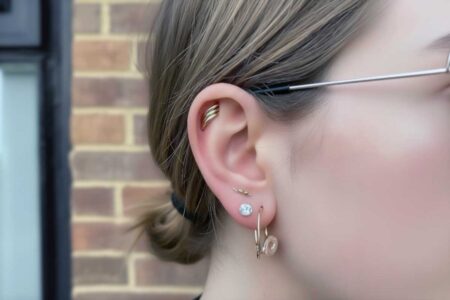






The best piercing for your face shape depends on the look you want. A delicate nostril stud can bring attention to your eyes, a septum ring can create a focal point at the center of your face, and a carefully arranged ear piercing can change how your features are framed.
If you’re choosing between different piercing styles, start with your face shape. Round faces often look striking with vertical details, square faces pair beautifully with curved jewelry, and oval faces offer plenty of room to experiment. But these are styling suggestions, not rules. Your individual anatomy, comfort, and personal taste matter much more than fitting into a particular category.
Here’s a quick breakdown of the piercing styles worth considering for each of the six common face shapes.
- Heart-Shaped Face: Small nostril studs, delicate hoops, and subtle lip piercings can complement a wider forehead and narrower chin. Long teardrop earrings, chandeliers, and short necklaces are also flattering styling options.
- Oval Face: Nostril studs, septum rings, paired nostril piercings, and different ear-piercing arrangements can all work beautifully. Large studs, chandeliers, hoops, and teardrop earrings offer plenty of variety.
- Round Face: High nostril placements, delicate septum jewelry, and vertical ear-piercing arrangements can create a longer visual line. Slim hoops, small studs, dangling earrings, and longer necklaces are worth trying.
- Diamond Face: Nostril studs, understated septum jewelry, and balanced ear-piercing arrangements can complement prominent cheekbones. Chandelier earrings, tassels, and shorter necklaces add interesting contrast.
- Square Face: Curved nostril jewelry, subtle septum rings, and small studs can contrast with a defined jawline. Round earrings, hoops, and oval-shaped dangles are especially useful styling options.
- Oblong or Rectangular Face: Nostril hoops, septum jewelry, and ear-piercing arrangements that emphasize width can complement a longer face. Large hoops, short dangles, and chokers are also options.
One distinction matters before you choose: earrings and necklaces can be changed whenever you like, but a new piercing requires a suitable anatomical placement and a healing period. The jewelry that looks best in a photo may not be appropriate for a fresh piercing.

1. Heart-Shaped Face
A heart-shaped face typically has a broader forehead, prominent cheekbones, and a chin that tapers to a narrower point. If you like a balanced look, consider jewelry that draws a little attention toward the middle or lower part of your face.
For nose jewelry, a small nostril stud is a lovely starting point. A delicate hoop can also work, particularly if you prefer something with a softer outline. If you’re interested in lip piercings, a subtle labret or philtrum piercing can become a focal point below the nose, provided your anatomy is suitable and you’ve discussed the risks with a qualified piercer.
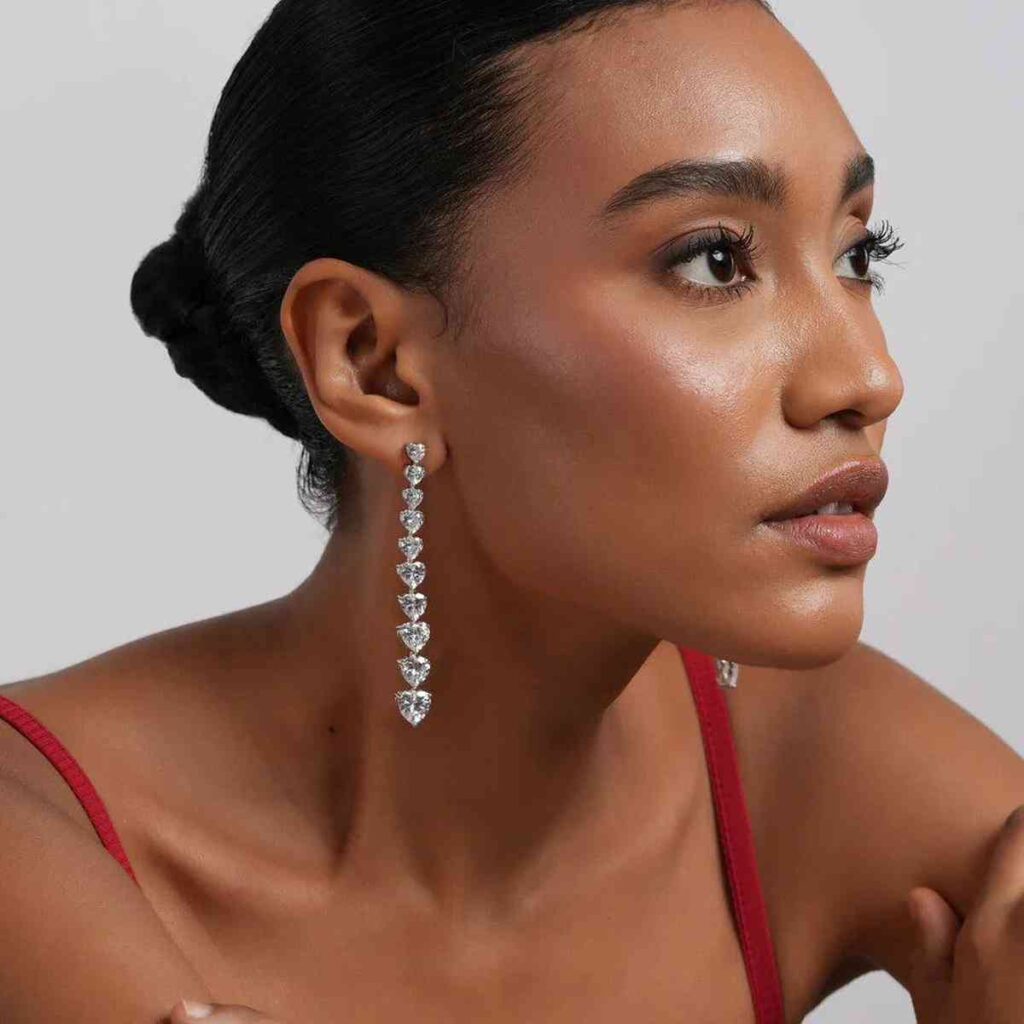
For existing ear piercings, elongated curves are a good match. Try chandelier earrings, long teardrops, or gently curved dangles. Short necklaces, chokers, and a pendant resting higher on the chest can also create a pleasing contrast with a pointed chin.
Style tip: If you’re wearing dramatic dangling earrings, try a small nose stud rather than an equally bold facial jewelry piece. You don’t have to make every accessory compete for attention.
2. Oval Face

Oval faces are generally longer than they are wide, with softly rounded contours and a jaw that’s slightly narrower than the cheekbones. This shape works with a particularly wide range of jewelry styles, so your choice can come down to the feature you want to highlight.
A tiny nostril stud keeps things understated, while a well-fitted septum ring makes a stronger statement. Paired nostril piercings can create symmetry, and a curated ear arrangement with lobe, helix, or conch jewelry offers another way to experiment, depending on your ear anatomy.
For earrings, consider wide chandeliers, large studs, hoops, triangular designs, and teardrop shapes. Necklaces are equally flexible. Long pearls, low-hanging pendants, and chokers can each create a different effect.
Both small and larger nose hoops can suit an oval face visually, but don’t choose hoop diameter based on face shape alone. The position of your piercing and the shape of your nostril determine what will fit comfortably.
3. Piercings for Round Face

Round faces tend to have soft contours, fuller cheeks, and a similar overall width and length. If you’d like to create the impression of more length, think about vertical lines rather than simply choosing the smallest jewelry available.
A delicate septum ring draws the eye toward the center of the face. A nostril stud with a slim teardrop or marquise-shaped decorative end can add a vertical detail. High nostril piercings are another possible option, although their placement and suitability need careful assessment by an experienced piercer.
Ear piercings can play a role, too. A graduated arrangement of small studs traveling upward along the ear creates a different effect from one oversized hoop. For healed earlobe piercings, slim dangling earrings and drop earrings can emphasize length, while circular hoops and rounded drops create a softer, more playful look.
Longer necklaces can reinforce that vertical effect, but there’s no need to avoid chokers or shorter necklaces if you enjoy wearing them. The goal is to find a look you like, not to disguise your face shape.
For more placement ideas and jewelry considerations, see our detailed guide to piercings for round faces.
4. Diamond Face

A diamond-shaped face is usually widest at the cheekbones, with a narrower forehead and jawline. The cheekbones are already a strong focal point, so jewelry can either emphasize them or draw attention elsewhere.
Small nostril studs are an easy way to add sparkle without overwhelming the middle of the face. A delicate septum ring can create a centered focal point, while an understated ear-piercing arrangement lets your cheekbones take the lead.
For earrings, wide chandeliers, tassels, and styles that add fullness below the cheekbones can create an attractive contrast. Collar and princess-length necklaces are also worth considering, particularly if you like accessories that visually frame the neck and collarbone.
Style tip: If you want your cheekbones to stand out, pair subtle facial jewelry with a more noticeable earring. If you’d rather draw attention toward your nose, reverse the balance with simple earrings and a distinctive nostril stud.
5. Square Face
Square faces typically have a defined jawline, angular contours, and a forehead and jaw that are relatively similar in width. Curved jewelry offers a lovely contrast to those strong lines, although geometric pieces can look equally striking if you want to emphasize them.
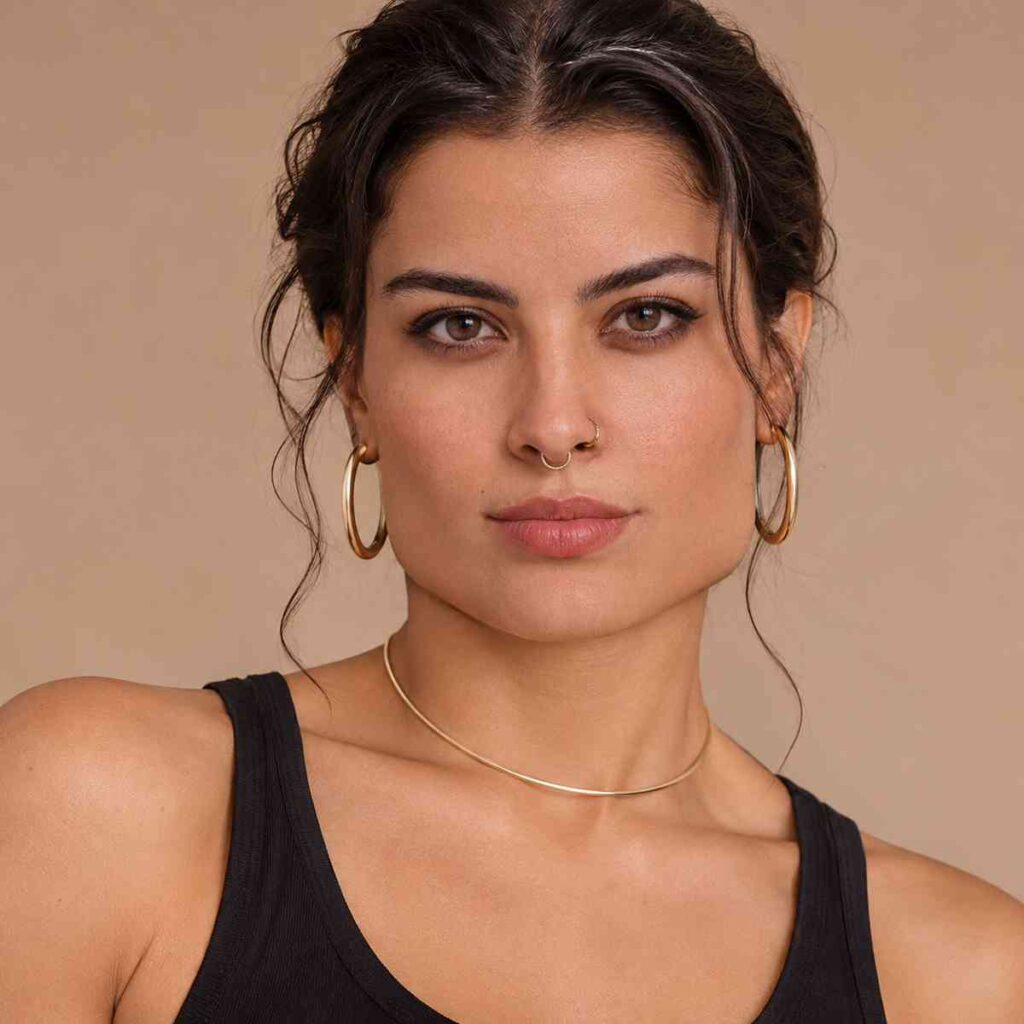
For facial piercings, consider a small round nostril stud or a delicate nostril hoop. A subtle septum ring is another possibility if the placement suits your anatomy. Tiny gemstone studs, including diamond designs, work well when you want a little sparkle without a large decorative element.
Round studs, classic hoop earrings, and long oval-shaped earrings complement the angles of a square face. Chokers and circular necklaces can also work, especially when the design is simple enough to let the earrings or facial jewelry stand out.
Style tip: Try two different looks before deciding: soft hoops for contrast, then angular studs for a sharper style. Both can complement the same face, just in different ways.
6. Oblong or Rectangular Face

An oblong or rectangular face is noticeably longer than it is wide. Rectangular faces often have straighter sides and a more defined jaw, while oblong faces may have softer contours. Both can work beautifully with jewelry that brings attention across the face rather than only up and down.
A nostril hoop can be an appealing option because of its rounded outline. Delicate nostril studs and septum jewelry are also worth considering. The best choice depends on your nose anatomy and how much attention you want the piercing to attract.
For healed ear piercings, large hoops, rounded studs, and shorter dangle earrings can add visual width around the sides of the face. Collar necklaces and chokers are useful accessories if you prefer a shorter neckline rather than a long pendant.
If you love long earrings, wear them. There’s no reason to give up a favorite style because it doesn’t follow a traditional face-shape recommendation.
How to Choose a Face Piercing That Suits You
Face shape is a useful starting point, but it isn’t enough to choose a piercing safely. Before booking an appointment, think about the placement, the jewelry you’ll eventually want to wear, and how the piercing fits into your everyday life.
- Start with the feature you want to highlight. A nostril piercing brings attention to the nose, a septum piercing creates a central focal point, and ear piercings frame the sides of the face.
- Consider how subtle or bold you want to go. A small stud has a different visual effect from a large hoop, even when worn in the same location.
- Look at your individual anatomy. The shape and structure of your nose, ear, or lip matter more for placement than whether your overall face is round, square, or oval. Not every piercing is suitable for every person.
- Think about daily comfort. Glasses, headphones, helmets, sports equipment, and sleeping habits can affect how practical a particular placement feels while healing.
- Try the look before committing. An appropriately sized faux nose ring or clip-on earring can help you picture a style without getting pierced. Don’t use temporary jewelry on an unhealed piercing.
If you’re still weighing your options, our guide to whether a nose piercing will suit you takes a closer look at nose jewelry and personal style.
Jewelry Fit, Materials, and Healing Matter More Than Face Shape
It’s fun to choose a piercing based on how it looks, but a fresh piercing isn’t the place to experiment with oversized hoops or heavy decorative jewelry. Your piercer needs to select an appropriate initial jewelry style, diameter or length, gauge, and material for the placement and your anatomy.
The Association of Professional Piercers recommends suitable body-compatible materials for initial piercings, including certain grades of implant-certified titanium and appropriately alloyed solid gold. Gold-plated jewelry is not suitable for fresh piercings. The organization also explains why jewelry that’s too tight or too large can create problems during healing.
Don’t assume you can switch immediately to the hoop or chandelier-style jewelry you have in mind. Some piercings need different initial jewelry, and decorative additions should wait until the area is fully healed. Your piercer can explain when a change is appropriate.
For healing piercings, follow the recommended piercing aftercare guidance, which includes appropriate sterile saline wound wash, clean hands, and avoiding unnecessary jewelry movement. If you suspect an infection or experience worsening symptoms, seek medical advice rather than changing or removing jewelry on your own.
If you’re shopping for jewelry for an existing piercing, you can browse different body jewelry designs or explore BluFashion’s guide to piercing jewelry. Always check the material, dimensions, and suitability for your piercing before purchasing.
What Face Piercing Should I Get?
If you’re unsure where to start, a nostril piercing is worth discussing with a professional piercer if you like a small, versatile detail. A septum piercing is another option if you prefer jewelry centered on your face. If you want to experiment with several pieces while keeping the focus on your ears, consider an arrangement of lobe or cartilage piercings that your anatomy can support.
There isn’t one perfect piercing for a round, square, heart-shaped, diamond, oval, or rectangular face. The best result comes from choosing a style you genuinely like and having a qualified piercer confirm that the placement and jewelry are appropriate for your body.