



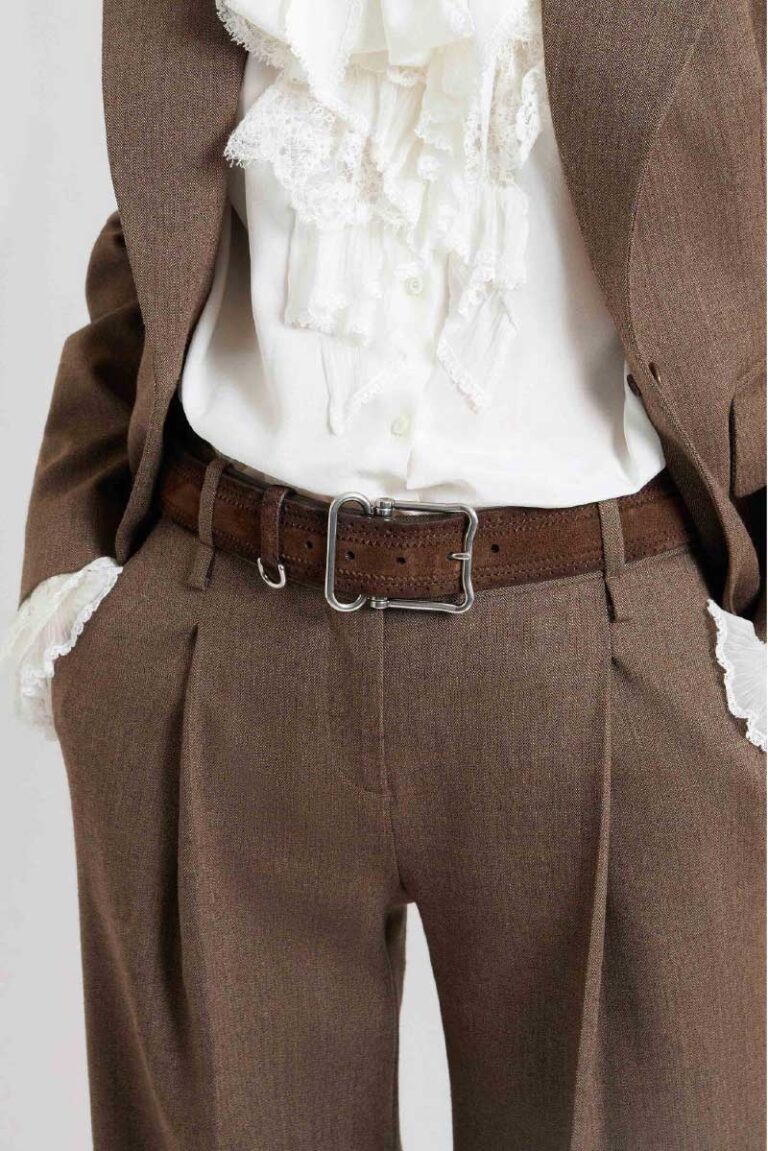
Two addresses, two different expressions of American luxury, one unmistakably Florentine approach to fashion
Luxury boutiques are rarely just places to shop. At their best, they offer a physical interpretation of a fashion house, its materials, proportions, atmosphere and, perhaps most importantly, its point of view.
For Ermanno Scervino, that point of view begins in Florence and today travels far beyond Italy.
In the United States, two addresses provide particularly interesting interpretations of the Italian Maison. One is in Beverly Hills, California, on one of the world’s best known luxury shopping streets. The other is in Bal Harbour, Florida, a destination where fashion, travel and a distinctly Miami approach to luxury naturally meet.
Different cities, different climates, different wardrobes. Yet both boutiques tell the same story, one rooted in Florentine craftsmanship and contemporary Made in Italy.
Beverly Hills, Italian fashion on Rodeo Drive
At 214 North Rodeo Drive, Beverly Hills, Ermanno Scervino finds itself in a neighbourhood synonymous with international luxury.
Rodeo Drive hardly needs an introduction. For decades, it has been one of America’s most recognisable fashion destinations, bringing European houses into the heart of Southern California.
For a Florentine Maison, however, the location creates an interesting contrast.
Los Angeles has its own understanding of luxury, often more relaxed than its European counterpart, influenced by climate, lifestyle, entertainment and the ease of the West Coast. Scervino arrives with a vocabulary built thousands of miles away, cashmere, lace, tailoring, embroidery, leather and an artisanal understanding of how materials should be handled.
The two sensibilities meet surprisingly naturally.
A cashmere cardigan can be worn without ceremony. Tailoring becomes less formal when combined with softer fabrics. Lace moves comfortably between day and evening, while leather accessories introduce craftsmanship without requiring an entire look to make the statement.
The Maison’s current American collection reflects precisely this breadth, moving across dresses, jackets, coats, blazers, knitwear, trousers and skirts, alongside bags, shoes and accessories. Ermanno Scervino
The Beverly Hills boutique consequently becomes more than an American outpost. It offers Los Angeles customers a physical encounter with the materials behind Italian luxury.
Bal Harbour, a different rhythm of luxury
Travel east and the setting changes.
At 9700 Collins Avenue in Bal Harbour, Florida, Ermanno Scervino speaks to another side of American luxury.
The Miami area has long combined resort culture with an international clientele. Here, fashion lives differently. The climate changes the wardrobe, colour behaves differently in the Florida light and the distinction between holiday dressing and city dressing is considerably more fluid.
This makes Bal Harbour a particularly appropriate setting for the more feminine and tactile elements of the Scervino world.
Lace, dresses, lighter silhouettes and accessories sit naturally within this environment. The Maison’s approach to bags is especially relevant. Its current American offer includes the Maggie, Clio and Joy families, with leather, suede, shearling and artisanal detailing used across different shapes and proportions. Ermanno Scervino
The Maggie Bag, in particular, demonstrates how the vocabulary of a fashion house can be condensed into an accessory. Material, craftsmanship and decorative detail become something that can move easily between an afternoon in Bal Harbour and an evening in Miami.
It is an expression of Italian design that does not need an Italian setting to make sense.
Why the physical boutique still matters
There is an interesting paradox in contemporary luxury.
Fashion is increasingly discovered through screens. Collections appear online immediately, products travel internationally and customers can explore a Maison from almost anywhere.
Yet craftsmanship remains stubbornly physical.
The quality of cashmere is difficult to understand from a photograph. The construction of a tailored jacket reveals itself when worn. Lace has texture, embroidery has depth and a leather bag changes according to how it is held.
Ermanno Scervino’s official language around its collections places considerable emphasis on precisely these details, selected materials, artisanal workmanship and the relationship between traditional craftsmanship and contemporary design. Ermanno Scervino
This is where the boutique retains its purpose.
Beverly Hills and Bal Harbour allow the digital image of Italian luxury to become tangible.
One Maison, two American wardrobes
The interesting part is not that the two boutiques are identical. It is that they do not need to be.
California and Florida represent two very different American wardrobes.
Beverly Hills suggests tailoring softened by the West Coast, cashmere, dresses, sophisticated separates and accessories that move easily from daytime to evening.
Bal Harbour introduces another rhythm, lighter, more resort oriented, with lace, dresses, bags and pieces that work naturally within Miami’s relationship with colour, climate and international luxury.
The same collection can therefore be read differently depending on where it is encountered.
That versatility is already visible in the wider Ermanno Scervino women’s collection, where structured tailoring exists alongside cashmere, lace, denim, leather, shoes and accessories. The latest collections continue to combine traditional materials with experimentation, including handmade embroidery, couture lace and unexpected treatments of denim and technical fabrics. Ermanno Scervino
Florence remains the common address
Despite the distance between Beverly Hills and Bal Harbour, Florence remains the invisible third location in this American story.
It is there that the identity of Ermanno Scervino was formed, around an understanding that craftsmanship is not simply a nostalgic reference to the past. It can be used to make contemporary clothes feel more personal, more tactile and ultimately more distinctive.
America provides two very different stages for that idea.
On Rodeo Drive, it encounters the polished confidence of Beverly Hills. In Bal Harbour, it meets the lighter rhythm of South Florida.
What connects them is not simply a logo above a boutique entrance.
It is the product itself, the feel of cashmere, the construction of a jacket, the delicacy of lace, the embroidery on leather, the weight of a bag in the hand.
In a luxury market increasingly experienced through a screen, perhaps that is the most interesting reason to walk into a boutique in the first place.