




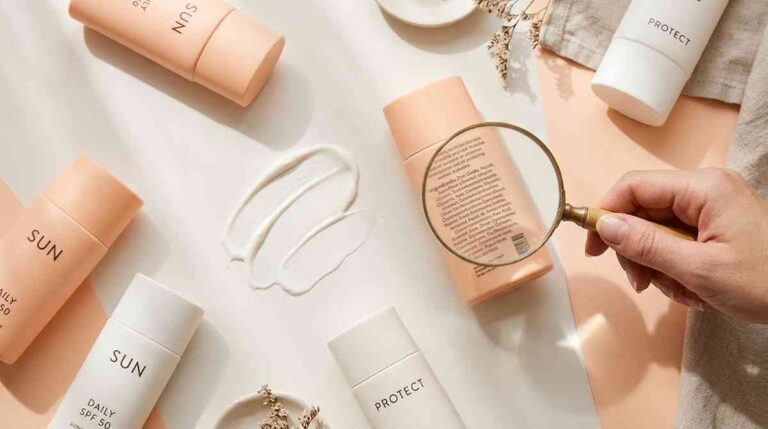
I’ve always been the person who turns a product around and reads the back before anything else. I studied chemistry in college, so I think that’s where it started, but Instagram has definitely made it worse. My Reels are basically dermatologists talking through ingredient lists. My friends tease me about it, but they’re also the first to send me a photo of a label and ask, “Is this okay?”
So you can imagine how I felt when I realized the “mineral” sunscreen I’d worn for almost two years wasn’t completely mineral after all.
The “Mineral” label problem
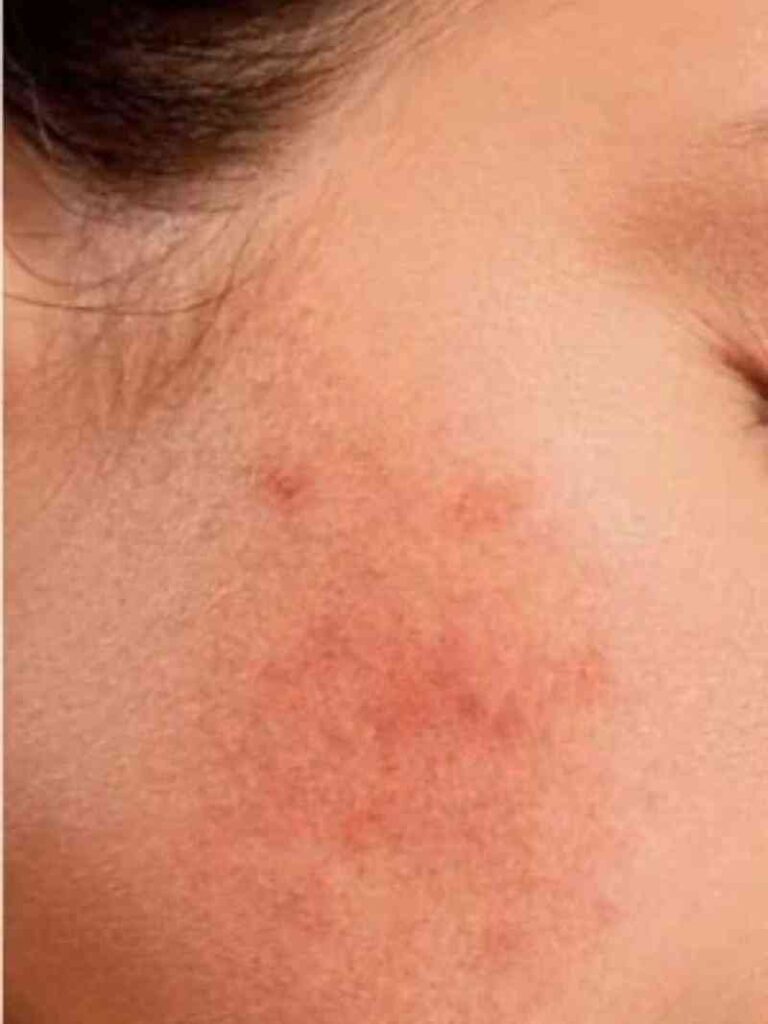
My skin is sensitive and goes red if you look at it wrong (hi, rosacea). That’s why I switched to mineral sunscreen years ago. Zinc oxide was one of the few things that didn’t leave my face flushed by lunchtime, and I thought I had sunscreen figured out.
Then one night I was scrolling before bed and came across a dermatologist going through a mineral sunscreen. They zoomed in on the inactive ingredients and pointed out butyloctyl salicylate. The name rang a bell, so I went and got my sunscreen from the bathroom, and sure enough, there it was.
In case you haven’t come across it either, butyloctyl salicylate is closely related to octisalate, a chemical UV filter. Brands use it to boost the SPF and help the zinc spread more smoothly. In the US, it isn’t classed as an active ingredient, so it doesn’t appear in the Drug Facts box, and the only way to spot it is to read the full list. You might also see tridecyl salicylate or polyester-8 doing a similar job, and some people call these “pseudo-filters.”
None of this breaks any rules, and it doesn’t make sunscreen bad. I just felt a little silly, because I’d chosen mineral for a reason and never looked past the front of the bottle.
It’s in more sunscreens than you’d think
Naturally, I then spent a whole evening checking the ingredient lists of other popular mineral sunscreens, including CeraVe Hydrating Mineral Sunscreen SPF 50 Face Lotion, Sun Bum Mineral SPF 50 Sunscreen Lotion, Tower 28
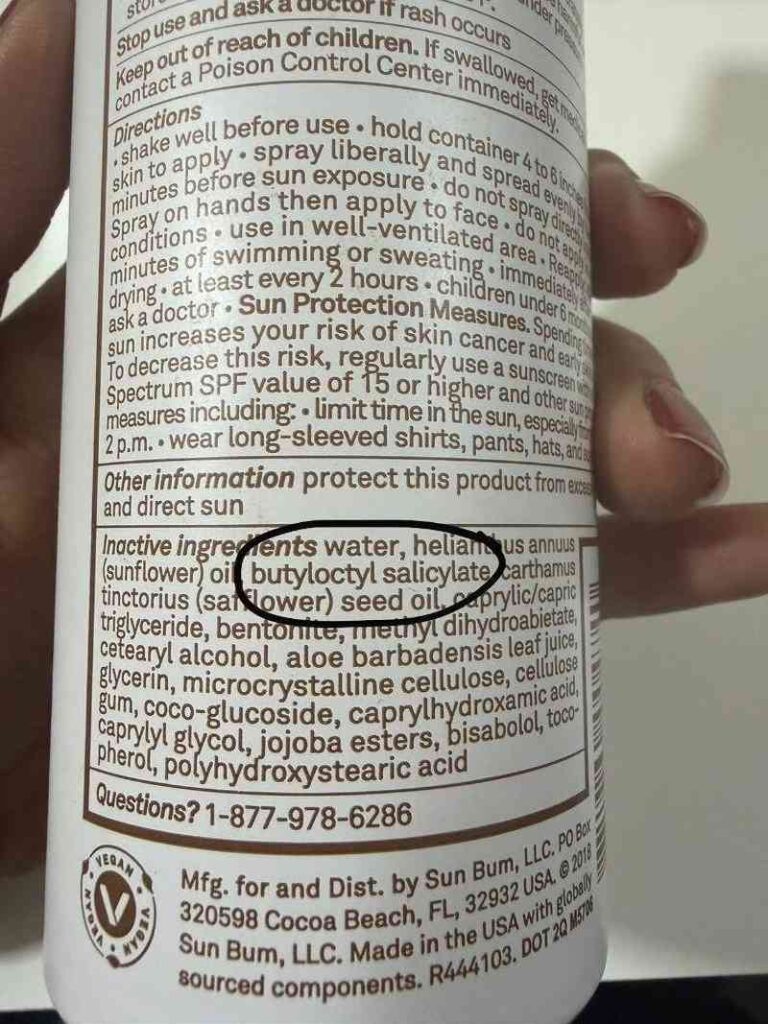
SunnyDays Tinted SPF 30, and La Roche-Posay Anthelios Mineral Ultra-Light Fluid SPF 50. Every one of them listed butyloctyl salicylate among its inactive ingredients.
Lots of people love these sunscreens, so I’m not telling you to throw yours away. I just think it’s worth knowing what’s in the bottle, especially if you picked mineral on purpose.
So, should you avoid chemical filters?
I think it really depends on why you chose mineral in the first place.
For me, a lot of it comes down to two FDA studies published in JAMA in 2019 and 2020. They found that six common chemical filters, avobenzone, oxybenzone, octocrylene, homosalate, octisalate, and octinoxate, are absorbed into the bloodstream at levels high enough that the FDA wants more safety data. The researchers were clear that this doesn’t mean they’re harmful and that people should keep wearing sunscreen. Pseudo-filters weren’t part of those studies.
So I don’t think anyone needs to panic. But my skin is reactive, and I’d rather not wonder, so when I buy mineral, I want it fully mineral. And if a chemical sunscreen is the one you’ll actually wear every day, keep wearing it. That matters far more than anything else here.
Finding a true mineral formula
After that, finding a sunscreen with only mineral filters was much harder than I expected. Nearly everything I checked had a salicylate somewhere, and I sort of gave up.
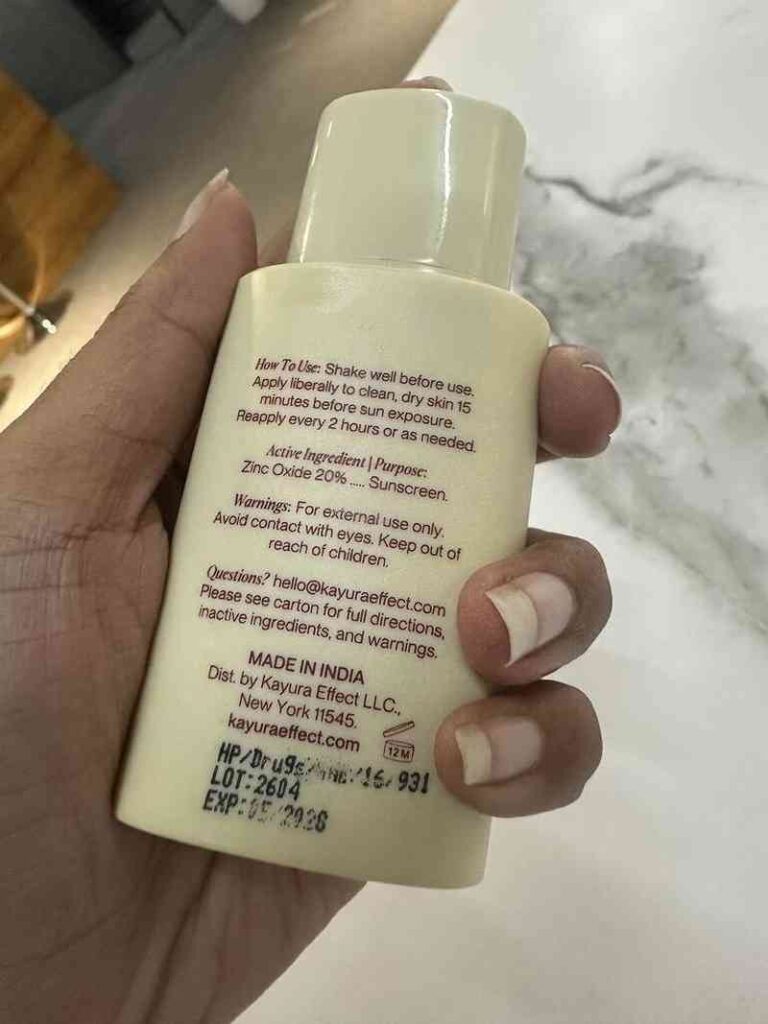
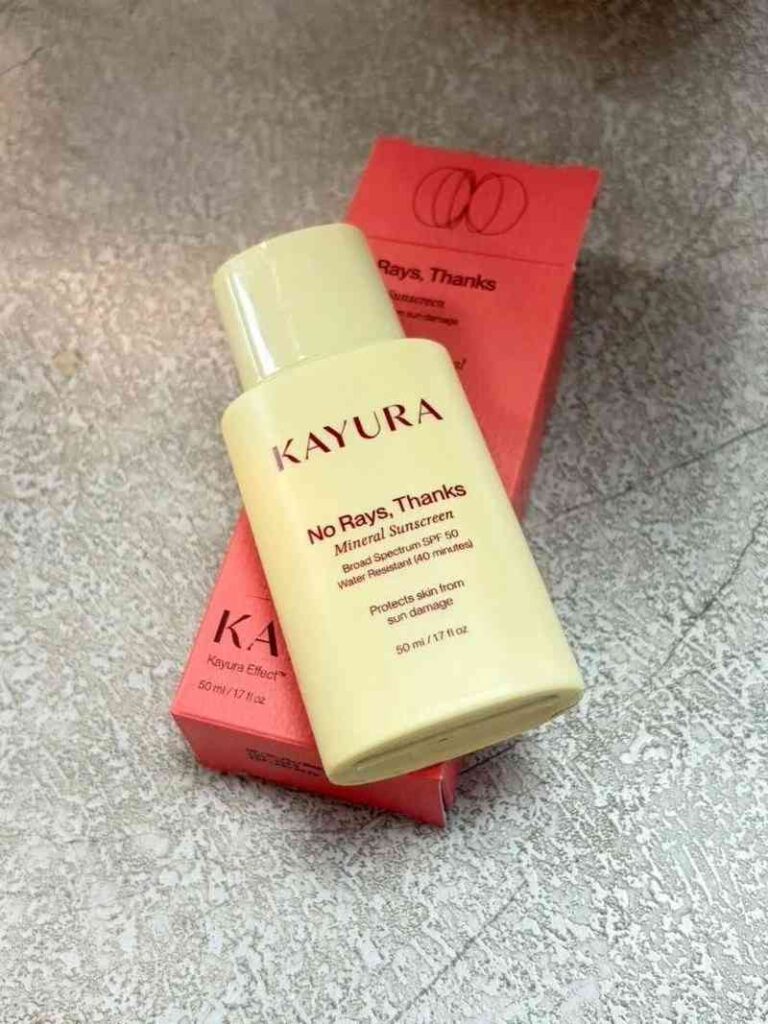
Then a few weeks ago I popped into Target for dish soap and ended up wandering through Target Beauty Studio, where I noticed a brand I’d never heard of, Kayura. I was nearly out of sunscreen, so I picked up their No Rays, Thanks™ Mineral Sunscreen SPF 50 and turned it over to read the ingredients, like I always do. It claimed to be 100% mineral, and for once the ingredient list actually matched. That was exactly what I’d been looking for, so I decided to give it a try.
The only active ingredient is 20% non-nano zinc oxide. I read the rest of the list twice and found no salicylates, no polyester-8, and no silicones. Instead of an SPF booster, they use clay to keep the zinc evenly spread. There’s squalane, ectoin, and vitamin E in there too, which my sensitive skin really appreciates.
What it’s like to wear
I was expecting the usual mineral-only trade-off, something thick and chalky that leaves you looking ghostly. It’s actually a light lotion that spreads easily. It looks slightly white for a few seconds, then blends right in. Reviewers with deeper skin tones have said the same, which is pretty impressive for 20% zinc.
It leaves a dewy, slightly glossy finish, and my foundation goes on over it without any pilling, which I think is thanks to the lack of silicones. Most importantly for me, I’ve worn it for six weeks now, and my cheeks haven’t flushed once.
A couple of things to keep in mind, though. At $32 for 50 ml, it isn’t the cheapest option, and I get through a bottle in about a month. And if your skin is on the oilier side, you might find the glossy finish a bit much on its own.
My final thoughts
I’m not against chemical filters at all, but I like knowing exactly what I’m putting on my face. If you chose mineral on purpose, take thirty seconds to flip the bottle over and read past the actives.
And if you’re looking for a sunscreen that really is just mineral, No Rays, Thanks is the one I’d recommend. It’s the first one I’ve found where the label and the ingredient list tell the same story.