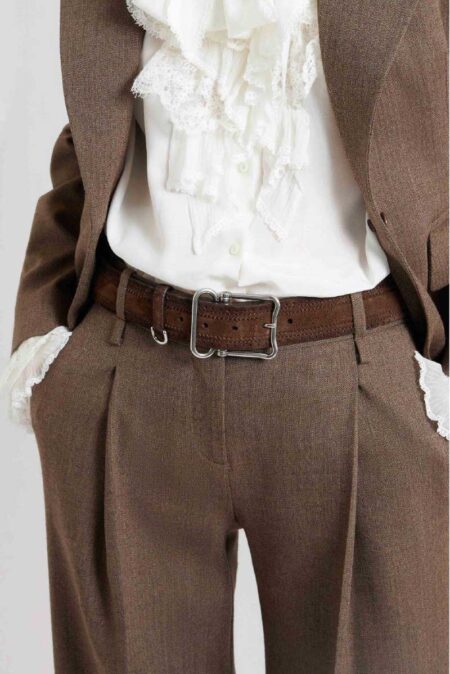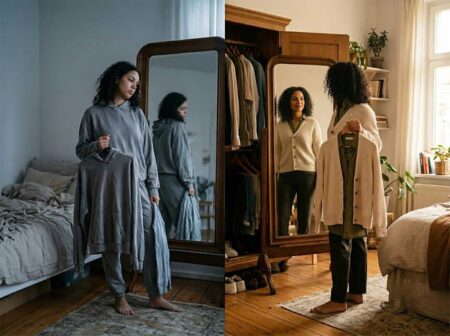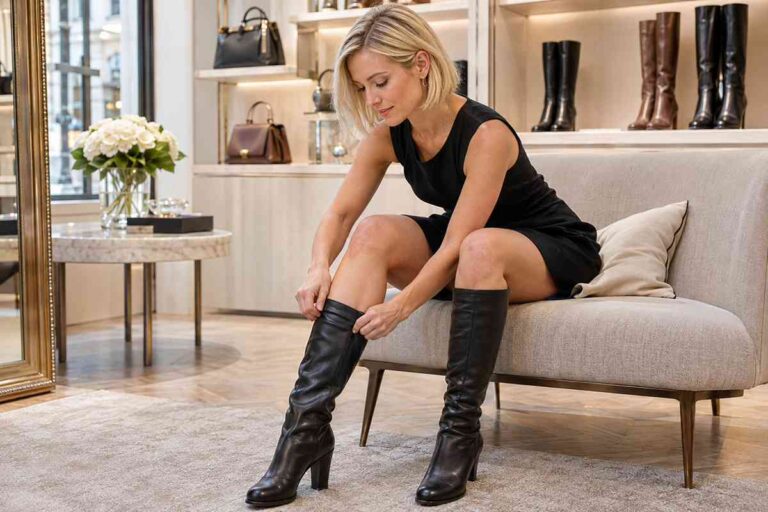
Yep, you’re short. But how does that affect what fits you best?
In clothing, petite means a garment is cut for women about 5’4″ and under. It’s a height-and-proportion category, not a weight category: a petite size 14 is just as real as a petite size 0. Petite pieces are shorter overall, and the better ones also move the waist, armholes, knees, and other details up to where a shorter body actually needs them.
What Does Petite Mean in Clothing?
When we say “petite,” most people assume we mean “tiny.” In the fashion world, though, “petite” refers to a size range made for women who are 5 feet 4 inches or under. Most US retailers, including J.Crew, Macy’s, and Anthropologie, use that 5’4″ cutoff. It isn’t a fixed standard, though: some brands design petites for 5’3″ and under, and a few stretch to 5’5″. Always check the retailer’s own size chart.
So does petite mean short or skinny? Short. Petite says nothing about your weight or your build. Petite women can be slim, curvy, pear-shaped, apple-shaped, or anything in between, which is why petite lines run from 00P or XXS Petite up into petite plus sizes.
You’ll spot petite sizing by the “P” on the label:
- Numbered sizes: 0P, 2P, 4P, and so on. Your usual number is a good starting point, but don’t assume an 8P matches a regular 8 everywhere: bust, waist, and hip measurements can differ between a brand’s petite and regular charts.
- Letter sizes: XSP, SP, MP, LP (sometimes written “Petite Small” or “PS”). A “large petite” is simply a size Large cut for a shorter frame.
- Petite plus: Often labeled 1XP, 2XP, 3XP and up, though labels vary by brand. Fewer retailers carry it, so it’s worth bookmarking the ones that do.
Petite vs. Regular Sizes: What Actually Changes
The most obvious difference is that petite clothing is shorter. Sleeves, skirts, leg lengths, and tops are all shorter. Because clothing makers cut to their own specifications, length may be the only difference in some cases. Higher-quality petite pieces go further:
- Tops and jackets: shorter body length and sleeves, higher armholes so the sides don’t gape, narrower shoulders, and buttons spaced closer together. Blazers often get smaller lapels and pockets so the details don’t swamp you.
- Dresses: a shorter bodice, so the waist seam lands at your waist instead of somewhere around your hips, plus a raised hem.
- Pants and jeans: a shorter inseam, a shorter rise, and a higher knee, which matters a lot on flares, bootcuts, and anything with a defined knee.
- Skirts: a shorter length and a waistband that sits where a shorter torso needs it.
Petite vs. Short Length in Pants
Some brands sell pants in a “short” length alongside petite, and they aren’t the same thing. Levi’s explains that “short” only changes the leg length, while petite also adjusts the rise, knee height, and hips. If regular pants fit you everywhere except the hem, a short length (or a quick hem) is all you need. If the rise is too long, so the waistband sits higher than the style intends, and the knee lands mid-shin, you want petite.
Am I Petite? How to Tell
If you’re 5’4″ or under, petite sizes will usually fit you better than regular ones, regardless of your body shape or age. But height is only the starting point. Proportions decide the rest, and plenty of women end up mixing petite and regular pieces. Try petite if you regularly run into these problems in regular sizes:
- Sleeves cover your knuckles.
- Shoulder seams hang past your shoulders.
- Dress waistlines sit below your natural waist.
- Armholes gape, showing your bra from the side.
- Pants bunch at the ankle and the rise reaches past your belly button.
Your torso and legs don’t always agree, either. A 5’2″ woman with a long torso may find petite tops too short and stick with regular tops and petite pants. Someone 5’5″ with a short torso may love petite blazers and dresses. So is 5’5″ petite? Not by most size charts, but if you’re short-waisted, petite tops and dresses are worth trying anyway, and if your legs are short for your height, petite pants may fit better than regular. Our body proportions mapper can help you work out whether your torso or legs run long or short.
Shopping Tips for Petite Sizes
- Check the size chart every time. Height cutoffs, inseams, and garment measurements vary from brand to brand. For a rough guide, many brands’ full-length petite pants have inseams of about 28 to 30 inches, compared with about 32 inches for regular. NYDJ’s petite, regular, and tall guide uses those ranges, for example.
- Know your inseam. Measure from the crotch seam to the hem on your best-fitting pair of pants, then shop by that number rather than by the label. The jeans fit calculator can help you narrow down your size and length.
- Buy petite for structured pieces. A tailor can easily hem pants or shorten simple sleeves. Moving a dress waistline, raising armholes, or shortening a pant rise is much harder and more expensive, so blazers, coats, fitted dresses, and jumpsuits are where petite sizing pays off most.
- Shop online for selection. Online stores usually carry a much bigger range of petite sizes than physical stores, which give most of their floor space to regular sizes. If you know your size and measurements, buying online is a good option, especially when returns are easy by mail or in store.
- Start with your shape, then your height. Our guide to dressing for your body shape covers the silhouettes that suit you. Petite sizing then gets those silhouettes to the right length. For real outfit ideas, see these petite Latina fashion influencers.
How Many Women Are Petite?
More than you might think. According to the CDC’s latest body measurement data (collected in 2021 to 2023), the average height of American women 20 and older is 63.5 inches, or about 5’3½”. About a quarter are roughly 5’1½” or shorter, which means more than half of adult women in the US are at or under the usual 5’4″ petite cutoff.
Petite sizing isn’t new, either. It goes back to the 1940s, when New York designer Hannah Troy concluded that the average American woman was short-waisted, whatever her height, so regular clothes rarely fit without alterations. Her proportioned petite sizing was later adopted as a standard across the fashion industry.