



Frizzy hair is not a major problem in the grand scheme of things, but it can definitely be annoying. Some people’s hair frizzes when the humidity is high. Other people’s hair frizzes when it’s very dry out. Either way, having a giant cloud of hair getting in your way can be a real bother.
Some frizz is just part of having curls, but a lot of it comes from dryness, friction, and how you handle your hair while it’s wet. Those are the parts you can control, and getting them right usually means more defined curls and a smaller halo. Below is a simple routine, how to refresh curls between washes, and four YouTube tutorials worth watching, from a five-minute leave-in fix to a full diffuser routine and three updos for days when the frizz wins anyway.
Why Curls Get Frizzy
Each hair has an outer layer, the cuticle, made of overlapping cells like shingles on a roof. When hair is dry or damaged, those shingles can lift, and the strand takes up moisture from the air unevenly. Parts of it swell, the curl loses its shape, and you get puff. Curls are more prone to this than straight hair, partly because the natural oils from your scalp have a harder time traveling down a coiled strand, so the ends stay drier. Your hair’s natural texture plays a role too: some curls simply have more fuzz than others, even with perfect care.
The usual culprits are over-washing, brushing dry curls, rubbing hair with a regular towel, touching curls while they dry, high heat, sun, chlorine, and cotton pillowcases. Humidity makes all of it more obvious.
A Frizz-Control Routine for Curly Hair
- Wash less often. Washing curly hair too often strips it and leaves it frizzy. Thick curls usually don’t need a daily or even weekly wash, though the American Academy of Dermatology’s curly hair tips suggest washing at least every two to three weeks for scalp health. Let your scalp set the schedule, though: if it gets oily, itchy, or flaky, wash more often. Use a moisturizing shampoo made for curly hair and lukewarm water, not hot. If your styling products suddenly stop working, buildup is a likely suspect, and an occasional clarifying shampoo clears it.
- Condition all of it. Use a rich conditioner from roots to ends, not just on the tips. If your hair still feels rough, add a weekly mask. Here’s how to deep condition your hair properly so the treatment actually sinks in.
- Detangle wet, never dry. With conditioner still in, work through knots with your fingers or a wide-tooth comb, starting at the ends. Brushing dry curls breaks up the curl pattern and is the fastest way to a cloud. If you’re unsure where brushes fit in, this piece on whether you should brush curly hair covers when it can work.
- Style while your hair is soaking wet. Apply leave-in conditioner, then a curl cream or gel, before you towel off. Products spread more evenly on wet hair, and curls clump together instead of separating into frizz. Creams mostly add softness and moisture, mousse adds light hold without much weight, and gel gives the strongest hold. Fine curls usually do better with mousse or a light gel; thick, dry curls can handle a cream underneath a gel. Smooth the product over the surface with flat palms, then scrunch upward.
- Blot, don’t rub. Squeeze out water with a microfiber towel or an old cotton T-shirt. A regular terry towel snags the cuticle.
- Dry hands-off. Air-dry or use a diffuser on low heat and low speed. Don’t touch your hair until it’s completely dry. If your gel dries stiff, that’s fine: once your hair is fully dry, scrunch with your hands (a drop of oil helps) to break the crunch and leave soft curls.
- Protect curls overnight. Gather your hair loosely on top of your head or in a loose braid, and sleep on satin or silk, or wrap your hair in a satin bonnet or scarf. Less friction means less frizz on day two.
- Refresh instead of restarting. On the second or third day, mist frizzy sections with water until they’re damp, not soaked, then smooth in a pea-size bit of leave-in or gel and scrunch the curls back into shape. Let them dry without touching. Add product only where the frizz is; doing your whole head every morning leads to buildup.
If you use a curling iron or flat iron, apply a heat protectant first, following its directions, and keep the temperature as low as works for your hair. Leave regular finishing oils for after heat styling unless the label says the product is made for use with hot tools.
Adjust for the Weather
The same routine can work beautifully in April and fail in August. On sticky, muggy days, a stronger-hold gel and a lighter hand with leave-ins usually help curls keep their shape. In cold, dry winter air, richer creams and a little oil help hold in moisture. Some people find that glycerin-heavy stylers make their hair puff up in humidity, while others use them year-round with no trouble, so if your curls change with the seasons, swap one product at a time and see what your hair does.
If Your Hair Is More Frizzy Than Curly
Frizzy hair that never seems to curl is often wavy or curly hair that has been brushed out, dried with a rough towel, or weighed down. Try the routine above for a few washes before deciding: styling on soaking-wet hair and leaving it alone while it dries is often enough to bring a hidden wave pattern back. If your hair is naturally straight, though, no product will make it curl on its own. For that, you need a curling iron (like in the third video below) or one of these heatless ways to curl your hair.
4 Video Tutorials for Frizzy Curly Hair
Some of these videos are more than a decade old, so the product brands and prices have changed. The techniques still hold up.
Styling Curly Hair: Fran’s Easy, Frizz-Free Taming Routine by Maximpulse
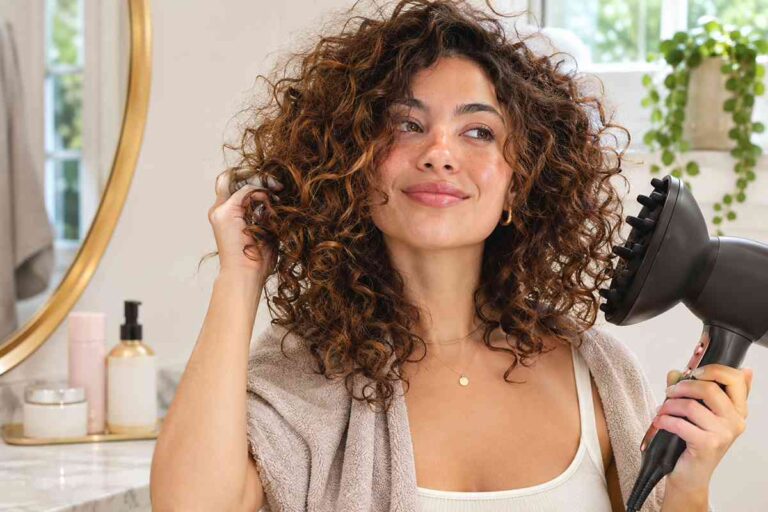
Fran is so good at having curly hair! I love that she didn’t just straighten it. She dries her thick curls with a diffuser and finishes with pomade and a finishing gloss, and when she’s done she still has curly hair, but every curl is clear and defined. At about 14 minutes, it’s the longest video here and walks through the whole routine from the sink onward, so watch this one first if you’re building your own.
How to Style Curly Frizzy Hair in 5 Minutes by Adrian Barrera
This guy has some very curly hair. If yours is short, his method is about as simple as it gets: spread leave-in conditioner evenly through damp hair, sculpt it with your hands, and let it air-dry. The result is a soft, curly pompadour, and the same steps work with whatever leave-in you already own.
How to Make Stupid Frizzy Hair Look Awesome
This girl starts out looking like pre-makeover Anne Hathaway in The Princess Diaries. (Honestly, in the movie I kind of liked that look better. But I’ve always been jealous of curly girls.) Then she curls inch-wide sections with a ceramic curling iron, combs through with a wide-tooth comb, smooths in a little baby oil (standing in for her usual hair oil), and sets it with hairspray. She ends up looking like post-makeover Anne Hathaway. It’s time-consuming, and it’s a heat-styling route rather than a care routine, but the results are impressive. She adds the oil after curling, which is the right order. If you try it, add a heat protectant before the iron, a step the video skips.
3 Simple Updos for Curly Hair by Cityline
For days when the frizz is winning and you’ve got a lion’s mane and no time, put it up. In this three-minute segment from the Canadian daytime show Cityline, stylist Kevin Hughes works with his model’s natural curls instead of fighting them. The first look is a quick bun made by pulling the hair only halfway through the elastic on the last pass, then pinning it. The second is a low chignon built from three small ponytails, each twisted and pinned. The third, which he calls Game of Thrones inspired, flips the top section through itself to create rolled sides that look almost braided. All three keep the frizzies tucked in, and if a few escape, it just looks romantic.
Want more ideas along those lines? Try these DIY updos for curly hair, these easy updos for short curly hair, or a few hairstyles that work with frizzy hair.