



Some Pieces Stay Longer Than We Expect
Most of us remember buying our first piece of jewelry that truly felt like our own.
Not because it was expensive.
Not because it attracted compliments.
Simply because we never really stopped wearing it.
Years later, we may struggle to remember where we bought a favorite sweater or what happened to a pair of shoes we once loved, yet a familiar bracelet or necklace often remains quietly present. It appears in old holiday photographs, catches the morning light while pouring a cup of coffee, or slips effortlessly beneath the sleeve of a winter coat without asking for attention.
The most meaningful jewelry rarely announces itself.
Instead, it settles into everyday life so naturally that we stop noticing it’s there.
That may sound surprising in a world where fashion constantly encourages us to search for something new. Every season introduces different colors, silhouettes, and accessories, each promising to redefine personal style. Yet when people look back over the photographs that truly matter—the ordinary birthdays, long weekends away, family dinners, unexpected celebrations—it is often the same few pieces of jewelry that quietly appear again and again.
Perhaps lasting style has never been about owning more.
Perhaps it has always been about keeping what continues to feel right.
The older we become, the more we realize that our wardrobes aren’t built in a single afternoon of shopping. They evolve through repetition, habit, and small decisions made almost without thinking. We return to certain jackets because they fit comfortably. We wear the same boots because they’ve shaped themselves to our feet. We reach for familiar jewelry for much the same reason.
Comfort has a quiet confidence.
It doesn’t compete.
It doesn’t demand attention.
It simply belongs.
That’s one reason jewelry behaves differently from almost everything else we own. Clothing wears out. Trends fade. Even carefully chosen accessories sometimes lose their appeal after a season or two. Jewelry often moves in the opposite direction. The longer we live with certain pieces, the more personal they become.
Time changes our relationship with them.
A silver bracelet no longer feels like something we purchased.
It becomes the bracelet we wore through the first year of a new job.
The necklace isn’t simply beautiful anymore.
It’s the necklace that travelled across countries tucked safely inside a small leather pouch, the one we instinctively packed without making a checklist because leaving it behind never even crossed our minds.
These quiet associations rarely happen overnight.
They’re built through ordinary mornings rather than extraordinary occasions.
A familiar ring accompanies countless meetings, train rides, grocery runs, coffee breaks, and evenings spent cooking dinner at home. None of those moments seem important on their own, yet together they slowly create something far more meaningful than a purchase.
Objects begin carrying memory.
Without asking permission, they become part of our routines, and eventually, part of our identity.
Fashion magazines often celebrate transformation.
Real life is usually less dramatic.
Most people don’t wake up one morning with an entirely new sense of style. Instead, personal style grows almost unnoticed. It develops through the pieces we continue choosing long after the excitement of buying them has disappeared.
Perhaps that’s why the jewelry we treasure most is rarely the newest.
It’s simply the jewelry that stayed.
Style Is Built Through Repetition, Not Reinvention
When people talk about building a wardrobe, they often imagine a series of deliberate decisions—a carefully chosen coat, the perfect pair of jeans, shoes that match almost everything.
Jewelry rarely enters the story in quite the same way.
More often than not, it becomes part of our lives almost by accident.
A bracelet bought while travelling.
A necklace discovered in a small boutique on an ordinary afternoon.
A ring chosen simply because it felt comfortable the moment it was tried on.
None of these moments seem especially significant at the time.
Yet months become years, and those same pieces continue appearing in the small routines that quietly shape everyday life.
That’s the curious thing about personal style.
It isn’t created through dramatic changes.
It’s built through repetition.
The pieces we return to over and over again eventually become the ones that define us—not because anyone else notices, but because they begin to feel inseparable from who we are.
There comes a point when getting dressed no longer feels like making a series of fashion decisions.
Instead, it becomes instinctive.
The shirt that always fits.
The jacket that works in every season.
The watch that’s been worn for years.
And the bracelet that’s reached for almost without thinking.
This quiet consistency often says far more about a person’s style than a wardrobe filled with constantly changing trends.
Perhaps that’s why the most memorable dressers are rarely the ones wearing the loudest outfits.
Their clothes feel lived in.
Their accessories feel personal.
Nothing appears chosen for attention.
Everything appears chosen because it belongs.
Silver has always occupied a unique place within that philosophy.
It doesn’t compete with colour.
It doesn’t overwhelm simple clothing.
Instead, it settles naturally into everyday life, complementing rather than dominating an outfit.
Whether paired with a crisp white shirt, a lightweight knit, or a relaxed linen jacket, silver rarely feels tied to a particular season.
That versatility explains why so many people gradually narrow their collection to just a handful of dependable favourites.
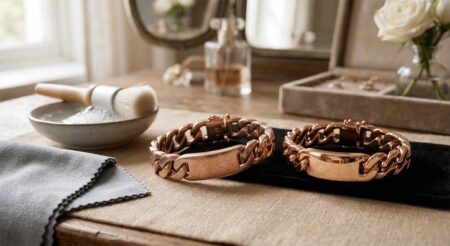
Among them, handcrafted sterling silver bracelets often become the pieces that stay in regular rotation. Their understated character allows them to move effortlessly between casual weekends, working days, and quieter evenings without ever feeling out of place.
The longer we wear something, the less we think about it.
And strangely, that’s often the highest compliment an accessory can receive.
It no longer asks for attention.
It simply becomes part of the rhythm of the day.
Fashion encourages constant discovery.
Personal style is something quieter.
It’s the confidence that comes from knowing certain pieces will always feel right, regardless of what’s currently appearing on runways or filling social media feeds.
Those are the pieces we continue reaching for year after year.
Not because they’re fashionable.
Because they have quietly earned our trust.
Looking back, few people remember every trend they followed.
They remember the handful of pieces that stayed beside them while everything else changed.
Perhaps that’s how a collection is really built—not through shopping, but through living.
The Pieces That Travel Through Life With Us
Travel has a way of revealing what really matters.
The suitcase is smaller than the wardrobe at home, every item has to earn its place, and unnecessary choices are quickly left behind. Few people pack an entire jewelry collection for a weekend away. Most reach for the same familiar pieces without even thinking about it.
It’s rarely a conscious decision.
The bracelet already resting on the bedside table slips into a travel pouch. The necklace worn almost every day is folded carefully between soft layers of clothing. The ring that’s been on the same finger for months hardly feels like something separate from the journey at all.
Somehow, those are the pieces that end up appearing in every photograph.
A quiet breakfast in a café before the city wakes up.
An afternoon wandering unfamiliar streets with no particular destination.
A train window reflecting the last light of the evening.
A family dinner where nobody thinks to talk about fashion, yet years later everyone notices the same necklace in every picture.
Jewelry has a remarkable ability to become part of memories without ever asking to be noticed.
Unlike a statement dress worn once for a special occasion, everyday jewelry quietly witnesses hundreds of ordinary moments. It sits beside a notebook during long meetings, catches the afternoon sun while crossing a busy street, and disappears beneath a warm scarf when winter arrives.
Those moments rarely seem important while they’re happening.
Looking back, they become everything.
Perhaps that’s why replacing a favorite piece is often harder than replacing almost anything else we wear.
It’s never just about finding another bracelet that looks similar or another necklace with the same design.
The missing piece carried years that can’t be recreated.
It travelled through airports, celebrations, quiet weekends at home, unexpected conversations, and countless ordinary mornings that slowly became part of a much bigger story.
The object itself can be replaced.
Its history cannot.
There’s something comforting about that.
In a world that constantly encourages us to replace, refresh, and reinvent, jewelry reminds us that some things become more valuable simply because they remain.
The tiny marks left by everyday wear aren’t imperfections.
They’re evidence of a life well lived.
A polished edge softened by years of movement.
A clasp opened and closed hundreds of times.
A chain that rests naturally because it has followed the same familiar routine for so long.
These details are almost invisible to everyone else.
Yet they’re often the very reason a piece feels impossible to replace.
The longer we wear something, the less it belongs to a particular outfit or season.
Instead, it becomes woven into our daily rhythm.
It accompanies Monday mornings and Sunday afternoons with equal ease.
It feels just as natural on holiday as it does during the ordinary routines waiting back home.
Perhaps that’s the quiet difference between fashion and familiarity.
Fashion asks us to notice something new.
Familiarity gently reminds us why we kept something in the first place.
And over time, those familiar pieces stop feeling like accessories altogether.
They simply become part of the life that’s unfolding around them.
The Difference Is Often in the Smallest Details
The people with the strongest sense of style rarely seem to be trying very hard.
That’s something I’ve noticed again and again, whether watching someone step off a train in Paris, walking through a neighborhood market on a Sunday morning, or simply sitting in a café during an ordinary afternoon.
Nothing about their outfit appears complicated.
A relaxed blazer.
A white cotton shirt.
Well-worn denim.
Comfortable leather shoes.
Everything feels effortless.
Yet the overall impression is unmistakably refined.
It isn’t because they’re wearing more.
It’s because every detail feels intentional.
Style rarely depends on dramatic gestures.
More often, it lives in the smallest decisions.
Rolling up a sleeve instead of buttoning it.
Choosing natural fabrics that move comfortably.
Leaving enough space for simplicity to speak for itself.
Jewelry follows exactly the same principle.
The pieces that quietly complete an outfit often become far more memorable than those designed to dominate it.
A delicate necklace resting against the collarbone.
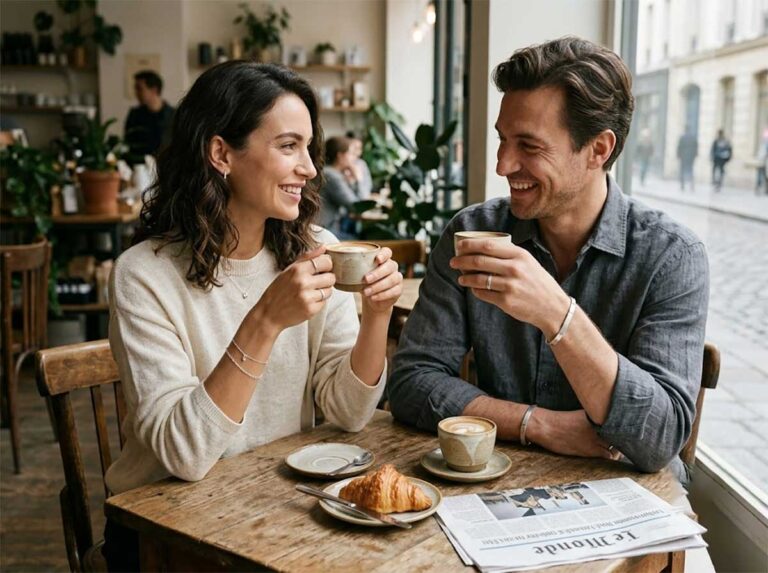
A slim bracelet catching the light while reaching for a coffee cup.
A familiar ring that appears almost unnoticed during conversation.
None of these pieces compete with the clothing.
Instead, they create balance.
That’s one reason timeless jewelry continues to outlast seasonal fashion.
Its purpose isn’t to transform an outfit into something completely different.
It’s to make an outfit feel complete.
Perhaps that’s why so many women eventually discover that one of their most frequently worn pieces is simply one of those elegant sterling silver necklaces that seems to work effortlessly with almost everything they already own.
It feels equally appropriate beneath a tailored jacket on a working day, layered over a lightweight knit during autumn, or paired with a simple linen dress on a warm afternoon.
Versatility has a quiet elegance of its own.
The older we become, the less interested we are in collecting options for every possible occasion.
Instead, we appreciate pieces that move naturally through different parts of life without asking us to think about them.
That doesn’t make style less expressive.
If anything, it makes it more personal.
Rather than relying on constant change, it begins to reflect consistency.
People start recognizing your style because it feels familiar, not because it’s constantly reinventing itself.
Fashion trends will always continue moving.
New silhouettes will appear.
Colors will change.
Accessories will become larger, smaller, brighter, or more understated.
Those cycles are part of what makes fashion enjoyable.
Personal style, however, usually grows in a quieter direction.
It becomes less about discovering something new every season and more about understanding what continues to feel right year after year.
Perhaps that’s why the most memorable wardrobes are rarely the largest ones.
They’re simply the ones built around pieces that have earned their place through everyday life.
And jewelry, more than almost any other accessory, has an extraordinary way of doing exactly that.
What We Choose to Keep
There comes a point when we stop measuring our wardrobes by how much they contain and start appreciating them for how well they reflect who we are.
The same shift happens with jewelry.
In the beginning, collecting often feels exciting. Every new piece promises a different look, another way to express ourselves, another trend worth trying. Over time, however, excitement quietly gives way to something more meaningful.
We begin to notice the pieces that never seem to leave.
Not because they’re the most valuable.
Not because they’re the newest.
Simply because they continue to feel right.
Those pieces become part of everyday rituals in ways we hardly recognize.
A bracelet fastened before leaving the house.
A necklace adjusted almost absent-mindedly while waiting for the elevator.
A ring returned to the same finger after washing your hands.
Small gestures repeated hundreds of times eventually become part of ordinary life.
And perhaps that’s the greatest compliment any piece of jewelry can receive.
It no longer feels like something you chose that morning.
It simply feels like part of you.
The objects surrounding us quietly absorb the stories of our lives.
A leather notebook filled with handwritten pages.
A favorite armchair beside the window.
A coffee mug reached for every morning.
Jewelry belongs to that same group of familiar things—not because it changes our lives, but because it stays with us while life changes around it.
Maybe that’s why timeless style rarely depends on owning more.
Instead, it grows from knowing what deserves to stay.
Long after trends have faded and shopping bags have been forgotten, the pieces that remain are usually the ones that accompanied ordinary days rather than extraordinary occasions.
They’ve been there for early mornings, long conversations, unexpected opportunities, family celebrations, and quiet weekends when nothing particularly memorable seemed to happen at all.
Yet those ordinary moments become the memories we carry.
And the jewelry quietly carries them with us.
Perhaps that’s what personal style has always been.
Not the pursuit of something new.
But the quiet confidence to keep wearing what already feels authentic.
Years from now, most of us won’t remember every purchase we made.
We won’t remember every trend that briefly filled our wardrobes.
We’ll remember the handful of pieces that stayed beside us through different seasons of life.
The bracelet packed without thinking before every journey.
The necklace that somehow appeared in every family photograph.
The ring that became so familiar we stopped noticing it altogether.
Those pieces don’t simply complete an outfit.
They quietly become part of the person wearing them.
Maybe that’s the real beauty of jewelry.
It isn’t measured by the moment we buy it.
It’s measured by the years we choose to keep it.