




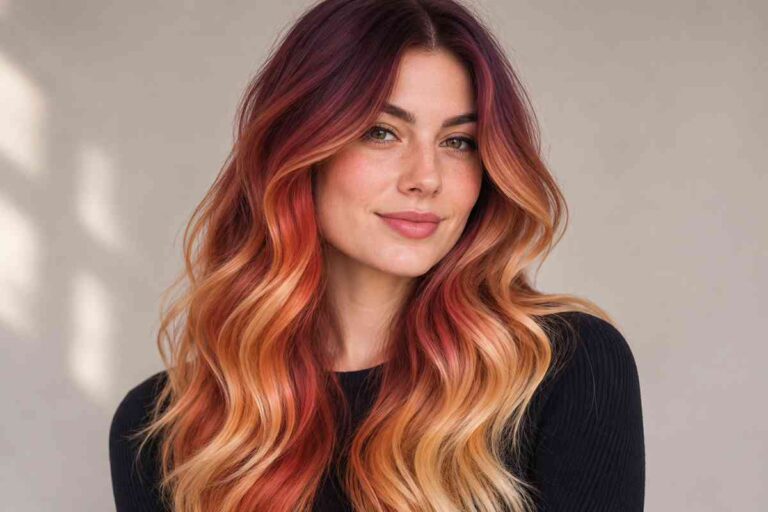
Color melting is a hair-color technique that blends several shades so smoothly you can barely tell where one ends and the next begins. If you love ombré but aren’t a fan of obvious color lines, it’s worth asking your stylist about.
If you’ve ever tried ombré hair, you know the appeal: darker roots, lighter ends, and plenty of contrast. The trouble starts when the transition looks more like a stripe than a gradual fade. A well-done ombré doesn’t have to be harsh, but an uneven ombré dye job can leave you with noticeable blocks of color. Color melting offers another way to soften that changeover.
(Related: The Snowlights Hair Color Trend Is the Perfect Winter Dye Job)
Don’t worry, nothing is actually melting. The colorist blends overlapping shades through the hair to blur the boundaries between them. As stylist George Papanikolas explained to BuzzFeed, the idea is to blend highlights into the base color without harsh lines.

Here’s the difference: balayage is a highlighting technique that paints lightness onto selected sections of hair. Ombré describes a darker-to-lighter color gradient. Color melting concentrates on how shades flow into one another, often using multiple closely related tones. A stylist can even combine balayage and color melting in the same appointment.
The result can look beautifully natural, especially when the shades stay close to your starting color. Think deep brown fading into caramel, or dark blonde easing into honey. The goal isn’t to erase every hint of dimension. It’s to avoid that unmistakable line where one color suddenly stops.
And rainbow hair fans aren’t left out. The same blending approach works with pink, purple, and blue. Obviously, nobody is going to mistake those shades for your natural hair color, but they can still flow together instead of looking like separate stripes.
If you’re considering a color melt, bring your stylist a photo of the transition you like, not just the end color. Ask whether your existing color needs lightening first, particularly if you’re going much brighter. Lightening isn’t always necessary, and the plan should depend on your hair’s color history and condition.
We’ve seen everything from rainbow roots to opal dye jobs, but the clever thing about color melting isn’t another new shade. It’s the way the colors meet. If your last ombré left you staring at a stripe halfway down your hair, that might be reason enough to try it.