






Japan probably isn’t the first country that comes to mind when you’re looking for a yoga retreat. Bali, India, maybe Thailand. Those are the usual suspects.
But Japan? I’d put it on the shortlist, especially if you’re after something a little different from the typical wellness holiday.
Picture a quiet morning near Mount Fuji, a yoga class overlooking a garden, or an afternoon spent wandering through a forest without checking your phone every five minutes. Add some excellent food, a hot spring bath, and a few days away from your regular routine, and you’ve got a pretty convincing reason to visit.
There is one catch, though. Not everything advertised as a wellness retreat in Japan is actually a yoga retreat. Some places offer daily classes with experienced instructors. Others focus on meditation, traditional Japanese culture, or simply providing a peaceful place to stay.
All of those can be wonderful experiences, but they’re not the same thing.
If you’re thinking about booking one of the yoga retreats in Japan, here’s what I’d look for, where I’d consider staying, and what I’d want to know before spending any money.
Why Go to Japan for a Yoga Retreat?
What appeals to me about Japan isn’t the promise of some magical transformation. It’s the possibility of experiencing yoga somewhere that feels completely different from everyday life.
Yoga originated in India, of course. Japan has its own contemplative traditions, including Zen Buddhist meditation, that developed separately. A well-planned retreat can introduce you to both without pretending they’re interchangeable.
You might start the day with yoga, spend the afternoon visiting a garden or walking through the countryside, and finish with a soak in an onsen, a traditional Japanese hot spring.
Or you might find yourself at a much more structured retreat, where mornings begin early, meals are shared, and most of the day revolves around yoga and meditation.
Neither experience is necessarily better. It depends on what you want from the trip.
Personally, I’d look for a balance. Enough yoga to make the retreat worthwhile, but enough free time to enjoy being in Japan. Traveling halfway around the world only to spend every waking hour inside a studio seems like a missed opportunity.
Where to Go for a Yoga Retreat in Japan
Choosing the destination is probably the most enjoyable part of planning. Japan has beaches, mountains, forests, historic towns, and cities where a quiet temple garden can be a short walk from a busy shopping street.
The trick is matching the location to the kind of break you actually need.
1. Kyoto: For Yoga With a Side of Japanese Culture
If this is your first trip to Japan, Kyoto would be one of my first places to consider.
There’s plenty to see beyond the yoga mat. Traditional gardens, old wooden streets, temples, tea houses, and neighborhoods that reward simply walking around without much of a plan.
You could spend the morning doing yoga, visit a temple in the afternoon, and finish the day with a quiet dinner somewhere away from the busiest tourist streets.
That said, Kyoto has become extremely popular with visitors. If you’re imagining empty bamboo forests and deserted temple grounds, you may need to adjust your expectations.
Central Kyoto can be crowded, particularly during cherry blossom season and the autumn foliage period.
For a more peaceful retreat, I’d look for accommodation on the outskirts of the city or somewhere with easy access to the surrounding countryside.
Also, check the program carefully. A hotel offering a single yoga class isn’t the same as a multi-day retreat with daily instruction.
I’d choose Kyoto if: You want yoga to be part of a broader Japan trip rather than the only reason for going.
2. Mount Fuji: For Mountain Views and a Proper Yoga Routine
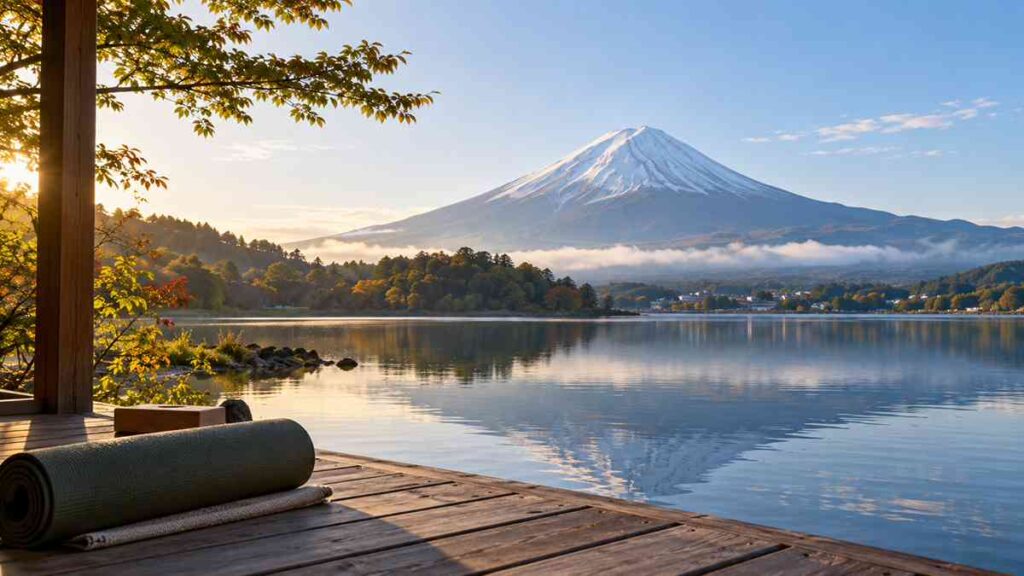
Now, if I wanted to make yoga the main event, I’d take a serious look at the Mount Fuji area.
There’s something appealing about the idea of spending a few days near a lake, with forests nearby and fewer distractions than you’d find in a large city.
One place worth researching is Shojiko Retreat, operated by Sivananda Yoga Japan near Lake Shoji.
It’s an example of a retreat built around yoga rather than a regular hotel that happens to offer a class or two.
The published program describes yoga practice, meditation, and shared activities. Depending on the booking option, accommodation and meals may be arranged separately.
If you’re interested in a traditional, more disciplined approach, that’s worth considering.
One small reality check: Mount Fuji doesn’t always cooperate with the photographs. Cloud cover can hide the mountain completely, even when you’re staying nearby.
I wouldn’t choose a retreat solely because a promotional picture shows a perfect mountain reflection in a lake.
I’d choose Mount Fuji if: I wanted a more focused yoga experience and enjoyed quiet surroundings, walks, and mountain scenery.
3. Okinawa: For Beach Days and a More Relaxed Retreat
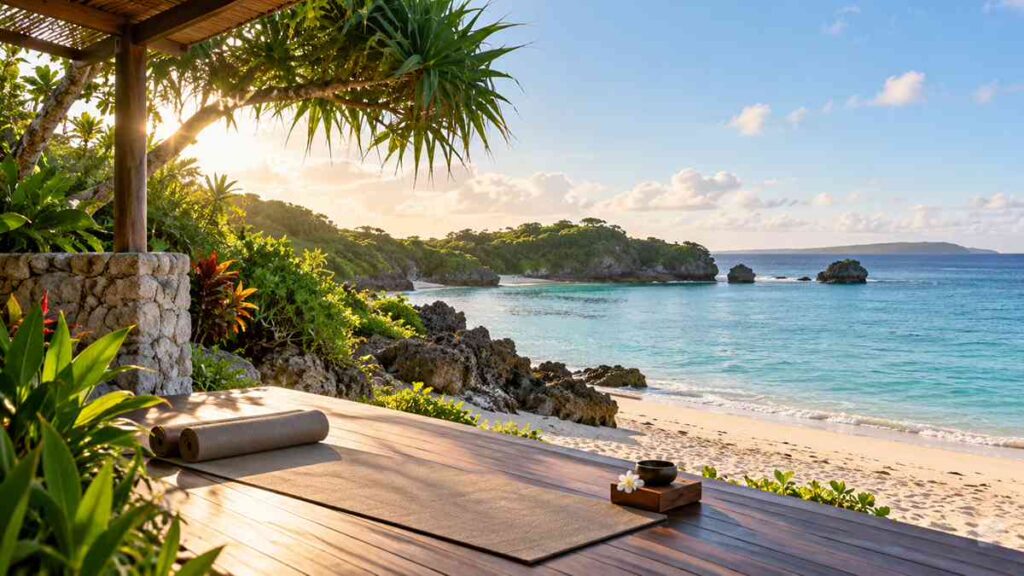
Okinawa feels like a different version of Japan.
It’s warmer, more tropical, and surrounded by some beautiful stretches of coastline. If your ideal retreat includes yoga in the morning and time near the ocean afterward, this is where I’d start looking.
Depending on the organizer, you may find programs combining yoga with meditation, swimming, outdoor activities, and free time.
Some are closer to luxury wellness holidays than traditional yoga retreats, which can be exactly what you want if relaxation is the priority.
Just don’t assume the weather is perfect year-round.
Okinawa gets hot and humid, and typhoons can affect travel during part of the year. A beautiful beachfront resort isn’t much fun if your planned outdoor activities are repeatedly canceled.
Before booking, I’d pay close attention to the dates, the retreat’s cancellation policy, and how much of the itinerary depends on good weather.
I’d choose Okinawa if: I wanted gentle yoga, beach time, and a holiday atmosphere rather than a tightly scheduled retreat.
4. Nagano: For Mountains, Forests, and Fresh Air
Not everyone finds beaches relaxing. Some of us would happily swap the ocean for a mountain cabin, a forest trail, and cooler evenings.
That’s where Nagano comes in.
The region is known for its mountains, hiking areas, traditional towns, and hot springs. It’s particularly appealing if you enjoy being outdoors and want to combine yoga with walking or other gentle activities.
You won’t necessarily find the same number of organized retreat packages as in more established international wellness destinations, so a little more research may be needed.
One option is to look for a small retreat or accommodation offering yoga sessions and then build some independent activities around it.
I’d also think carefully about the season. A mountain retreat in October is one thing. Arriving in the middle of winter without preparing for snow is quite another.
I’d choose Nagano if: I wanted a quieter, outdoors-focused break and didn’t need every hour of the trip organized for me.
5. Kyushu: For Hot Springs and a Slower Pace
Kyushu is another region I’d look at, especially if the idea of spending time in smaller Japanese communities appeals to you.
It’s known for its volcanic landscapes, hot springs, countryside, and distinctive regional food.
Some wellness programs here combine yoga with nature, local food, and cultural activities.
For example, Prana Retreat Japan advertises seasonal small-group retreats that include wellness activities and experiences of rural Japanese life.
It’s worth checking the current itinerary because retreat dates, instructors, and inclusions can change.
What I like about this type of program is that the destination becomes part of the experience. You’re not simply flying to Japan to attend the same yoga classes you could take at home.
I’d choose Kyushu if: I wanted yoga, local culture, countryside experiences, and a less tourist-heavy itinerary.
6. Koyasan: For Meditation Rather Than Traditional Yoga
Koyasan is a little different from the other places on this list, and that’s precisely why I’ve included it.
Located in Wakayama Prefecture, it’s known for its Buddhist temples and traditional temple accommodation, called shukubo.
Depending on where you stay, you may have opportunities to participate in morning religious services, meditation, or meals prepared according to Buddhist culinary traditions.
But here’s the important bit: a temple stay is not automatically a yoga retreat.
If you book a temple stay expecting daily Vinyasa classes, you could be disappointed.
On the other hand, if you’re interested in meditation, Japanese Buddhism, and spending time somewhere very different from an ordinary hotel, it could be a memorable experience.
I’d treat Koyasan as an alternative to a conventional yoga retreat, rather than a direct substitute.
Which Part of Japan Should You Choose?
If you’re still undecided, this quick comparison might help.
| Destination | What makes it appealing | Who I’d recommend it to |
|---|---|---|
| Kyoto | Temples, gardens, traditional culture | First-time Japan visitors |
| Mount Fuji | Lakes, mountain scenery, structured retreats | People wanting regular yoga practice |
| Okinawa | Beaches, tropical scenery, relaxed atmosphere | Travelers combining yoga with a holiday |
| Nagano | Forests, mountains, hiking, hot springs | Nature lovers |
| Kyushu | Hot springs, countryside, local culture | Slow-travel enthusiasts |
| Koyasan | Temple stays and Buddhist practices | People especially interested in meditation |
If I were narrowing the options down for a first trip, I’d probably focus on Kyoto, Mount Fuji, or Okinawa.
They’re three very different experiences, which makes the decision easier once you know what kind of holiday you want.
What Actually Happens at a Yoga Retreat?
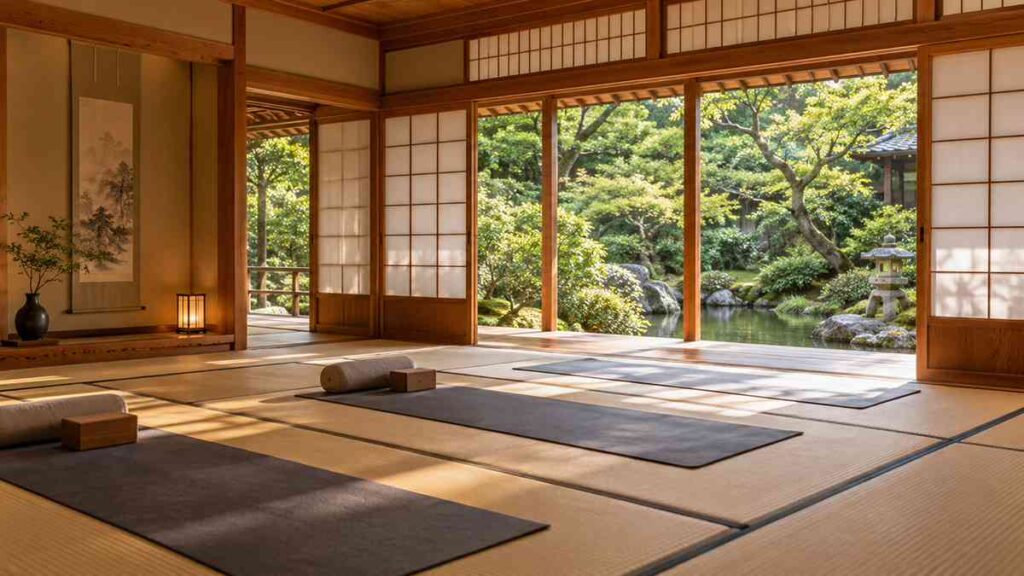
If you’ve never attended a retreat, it’s easy to imagine everyone sitting silently, drinking green tea, and meditating from sunrise until bedtime.
Some places are quite structured, but plenty are much more relaxed.
A typical day might include morning yoga, breakfast, a few hours of free time or organized activities, and another practice session later in the afternoon.
You may eat with the other guests, join a meditation class, or explore the surrounding area.
Here’s an example of how a relaxed retreat day could look. It’s only an illustration, not a schedule taken from a specific provider.
| Time | Activity |
|---|---|
| 7:00 AM | Morning meditation or breathing exercises |
| 8:00 AM | Yoga class |
| 9:30 AM | Breakfast |
| 11:00 AM | Nature walk, temple visit, or free time |
| 1:00 PM | Lunch |
| 3:00 PM | Optional activity or hot spring visit |
| 5:00 PM | Gentle yoga or meditation |
| 7:00 PM | Dinner and relaxation |
That sounds pleasant to me. But I’ve also seen retreat schedules advertised with much earlier starts and considerably less free time.
Neither approach is wrong. Just make sure you know what you’re signing up for.
If you’re hoping to sleep late, read a book, and enjoy long afternoons exploring Japan, a strict schedule might feel more like work than a holiday.
How Much Does a Yoga Retreat in Japan Cost?
This is one of the first things I’d check, because the price difference between retreats can be enormous.
You might find an affordable yoga class at an established center, a short countryside wellness break, or a luxury retreat package costing several thousand dollars.
And those prices can be misleading when you don’t know what’s included.
For example, Shojiko Retreat has advertised individual yoga classes for approximately US$15, while accommodation and meals are handled separately. At the other end of the spectrum, luxury multi-day retreat listings can cost well over US$1,000 per person.
Those are examples of different products, not directly comparable retreat prices. Rates change, so I’d always check the organizer’s current booking page.
You can compare advertised programs on BookYogaRetreats, but I’d also check the retreat’s official website before paying.
Don’t Forget the Extra Costs
A retreat that looks affordable at first glance can become considerably more expensive once you add everything else.
Before booking, I’d want answers to these questions:
- Is accommodation included, or do I have to book it separately?
- Are all meals provided?
- How many yoga classes are included each day?
- Do I need to bring my own yoga mat?
- Does the price include cultural activities and excursions?
- Will I need to pay for trains, taxis, or airport transfers?
- Is the advertised rate based on sharing a room?
- Are there additional charges for private accommodation?
I’d also check the cancellation policy before paying a deposit. That matters even more if you’re booking flights months ahead.
For me, a retreat with transparent pricing and a sensible itinerary is more appealing than one with beautiful photographs and vague promises about what’s included.
When Is the Best Time to Visit Japan for Yoga?
Japan’s seasons are part of its charm, but they can also make or break certain travel plans.
I’d choose the dates based on the destination rather than assuming one season works equally well everywhere.
Spring: March to May
Spring is an obvious favorite. The weather is often comfortable, gardens come alive, and cherry blossom season can make even an ordinary walk feel special.
The downside? You’re not the only person who knows this.
Popular areas such as Kyoto can become very busy, and accommodation prices may rise around major holidays and peak blossom periods.
If spring is your preferred season, I’d book early and avoid assuming that cherry blossoms will appear on a particular date. Blooming periods vary with the weather and location.
Summer: June to August
Summer can be beautiful in the mountains, but it can also be extremely hot and humid across much of Japan.
There is also a rainy season in many regions, followed by periods when tropical storms may affect travel.
If I were traveling during the hottest months, I’d look carefully at mountain destinations, indoor facilities, and whether outdoor activities can be adjusted when the weather doesn’t cooperate.
Autumn: September to November
Autumn might be my first choice for a retreat around Kyoto, Nagano, or Mount Fuji.
Cooler days, changing leaves, and opportunities for comfortable walks make it appealing.
Of course, autumn foliage is another popular tourist attraction. The most famous locations can be busy, especially in November.
I’d also remember that early autumn is still within the period when tropical storms can affect some areas.
Winter: December to February
A winter retreat sounds lovely if you enjoy snowy landscapes, quiet evenings, and hot springs.
But you’ll want to think about cold temperatures, transport connections, and possible seasonal closures.
If you’re unfamiliar with winter travel in mountainous Japan, I’d choose somewhere with straightforward access and clear arrival instructions.
My pick: For a first yoga retreat around Kyoto or Mount Fuji, I’d begin by researching April, May, October, and November. For Okinawa, I’d pay more attention to local weather and storm patterns.
Yoga, Zen Meditation, and Forest Bathing: What’s the Difference?
One thing that makes wellness travel in Japan interesting is the variety of experiences available beyond ordinary yoga classes.
But these practices have different histories and purposes, so it’s worth knowing what you’re booking.
Yoga
Yoga comes from Indian traditions and can involve movement, breathing, meditation, and philosophical practices.
At a modern retreat, you might encounter Hatha, Vinyasa, Yin, or restorative yoga.
If you’re new to yoga, I’d look for gentle instruction and plenty of modifications rather than choosing a program simply because it promises an intense experience.
Zen Meditation
Zen Buddhism has a long history in Japan, and some temple stays offer opportunities to practice zazen, or seated meditation.
It’s not the same thing as attending a regular yoga class.
You may be expected to follow particular procedures, remain quiet during sessions, and respect the religious nature of the setting.
I’d approach this as an opportunity to learn rather than treating it as another fashionable wellness activity.
Shinrin-Yoku, or Forest Bathing
Forest bathing sounds far more complicated than it is.
There’s no actual bathing involved. It’s about spending time in a forest and paying attention to the surroundings, the sounds, the air, the textures, and the experience of being there.
Japan has some wonderful forest landscapes, and a slow guided walk could be a lovely complement to yoga.
Just be wary of anyone promising that a forest walk can cure a medical condition. Spending time outdoors can be enjoyable and restorative without needing extravagant health claims.
Onsen Bathing
And then there’s the onsen, something I’d definitely look forward to on a Japan wellness trip.
These traditional hot spring baths are a big part of Japanese bathing culture.
Most facilities expect guests to wash thoroughly before entering communal baths. Many have separate bathing areas for men and women, and swimwear is generally not worn in traditional baths.
Tattoo policies vary, too. Some facilities restrict tattoos, while others allow them or provide private bathing options.
Check the rules beforehand, especially if you’re new to the experience.
Can Beginners Join a Yoga Retreat in Japan?
Yes, and you certainly don’t need to look like someone from a yoga advertisement.
You don’t have to be especially flexible, and you’re not expected to arrive knowing every pose by name.
But I’d be selective about the retreat.
Some programs welcome complete beginners. Others are designed for people who already practice regularly and want a more intensive experience.
Look for descriptions mentioning gentle yoga, beginner-friendly instruction, or modifications for different ability levels.
If you have an injury or a health condition, contact the organizer before booking. Depending on your circumstances, it may also be sensible to discuss the planned activities with your healthcare professional.
Most importantly, remember that a retreat isn’t an exam. You’re there to practice, not to impress the person on the next mat.
Of course, yoga doesn’t have to look the same for everyone. Some people enjoy traditional studio classes, while others explore less conventional approaches, such as nude yoga, which focuses on movement and body acceptance without the usual workout clothes. It’s another reminder that the best yoga practice is the one that makes you feel comfortable in your own skin.
Is It Worth Going on a Yoga Retreat Alone?
I actually think a solo retreat could be one of the more appealing ways to experience Japan.
You can choose the destination, decide how much socializing you want to do, and enjoy a few days without negotiating someone else’s holiday preferences.
Many organized retreats include group meals and shared activities, so traveling alone doesn’t necessarily mean spending the entire trip by yourself.
Still, I’d check a few details first.
Does the retreat offer private rooms? Are you expected to share accommodation? Is there an additional charge for solo guests? And how do you get there if you’re arriving on your own?
A retreat with a straightforward transfer from a railway station may be much easier for a first-time solo visitor than somewhere remote with complicated transport connections.
Also, there’s nothing wrong with wanting personal space. You don’t have to join every group conversation or activity just because you’re traveling alone.
How to Choose a Yoga Retreat You Won’t Regret Booking
Here’s where I’d become a little less romantic and a lot more practical.
Beautiful websites are easy to create. A good retreat takes more than lovely photographs, inspirational quotes, and promises of inner peace.
Before booking, these are the things I’d check.
Find Out Who’s Teaching
Does the website identify the yoga instructor? Can you find information about their training and teaching experience?
I’d be more comfortable booking somewhere that clearly explains its teaching approach than somewhere offering nothing beyond a vague promise of transformation.
Read the Actual Daily Schedule
How many classes are included? Is attendance compulsory? Will you have free time?
If the schedule isn’t published, ask for it.
I’d also want to know whether classes are taught in English if I didn’t understand Japanese.
Check the Accommodation
Some retreats offer modern hotel rooms. Others use traditional Japanese accommodation with futon bedding on tatami floors or shared bathrooms.
Both can be enjoyable, but not everyone sleeps comfortably on a futon or wants to share bathroom facilities.
It’s better to know before arriving.
Look Beyond the Reviews
Reviews can be useful, but I’d read them carefully rather than focusing only on the overall rating.
Do guests mention the quality of the teaching? Were the advertised activities actually included? Did the organizer communicate clearly?
A review discussing the instructor, food, accommodation, and schedule is far more helpful than one simply saying the experience was amazing.
Understand the Refund Policy
This one isn’t glamorous, but it’s important.
Find out how much you’ll lose if your plans change, what happens if the retreat is canceled, and whether the organizer requires a minimum number of participants.
I’d want those details in writing before handing over a substantial deposit.
What Should You Pack?
You don’t need a suitcase full of expensive yoga clothes. Comfortable, practical clothing will do the job.
I’d pack:
- Two or three comfortable yoga outfits, depending on the length of the stay and laundry facilities.
- A light sweater or warmer layer for early mornings.
- Comfortable walking shoes.
- A reusable water bottle.
- A small towel.
- A rain jacket or compact umbrella.
- Personal medication and any required documentation.
- Travel documents, insurance information, and booking confirmations.
- A suitable power adapter, with voltage compatibility checked for electronic devices.
- A yoga mat only if the retreat doesn’t provide one or you prefer your own.
For a mountain retreat, I’d add warmer clothing and check the weather forecast shortly before leaving.
For Okinawa, sun protection and lightweight clothing would move higher up the packing list.
And I’d leave some extra space in the suitcase. Japan has a way of making ordinary household items suddenly look irresistible.
A Few Things Worth Knowing Before You Arrive
Even a relaxing holiday benefits from a little planning.
Getting There May Take Longer Than You Think
Japan’s railway network is excellent, but that doesn’t mean every retreat is easy to reach.
Some properties are a considerable distance from the nearest major station, especially in mountain or countryside locations.
Ask for detailed arrival instructions and check whether the organizer provides transfers.
I’d avoid arriving in an unfamiliar rural area late at night unless I knew exactly how to reach the accommodation.
Food Can Be Part of the Experience
Some retreat programs offer vegetarian meals, traditional Japanese dishes, or food prepared around particular dietary principles.
That can be lovely, but don’t assume every retreat can accommodate every dietary requirement.
If you have allergies or restrictions, ask before booking.
You Don’t Need to Fill Every Free Hour
This might be the most useful advice in the whole article.
It’s tempting to squeeze in every famous temple, garden, and viewpoint because you’ve traveled so far.
But if you return from your yoga retreat exhausted from trying to see everything, you’ve rather defeated the purpose.
Pick a few activities you genuinely want to experience and allow some time for doing absolutely nothing.
Will a Yoga Retreat Actually Make You Feel Better?
It might. But I wouldn’t book one expecting all my stress to disappear after three days of stretching and herbal tea.
Yoga itself has been studied for its potential benefits.
According to the National Center for Complementary and Integrative Health, research suggests that yoga may help with stress management, sleep, balance, and certain types of pain.
That doesn’t mean a particular retreat will produce those results, or that a week away can replace appropriate medical or psychological care.
What a retreat can offer is time and structure.
You’re giving yourself a chance to practice regularly, step away from some daily distractions, and perhaps establish a routine you’d like to continue at home.
For me, that sounds like a more useful goal than expecting a complete personal transformation.
Frequently Asked Questions About Yoga Retreats in Japan
Are there yoga retreats in Japan taught in English?
Yes. Some retreat organizers offer English-language instruction, particularly those catering to international visitors. However, not every program does, so always confirm the language before booking.
How long should a yoga retreat in Japan be?
For a first experience, two or three days may be enough to decide whether you enjoy the format. A four- to seven-day retreat gives you more time to settle into the routine. The right length depends on your schedule, budget, and how intensive the program is.
Do I need to know yoga before joining a retreat?
Not always. Many retreats welcome beginners, but others are intended for experienced practitioners. Check the class descriptions and contact the instructor if you’re unsure.
What’s the best part of Japan for a yoga retreat?
I’d look at Kyoto if you want culture and sightseeing, the Mount Fuji region for nature and structured yoga, and Okinawa if you’d prefer a beach-focused wellness holiday. The actual program matters more than the destination name.
Can I attend a retreat if I’m traveling alone?
Yes. Solo travelers can join organized retreats, although room-sharing policies and single-person supplements vary. Choose somewhere with clear arrival instructions and accommodation arrangements that suit your preferences.
Do Japanese yoga retreats include meditation?
Some do, but it depends on the organizer. Others focus mainly on physical yoga or general relaxation. Read the itinerary and don’t assume meditation, cultural activities, or excursions are included unless stated.
Are meals included?
Sometimes. Residential retreats may provide some or all meals, while yoga classes and more flexible packages may not. Confirm the details, particularly if you have dietary requirements.
Can I combine a retreat with sightseeing?
Absolutely, provided the schedule allows it. Kyoto is especially convenient for combining cultural visits with yoga. For a remote countryside retreat, I’d consider adding sightseeing days before or after the program rather than squeezing everything into the retreat itself.
When should I book?
I’d book early for popular spring and autumn dates, especially when the retreat has only a few rooms. Make sure the booking is confirmed and you understand the cancellation terms before arranging non-refundable transport.
So, Is a Yoga Retreat in Japan Worth It?
I think it can be, particularly if you’re interested in Japan beyond the usual sightseeing itinerary.
You don’t have to spend a fortune on a luxury resort or sign up for an intense spiritual program to enjoy the experience.
A few days of yoga near Mount Fuji might be exactly what you’re looking for. Or perhaps a gentle retreat in Okinawa, with time for the beach and long, unhurried breakfasts, sounds more appealing.
I’d start with the location, compare a handful of actual retreat programs, and pay close attention to the instructor, schedule, and total price.
Above all, I’d resist booking somewhere simply because it promises to change your life.
Sometimes a good holiday doesn’t need to change anything dramatically. A little rest, a new perspective, and a few memorable days can be enough.
And if you’re considering Japan’s yoga retreats, that’s a perfectly good reason to start planning.
Sources and Further Reading
- Japan National Tourism Organization, for practical travel information, regions, seasons, and Japanese culture.
- National Center for Complementary and Integrative Health, for research into the potential benefits and safety of yoga.
- Sivananda Yoga Japan, for information about Shojiko Retreat near Mount Fuji.
- Prana Retreat Japan, for information about seasonal retreat programs.
- BookYogaRetreats, for researching available retreats and comparing advertised inclusions.
- About the Author
- Latest Posts

I’m Iskra Banović, editor of Blufashion and the voice behind its fashion, beauty, and lifestyle stories. Fashion, beauty, and lifestyle are my playground, but I’m just as likely to share the messy side of it all, like the time I tested a “must-have” skincare gadget and ended up with glitter stuck in my hair. I love turning trends and everyday finds into something useful (and fun) for real people.