



The best pajamas are the ones you barely notice once you’re in bed. They shouldn’t leave you sweating, pull across your shoulders when you roll over, or have a waistband that digs into your stomach. And if they look good enough for a slow Sunday morning, even better.
When shopping for pajamas, start with five things: fabric, breathability, fit, construction, and the style you’ll actually enjoy wearing. Your sleeping temperature and laundry habits matter just as much as the color or pattern. Here’s how to choose a pair that’s comfortable, practical, and worth buying.
1. Choose Pajama Fabric for the Season and Your Sleeping Temperature
One of the first things to consider when choosing pajamas is the fabric. A lightweight cotton set might feel wonderful in July but leave you reaching for another blanket in January. Meanwhile, thick flannel can be cozy on a cold night and miserable in a warm bedroom.
Think about how warm you tend to feel while sleeping, not just the weather outside. Someone who sleeps hot may prefer lightweight pajamas throughout the year, while someone who gets cold easily might want long sleeves even in spring.
Here’s how common pajama fabrics compare:
- Cotton: A dependable everyday choice. Lightweight cotton is generally breathable and comfortable, while cotton jersey has a soft, T-shirt-like feel. Heavier cotton fabrics provide more warmth.
- Linen: A good option for warm weather and people who prefer an airy feel. Linen can feel crisp at first and wrinkles easily, which may matter if you like a polished-looking set.
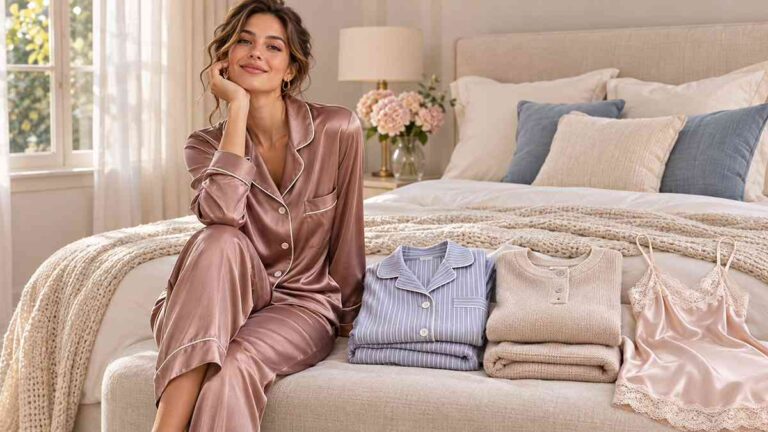
- Silk: Smooth, lightweight, and luxurious against the skin. Silk pajamas are worth considering if you enjoy a fluid, elegant fit, but they usually cost more and may need delicate care.
- Flannel: A cozy choice for colder nights. Its brushed surface helps provide warmth, although it can feel too heavy if you tend to overheat.
- Modal and viscose: Often soft, smooth, and fluid in the way they drape. These fabrics can feel comfortable for sleeping, but their performance depends on the fabric’s weight and construction.
- Polyester and blends: Often affordable, durable, and easy to care for. Some polyester fabrics retain more heat than lightweight natural-fiber alternatives, so check the actual fabric rather than judging by appearance alone.
For example, if you’re shopping for mens silk pajamas, consider whether the person wearing them prefers the smooth feel of silk or the familiar softness of cotton. Either can be a comfortable choice, but they’re different experiences.
One detail worth checking is fabric weight. A lightweight woven cotton set and a thick cotton knit can feel completely different, even though both labels say 100% cotton. Don’t assume the fiber name tells you everything about how warm the garment will feel.
2. Look for Breathable Fabric and a Comfortable Weave
Breathability matters when choosing sleepwear, especially if you regularly wake up feeling too warm. But the fabric’s weave or knit, thickness, and overall construction can affect comfort as much as its fiber content.
Lightweight cotton and linen are useful options for people who prefer an airy feel. Cotton jersey offers more flexibility, making it a practical choice if you change sleeping positions frequently. Silk has a smooth surface and can feel pleasantly lightweight, although its comfort depends on the particular garment.
It’s also worth understanding the difference between absorbing moisture and moving it away from your skin. Cotton absorbs moisture well, but it may stay damp longer than some moisture-wicking fabrics. If you tend to sweat at night, consider how quickly the material dries, not just how soft it feels when you first put it on.
And don’t confuse satin with silk. Satin describes how fabric is woven, not what it’s made from. A polyester satin set may look similar to silk pajamas in a product photo, but the two can feel different in bed. Check the fiber-content label before paying a premium for something advertised as silky.
If you’re comparing mens silk pyjamas, look at the actual silk content, fabric weight, and washing instructions. A beautiful set isn’t much of a bargain if you’re uncomfortable wearing it or reluctant to clean it.
You’ll also see pajamas advertised as bamboo. Many of these are actually made from rayon or viscose produced using bamboo as the raw material. They may feel soft and comfortable, but don’t assume they’re naturally antibacterial or hypoallergenic simply because the product description mentions bamboo. The Federal Trade Commission explains how bamboo fabric claims can be misleading.
3. Pay Attention to Embellishments, Seams, and Construction
Pajamas don’t have to be plain to be comfortable. A classic striped set, contrast piping, or a scalloped-edged pair of shorts can add personality without making sleepwear feel overdone.
The trick is choosing details that look good without getting in your way. Lace, beads, bulky buttons, and decorative stitching can be attractive, but consider where they’ll sit when you’re lying down. A raised seam that feels harmless while standing may be annoying after several hours in bed.
Before buying, take a closer look at how the pajamas are made:
- Seams: Look for neat, secure stitching without loose threads or rough edges that might rub against your skin.
- Waistband: Choose elastic that feels secure without digging in. A fabric-covered waistband can be more comfortable if you’re sensitive to exposed elastic.
- Buttons and closures: Check that they’re securely attached and don’t press uncomfortably against your body.
- Fabric finish: Look closely for obvious snags, uneven stitching, or areas that seem unusually thin.
- Decorative details: Make sure piping, lace, and other embellishments feel comfortable against your skin and won’t complicate cleaning.
If you’re buying pajamas as a gift, simpler designs are often easier to get right. A soft, well-made set in a familiar style may be more useful than something elaborate that looks impressive in the box but rarely gets worn.
You don’t necessarily need to spend a fortune, either. If you’re shopping on a tight budget, prioritize comfortable fabric, secure stitching, and easy care over extra decoration.
4. Find a Flattering Cut That Still Lets You Move
A flattering pair of pajamas should make you feel good without sacrificing comfort. That doesn’t mean choosing the tightest fit or hiding under yards of extra fabric. The sweet spot is enough room to move naturally, with a shape you actually like wearing.
Some people prefer a classic button-front shirt with straight-leg pants. Others feel better in a relaxed T-shirt, elastic-waist shorts, or a soft matching knit set. There’s no single cut that’s right for every body or sleeping style.
When trying on pajamas, sit down, raise your arms, bend your knees, and turn your upper body. The shirt shouldn’t pull sharply across your shoulders or chest, and the pants shouldn’t feel restrictive at the hips or thighs. If you’re shopping online, compare your measurements with the brand’s specific size chart instead of relying only on your usual clothing size.
Pay particular attention to the waistband and inseam. Pants that fit perfectly at the waist can still be uncomfortable if they’re too short through the rise or bunch around your ankles. If you’re between sizes, consider whether the fabric stretches and whether the brand notes any shrinkage after washing.
For a more tailored appearance, look for a gently shaped top or straight-leg pants rather than an extremely oversized set. If your priority is unrestricted movement, a relaxed jersey style may be more appealing.
One important exception: These relaxed-fit recommendations are intended for adults. When buying pajamas for children, follow the garment’s safety labeling rather than simply sizing up for extra room. US children’s sleepwear must meet applicable flammability requirements or qualify under specific snug-fitting provisions. The US Consumer Product Safety Commission explains children’s sleepwear requirements.
5. Consider a Chemise or Nightshirt Instead of a Traditional Pajama Set
Not everyone wants to sleep in a matching shirt and pants. If waistbands bother you or you prefer fewer layers, a chemise or nightshirt might be a better choice.
A chemise is typically a lightweight, sleeveless garment with a relaxed or gently shaped silhouette. Many styles have thin straps and fall somewhere around the upper thigh, although lengths vary. Chemises may feature lace, simple trim, or a wide or low-cut neckline.
Cotton chemises can be a practical choice for everyday sleepwear, while silk and satin styles offer a smoother, dressier look. Just as with traditional pajamas, check the fiber content rather than assuming every shiny fabric is silk.
A nightshirt generally has a more casual look, often resembling an oversized shirt or T-shirt. It may provide more coverage across the shoulders and chest, depending on the design. If you prefer something simple to throw on at bedtime, a soft cotton nightshirt could be more comfortable than a fitted chemise.
Before buying either style, consider the length, how much coverage you want, and whether the fabric rides up when you move. Adjustable straps can be helpful on a chemise, while a matching robe may be useful if you want extra coverage around the house.
Before You Buy, Check the Size Chart and Care Label
Even a beautifully made pajama set can be disappointing if it doesn’t fit after the first wash. Take a minute to check the details that product photos can’t tell you.
- Check measurements: Compare your bust or chest, waist, and hip measurements with the brand’s size chart. For pants, check the inseam and rise when those measurements are available.
- Read the fabric label: Look at the percentage of each fiber, especially if you’re shopping for pure silk, cotton, or a particular blend.
- Review washing instructions: Some silk garments need hand-washing or dry cleaning, while many cotton and knit sets are easier to maintain.
- Consider shrinkage: Check whether the manufacturer offers guidance about shrinkage, particularly for cotton garments.
- Check the return policy: This matters when buying online or shopping for a gift, especially if the seller limits returns on sleepwear.
For everyday pajamas, a comfortable cotton or cotton-blend set is often a sensible place to start. If you tend to overheat, compare lightweight cotton, linen, and other breathable options. If you love the feeling of silk and don’t mind the care requirements, that may be worth the extra expense.
The best choice isn’t necessarily the prettiest pair on the product page or the most expensive one in the store. It’s the pair that fits comfortably, suits your sleeping temperature, and still feels good when bedtime comes around.