




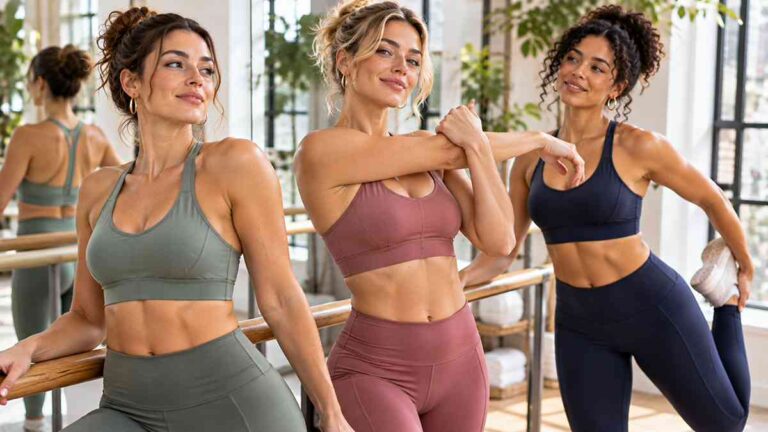
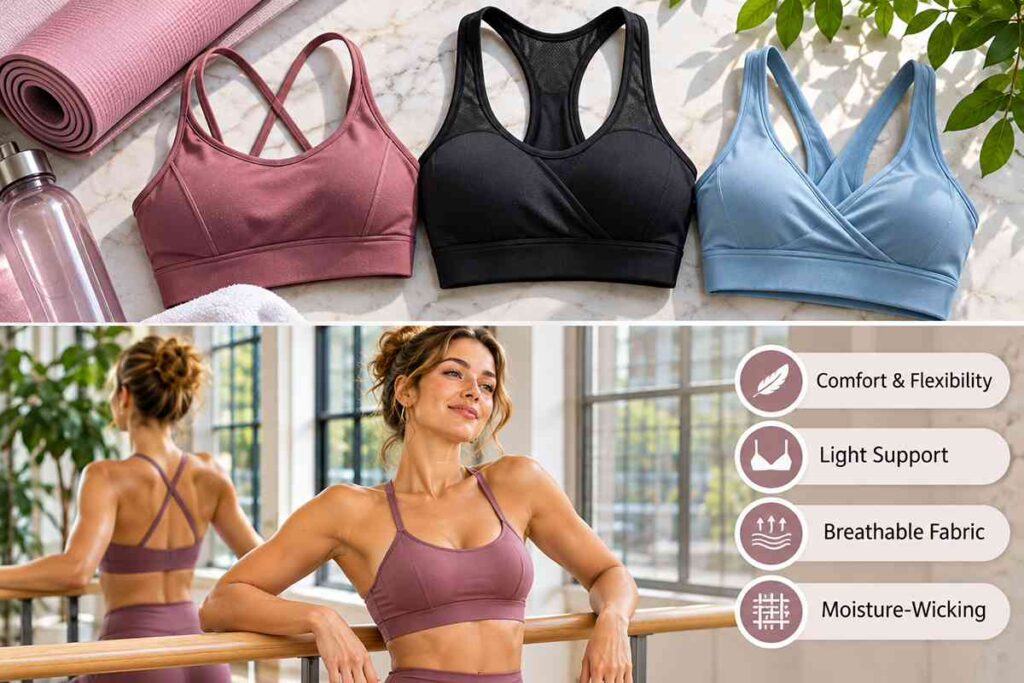
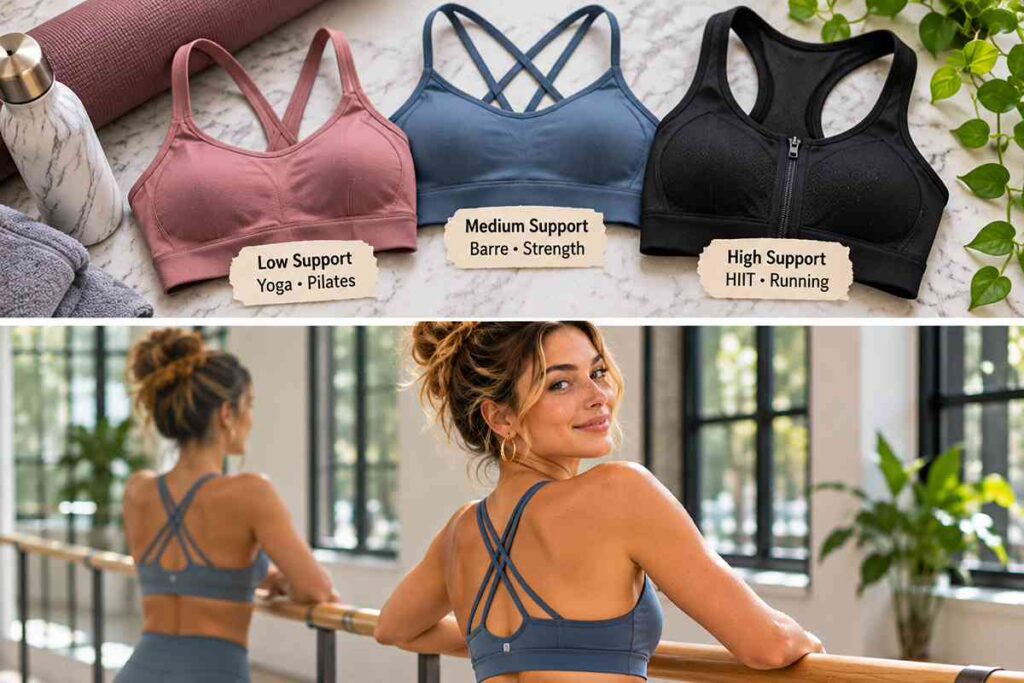
For barre, yoga, and Pilates, you usually don’t need the same high-impact sports bra you’d wear for running. Start with light-to-medium support, a band that stays put, and fabric that feels good when you stretch, twist, or fold into a Pilates roll-up.
When you’re running or SoulCycling (I would imagine, can’t speak from experience), priority numero uno is keeping your girls from bouncing all over the place. Barre is a different story. The goal is enough support to move comfortably without feeling locked and loaded.
I knew there was no better person to ask than not-your-typical-lingerie-designer Dana Donofree. Dana founded AnaOno Intimates after breast cancer treatment changed what she needed from a bra. I’ve written about Dana before, but to recap, she underwent a bilateral mastectomy, reconstructive surgery, and chemotherapy.
At the end of it all, she found that bras simply did not fit her anymore. A graduate of Savannah College of Art and Design, Dana set out to fix that problem herself. The result was a lingerie line that prioritizes fit and comfort, including designs for people who’ve had breast surgery. Those same qualities matter when you’re choosing a bra for a low-impact workout.
Here are Dana’s tips for shopping for a low-impact sports bra for your barre class and beyond, with a few extra fit checks worth making before you buy.
Choose breathable fabric, not just natural fabric
“Generally speaking, when shopping for a sports bra to wear to Barre or Pilates or any low-impact exercise, it’s best to keep in mind breathability and comfort that offers light support,” Dana says. “Natural fabrics, like our sustainable bamboo material in our Jennifer collection, help keep your body heat regulated by wicking sweat away from the body, and they can prevent skin irritation from sweat and movement as well. The mesh back features on our bra is also great for keeping you cool while you work out.”
Softness matters, especially if your skin is sensitive, but don’t rule out polyester-spandex blends. Many synthetic workout fabrics wick moisture and dry quickly, while some natural fibers hold on to sweat. Feel the fabric, check the care label, and think about how much you perspire in class. The Jennifer collection Dana mentions was part of the line when this interview took place, so check AnaOno’s current selection rather than assuming the same style is still sold.
Think “second skin”
“Comfort is essential, too. No one wants to be distracted by the band of their bra cutting into to their body while trying to ease into a deep yoga pose, or feel restricted or pinched in a Pilates roll-up,” she says. “You want your bra to move with you, while still keeping everything in place. It should be a gentle, second-skin, just like your favorite pair of yoga pants.”
Underwire isn’t automatically the enemy, but a wire, clasp, seam, or strap that digs in when you bend is a dealbreaker. Check that the band sits level beneath your bust and that the cups contain your breast tissue without gaping or spilling. A soft bra can still offer real support, and a comfortable fit shouldn’t require you to size down.
Test it out (really test it out) before you buy it
Merely trying on is not enough. “Make it a point to move and bend and lift your arms while trying on a sports bra, just to make sure it doesn’t ride up or feel restrictive,” Dana says.
Take a deep breath, reach overhead, turn from side to side, and fold forward. Does the band stay put? Do the straps stay on your shoulders without digging? Can you move without adjusting the cups every few seconds? If the answer is no, try another size or style. If you’re ordering online, check the specific brand’s size chart and return policy first.
Fashion should make you feel good, even for working out
“Let’s not forget; fashion can make athletic or workout gear fun. Our Jennifer bra is stylish enough to wear on its own or peeking through a tank, and its ultra-soft construction can take you from the studio to the smoothie bar after class with ease. We’ve heard from many women they even forget it’s on, it’s that comfortable.” I have one, and I’m telling you, it’s cute enough that I’d wear it as a shirt.
You need a little give
For some reason, women have this impression that sports bras need to be so tight we can barely breathe. Not so. “It’s important, especially for women who’ve had breast surgery, and even more so, reconstruction surgery, to make sure there isn’t too much compression when shopping for a bra to wear to the gym or exercise class,” Dana advises. “You want a little give because tightness can sneak up on you and cause lots of discomforts.”
A sports bra should feel secure, not like it’s squeezing the air out of you. If you’ve recently had breast surgery, follow your surgical team’s instructions about compression, bra styles, and when to resume exercise. A regular low-impact sports bra isn’t a substitute for a prescribed recovery garment.
How much support do you need for barre?
Low support is a sensible starting point for many barre, yoga, and Pilates classes, but it’s not a rule for every body. A fuller bust, quick transitions, or a barre class with jumps and cardio may call for a medium-support bra instead. If you’re more comfortable with extra coverage or an adjustable band, that’s a good reason to choose it. The label matters less than how secure you feel when you move.
For more on compression versus individual-cup support, see our sports bra fit and style guide. For a detailed band-and-cup fit check, REI’s sports bra fitting guide is useful, too.
Beyond the studio: A guide to bras for tricky necklines
We have our t-shirt bras for our t-shirts, our plunging bras for our deep V-necklines, and our nude bras for those semi-sheer shirts. But what do you wear with dresses and tops that have complicated necklines and backs that don’t even work with your strapless 5-way bra, and you don’t want to go braless? As trendy as it is to rock an exposed bra, sometimes you want to keep it hidden. “Invisible” clear bra straps aren’t the solution.
For outfits beyond workout clothes, here are a few ways to make tricky necklines work:
- For low-back dresses: When a dress has a low back, sometimes you can pull your regular bra down far enough so you can’t see it. When that doesn’t work, try a low-back bra converter such as Fashion First Aid Low Expectations Low Back Converter on Amazon. You attach it to a regular bra at the back and wrap it around your stomach to lower the bra band a few inches.
- For racerback styles: You probably have at least one three-way bra in your lingerie drawer that converts into a racerback style, but if you don’t, you can use a clip to convert your regular bra. A bra-converting clip, such as the Hollywood Bra Converting Clip, can help with sleeveless dresses that expose a bit of bra strap when you move. For really wide racerbacks, a strapless bra may work better.
- For plunging necklines: If you want to show a bit of cleavage without exposing your bra, look for a U-shaped plunge style, such as the Nordstrom Intimates U-Plunge Backless Strapless Bra. The deep center cut is meant to stay hidden under a neckline that dips toward the sternum, but check the fit before committing.
- For backless styles: Sometimes a low-back bra still isn’t enough. When you have a dress or a top with a really low back, a stick-on bra may be an option. Styles such as the Lingerie Solutions Backless Strapless Bra use adhesive to stay in place. Check the product’s instructions and be mindful of skin sensitivity before using adhesive cups.
- For cutout styles or pieces with low fronts and backs: For those “I bought this dress but have no idea what sort of bra I can wear under it” moments, individual adhesive cups or pads may be worth considering. The Fashion Forms Ultimate Boost Adhesive Bra is one example of a style designed to give coverage without visible straps. How much lift or support you get depends on the fit and construction, so don’t assume it will feel like a conventional bra.


