



A hat that pinches at the forehead or slips over your eyes is usually a sizing problem. Measure around your head where the hat will sit, then use the calculator below to find a starting US, UK, or EU size. The charts and fit notes help you check that number before buying a fitted cap, felt hat, or beanie.
Quick fit checklist
- Measure around your mid-forehead and just above your ears, keeping the tape level.
- Enter your circumference in inches or centimeters and compare the result with the hat brand’s chart.
- For a between-sizes fit, consider the material: stretch knits are more forgiving than rigid fitted caps.
Hat and Beanie Size Calculator
Measure your head circumference and find your perfect hat size across US, UK, EU sizing systems. Works for fitted caps, beanies, fedoras, and more.
How to Measure Your Head
- Use a flexible measuring tape or string
- Wrap around your head about 1/2 inch above your eyebrows
- Keep the tape level and snug but not tight
- Pass the tape over the back of your head at the widest part
- If using string, mark the length and measure with a ruler
How to measure your head in 60 seconds
- Wrap a soft measuring tape around your mid-forehead, roughly 1/2 inch above your eyebrows and just above your ears, where the hat’s band will sit. Keep it level around the back of your head.
- Keep the tape comfortably snug without pressing into your skin or flattening your hair. Read the circumference and measure again to check it.
- No tape? Wrap non-stretch string around the same spot, mark where it meets, then lay it flat against a ruler.
On a phone, swipe across a wide chart to see every column.
Get your size in one tap
How to use the calculator
- Choose the hat type from the menu.
- Select in or cm, then enter your head circumference.
- Tap Convert to see the US letter and numeric sizes, UK and EU sizes, and fit notes. Use Copy Results if you want to save the numbers.
Example: A head measuring 22 3/4 inches (about 57.8 cm) corresponds to US fitted size 7 1/4 on New Era’s 59FIFTY chart. The comparable European reference is 58 cm. Treat any calculator result as a starting point because brands may label the same circumference differently.
Use this simple hat size formula
US fitted hat size ≈ head circumference in inches ÷ π (3.1416). Round the result to a nearby 1/8-size increment for an initial estimate, then check the product’s own size chart. For a 22 3/4-inch head, 22.75 ÷ 3.1416 ≈ 7.24, which is close to US 7 1/4.
EU and UK sizes: A European size such as 58 usually refers to a head circumference of about 58 cm. Traditional UK numerical hat sizes are not identical to US sizes. For example, Lock & Co.’s conversion chart pairs EU 58 with US 7 1/4 and UK 7 1/8. Imported product labels and individual brand charts can differ.
Why charts disagree: New Era lists US 7 1/4 at 22 3/4 inches (57.7 cm), while Stetson lists the same numeric size at 23 inches (58 cm). The number on the label is a guide, not a replacement for the manufacturer’s chart.
Measure your circumference as accurately as you can. It is the fitted hat size that comes in 1/8 increments, not the tape measurement itself. If you fall between sizes, follow the maker’s advice for that particular hat.
Hat and beanie size charts
Beanie letter sizes are rough shopping guides, not a universal standard. Many knit beanies are sold in one size, and the same head measurement may fall into different labels across brands.
Beanie size chart inches
| Head size, in | Beanie size | Fit note |
|---|---|---|
| 20.0 to 21.25 | Small | Slim heads, snug rib knits |
| 21.5 to 22.75 | Medium | Typical medium starting point |
| 23.0 to 24.0 | Large | Thicker hair or relaxed feel |
| 24.25 to 25.0 | X Large | Big heads or loose fit lovers |
Beanie size chart cm
| Head size, cm | Beanie size | Fit note |
|---|---|---|
| 51 to 54 | Small | Snug rib knits, some kids with stretch |
| 55 to 58 | Medium | Typical medium starting point |
| 59 to 61 | Large | Hair volume or relaxed feel |
| 62 to 64 | X Large | Roomy fit |
Fitted hat size chart: US, UK, inches, and EU centimeters
| US fitted | Head circumference, in | EU reference, cm | UK reference |
|---|---|---|---|
| 6 7/8 | 21 1/2 | 55 | 6 3/4 |
| 7 | 22 | 56 | 6 7/8 |
| 7 1/8 | 22 3/8 | 57 | 7 |
| 7 1/4 | 22 3/4 | 58 | 7 1/8 |
| 7 3/8 | 23 1/8 | 59 | 7 1/4 |
| 7 1/2 | 23 1/2 | 60 | 7 3/8 |
| 7 5/8 | 23 7/8 | 61 | 7 1/2 |
| 7 3/4 | 24 1/4 | 62 | 7 5/8 |
| 7 7/8 | 24 5/8 | 63 | 7 3/4 |
| 8 | 25 | 64 | 7 7/8 |
The inch column follows New Era’s fitted-cap chart for US sizes 7 through 8. The 6 7/8-inch pairing and EU and UK reference conversions come from Lock & Co.’s chart linked above. They are not one brand’s universal fit chart. The EU figures are rounded whole-centimeter labels, not exact conversions of every inch fraction. Letter sizing varies too, so check the hat you are actually ordering.
Head size ranges for kids and adults
For a rough starting point, the Craft Yarn Council’s head circumference chart gives these ranges for knitting and crochet projects. They are not population averages or a substitute for measuring the person who will wear the hat.
- Toddler: 16 to 18 inches (40.5 to 46 cm).
- Child: 18 to 20 inches (45.5 to 51 cm).
- Tween: 20 to 22 inches (51 to 56 cm).
- Adult women’s reference range: 21 to 23 inches (53 to 58.5 cm).
- Adult men’s reference range: 22 to 24 inches (56 to 61 cm).
Children grow at different rates, and hair volume or protective styles may change how a hat feels. If you are buying a gift, a flexible or adjustable design is usually safer than guessing from age alone.
Fit notes that matter in real life
Snug vs relaxed
A snug fit helps keep a hat secure in wind; a relaxed fit may feel better if you get pressure at the forehead. For stretchy knits, start with the brand’s size recommendation rather than deliberately buying large. A helmet is different: never assume a regular beanie is safe underneath it.
Stretch and materials
Rib-knit acrylic can stretch comfortably, while the fit of wool blends and cotton depends on the knit and construction. Structured felt hats have much less give. If a felt hat is almost right but creates a pressure point, ask a professional hatter about small adjustments rather than forcing it.
Crown depth and profile
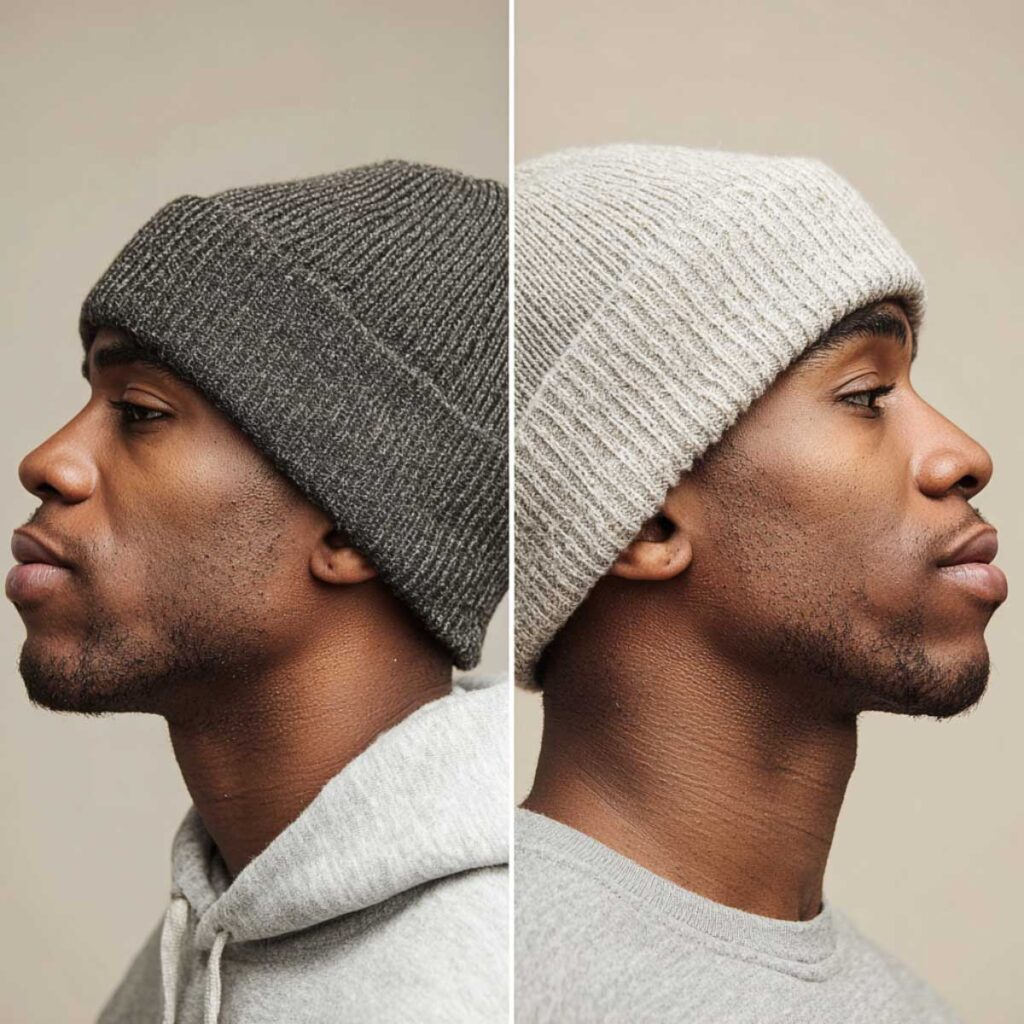
A low-profile crown looks shallower; a taller crown creates more height above the head. For beanies, also check whether the cuff covers your ears and whether the top has extra fabric. Crown depth and head circumference are different measurements.
Brand fit examples and smart swaps
- New Era 59FIFTY. This is a fitted cap, so use the manufacturer’s 59FIFTY size chart rather than an S/M/L guess. New Era advises rounding up if your measurement falls between listed sizes. A larger cap may feel looser, but too much extra room can make it shift.
- Carhartt acrylic beanie. The popular A18 knit cuffed beanie is a stretchy, one-size style. There is no separate snug size to select, so check how it fits your head and how far you want the cuff to sit.
- Patagonia and The North Face beanies. Materials and sizing change by model. Look at the exact product’s fabric and size chart rather than assuming every beanie stretches the same way.
- Stetson felt hats. If you fall between sizes, Stetson recommends sizing up and adjusting the sweatband with a little padding if needed. Its measurement chart differs slightly from fitted baseball-cap charts.
How do I know my beanie size?
Measure your head and compare it with the beanie brand’s chart, or its one-size range. For a close-fitting knit, look for light, even stretch without a tight line across your forehead. For a slouchy fit or extra hair volume, check the hat’s depth and shape as well as its circumference. Don’t default to Medium without measuring.
Winter sports fit, beanie and helmet together

Check your helmet manufacturer’s instructions before adding any head covering. A thick knit beanie can interfere with the helmet’s fit and protective design. If the manufacturer permits a liner, choose a thin, close-fitting one without bulky seams, then check that the helmet still sits securely. Giro’s ski helmet guidance also distinguishes thin technical liners from thick beanies.
Care, shrinkage, and break in
Check the care label first. For washable wool knitwear, a gentle wash followed by drying flat is often the safest approach; not every hat can be machine washed. Woolmark recommends drying knitwear flat, away from direct heat and sunlight.
If a washable knit loses its shape, gently smooth it back into place while damp and let it dry flat. Felt and structured hats need their own care instructions; if a brim is badly misshapen, a hat shop is a safer bet than aggressive home steaming. Avoid leaving hats in a hot car.
What I tried and what actually worked
I measured above my hairline the first time and my beanie crept up in the wind. Second try, I measured across mid forehead and the fit locked in.
I keep two notes in my phone, 22.75 in, 58 cm. Then I tag one line, snug for rib knits, relaxed for felts. My returns dropped fast.
A gift story too. I guessed Large for a friend because he lifts and has big hair days. He tried it, rolled the cuff, and said keep this one. The chart was right. The stretch did the rest.
Sizing mistakes, fast fixes
Measuring too high or on a tilt: Fix, remeasure mid forehead, above ears, level around the back.
Mixing units: Keep the number and its unit together. A 58 cm head is about 22.8 inches, not 58 inches. Use the calculator’s unit selection before converting.
Trusting one brand’s Medium for all: Fix, compare your number to the brand chart. New Era lists exact eighth inch steps. Stetson explains fit and padding.
Assuming every beanie stretches the same: Check whether the knit has elastic recovery and whether the cuff leaves pressure marks. A soft, stretchy fabric is forgiving, but a too-small beanie can still creep upward.
Gift giver guide, guess right without a tape
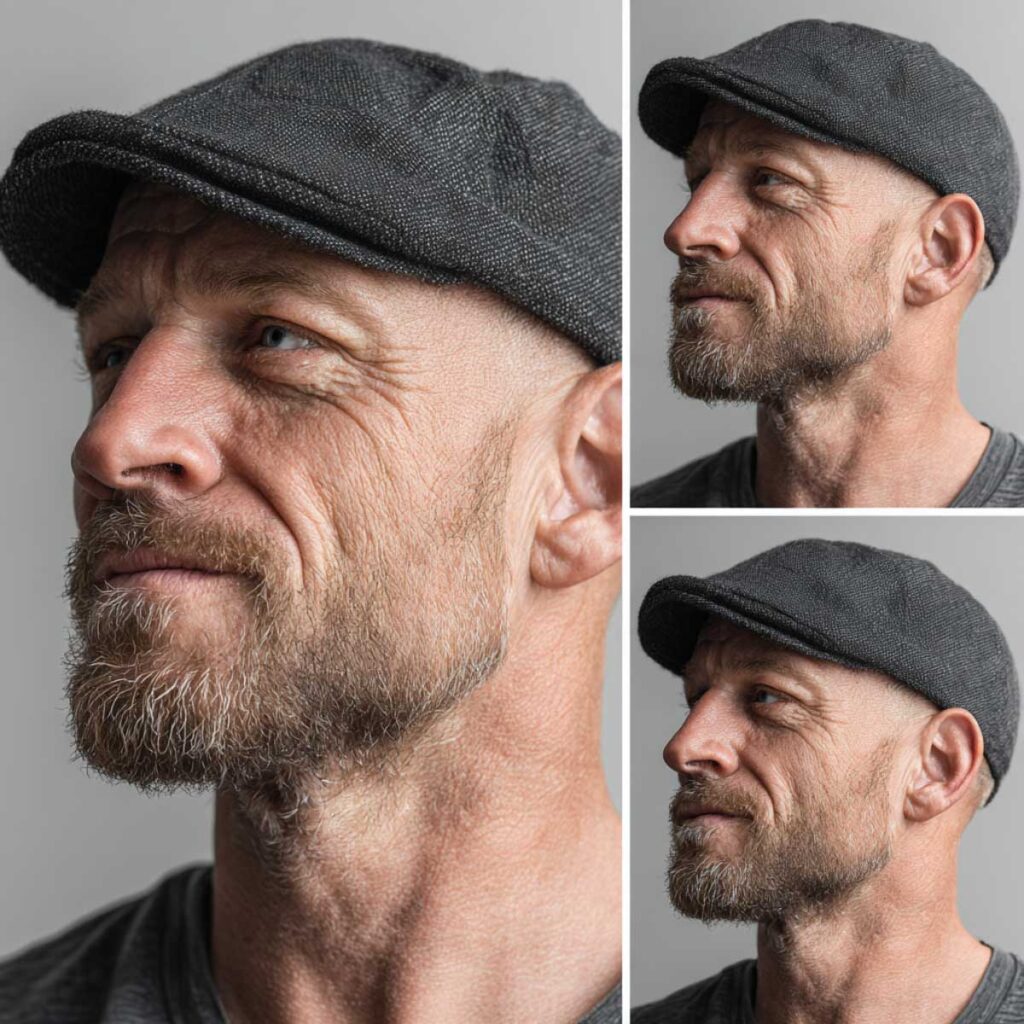
Ask how they like to wear their hats: over the ears, cuffed high, fitted, or slouchy. An adjustable cap or one-size stretch beanie can be less risky than a rigid fitted size. For a precise gift, ask them to text you their head circumference, or measure the inside sweatband of a hat they already wear comfortably.
Mini checklist for checkout
- Head size saved in in and cm.
- Chart checked, US, EU, and Beanie noted.
- Fabric and stretch considered.
- Crown depth matches your taste.
- Brand-specific size chart and return policy checked before buying.
More BluFashion sizing tools
Shopping for other pieces too? Keep the measurements handy with our International Size Converter, Swimsuit Size Chart and Support Picker, Shoe Size Converter with Fit Notes, Ring Size Finder and Calculator, and Jeans Fit Calculator.
FAQ
How do I know my beanie size?
Measure around your forehead and just above your ears. Compare that number with the beanie maker’s size range. One-size styles and stretch knits don’t follow a universal S/M/L chart.
How do I calculate my US hat size?
Divide your head circumference in inches by pi (about 3.1416), then use the nearest eighth as a starting point. Check the brand’s chart before ordering.
Are men’s and women’s hat sizes different?
Head circumference is what matters. Some brands market separate men’s or women’s ranges, but a measured circumference is more useful than an average for either group.
Should I size up or down if I am between sizes?
Check the manufacturer’s advice. New Era and Stetson recommend choosing the larger listed size when you fall between sizes. Stretch beanies depend on the specific fabric and fit.
Do all hat brands use the same size charts?
No. New Era and Stetson pair some US sizes with different inch measurements. US and traditional UK numeric sizes also differ. Always compare your head measurement with the product’s own chart.