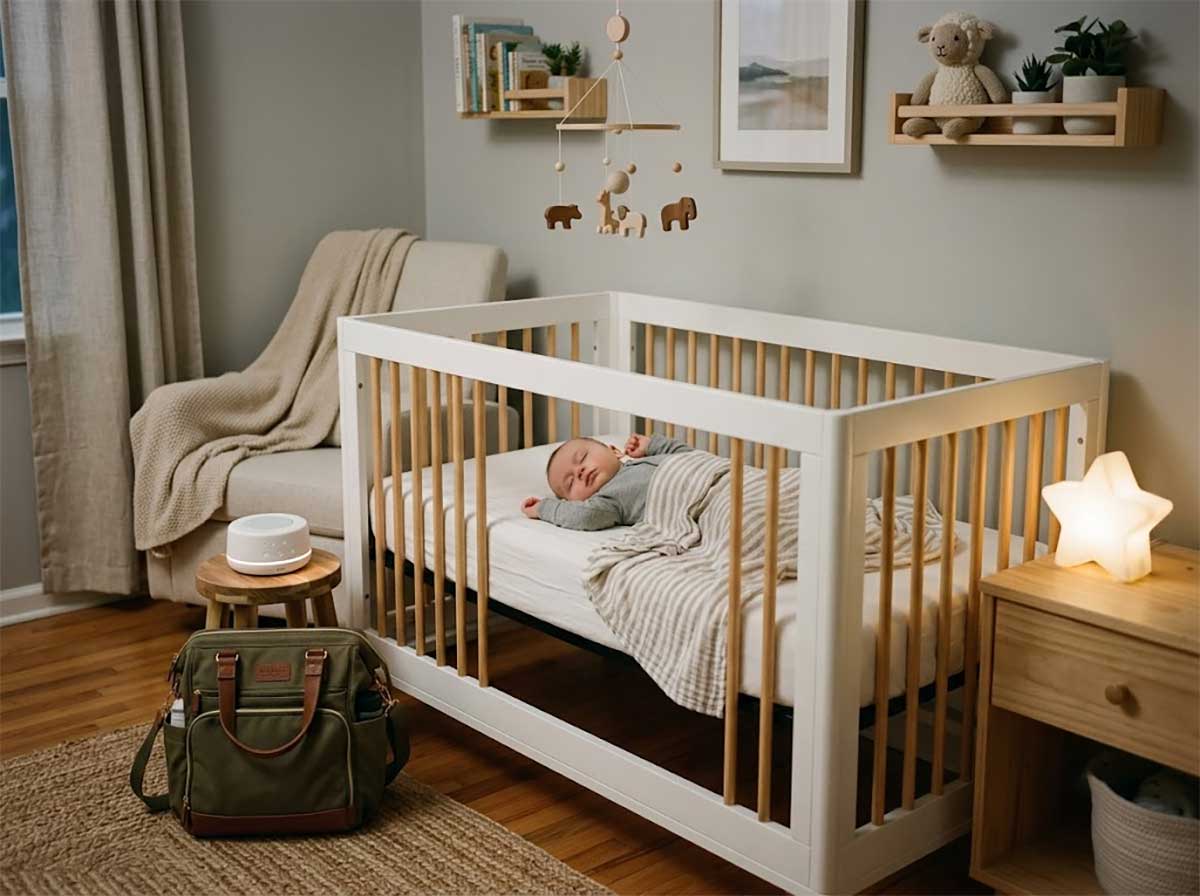
Modern family life rarely stays in one nursery. Daytime sleep may start in a crib, shift to a stroller, then finish in a travel bassinet at grandparents’ house. A compact portable sound machine helps keep the sonic cue familiar when the furniture keeps changing—without turning every outing into a packing ordeal.
Why Portability Matters More Than Fancy Speakers
Babies notice abrupt changes: new echoes, hallway chatter, TV volume next door. Consistent low-level sound softens those spikes. The goal is not entertainment; it is a predictable backdrop that travels with you. Bulkier home units can stay on the dresser. A lighter device earns its place in the diaper bag when naps happen on the go.
Portability also supports shared caregiving. Partners, grandparents, and sitters can recreate the same wind-down without hunting for a wall outlet in every guest room. Charge overnight, pack a short cable, and agree on one preferred sound texture so nobody improvises at midnight.
Safety Rules That Travel With You
- Keep volume near a quiet conversation—roughly 50 dB or lower.
- Place the unit several feet from the sleep surface; never inside the crib or bassinet.
- Use timers so continuous overnight play is intentional.
- Recheck distance after you move rooms; hotel desks and sofa edges change the geometry.
- Keep cords out of reach and away from curious hands.
Sound supports sleep; it does not replace safe-sleep rules, feeding plans, or medical advice when breathing, fever, or feeding patterns worry you.
Features Worth Comparing for Mobile Naps
Battery life matters more than an endless sound library. Look for clear volume steps, a readable timer, and a soft night light that does not flood the room. Remote or app control helps when you are already outside the door and do not want the hinge to squeak. If caregivers share one household account, confirm that app setup is simple enough for everyone on duty.
When you want app and remote flexibility in one unit, evaluate the Smart Baby Sound Machine – App Remote Control against your real nights: travel frequency, Wi-Fi patience, and whether buttons alone would be enough. Match features to the hardest evenings—not to every marketing bullet.
A Pack-and-Go Evening Sequence
- Start the wind-down earlier than the new space seems to demand.
- Begin sound at a low level before placing baby down.
- Confirm volume and distance once, then leave calmly.
- Save remote tweaks for true disruptions, not every rustle.
- Note preferred sound, max volume, and timer length for the next caregiver.
On travel days, test the room’s acoustics before bedtime. Hard floors and high ceilings reflect differently than carpeted nurseries. A two-minute check beats guessing at 2 a.m.
Common Mistakes on Busy Weeks
Raising volume to cover every fuss risks unsafe levels and teaches nobody to settle. Switching textures every night removes the cue you were building. Treating the machine as the only strategy while ignoring wake windows usually backfires. If sleep worsens after a trip, change one variable: lower volume, shorter timer, or earlier bedtime.
Another frequent miss: leaving the portable unit at 100% charge anxiety. Build a simple habit—plug in during the last evening feed so the bag stays ready for morning errands.
Tapering and Shared Rules
As sleep skills mature, many families shorten overnight use with timers and gradual volume reduction. Illness, teething, and hotel stays may bring the machine back temporarily. That flexibility is normal. Keep a short shared note in your phone: preferred sound, max volume, timer length, light preference, and charging spot.
Guests and seasonal schedules will test any routine. Recheck placement after each move, and keep clinician contacts handy when nights feel medical rather than merely noisy. Steady sound is a support tool. Pair it with realistic expectations, partner rotation, and clear rules so well-meaning helpers do not turn a quiet cue into a louder room than you intended.
When comparing options, start from your hardest nights: light sleepers, multi-room days, or frequent travel. Shortlist only features that solve those nights. A simple setup you actually pack beats a complex system nobody remembers after boarding a flight.
Protect adult rest too. Agree who handles the next waking, keep water nearby, and treat portable sound as one piece of a broader safer-sleep plan—for your baby and for the people caring for them. Over a few weeks of practice, most households find more predictable naps—not perfect silence, but fewer surprise wake-ups when life keeps moving.
Seasonal guests, dry hotel air, and schedule shifts will keep testing the plan. Small adjustments plus shared rules usually outperform last-minute gadget upgrades. Revisit volume and distance after each change of venue, and keep the bag checklist short enough that you actually use it.
If two caregivers disagree on quiet enough, measure once with a phone meter app in the same spot, then write the number down. Shared evidence reduces midnight debates and keeps the portable unit working as a cue—not as a volume arms race between tired adults.
Weekend Trips Without Resetting Progress
Short trips often undo a week of progress because the new space feels too quiet or too loud. Pack the same sound texture you use at home, arrive early enough to run a quiet test, and keep bedtime within thirty minutes of the usual clock time when possible. If the hotel white-noise app feels different, stick with your portable unit instead of mixing cues.
Write a three-line card for grandparents: preferred sound name, maximum volume setting, and where the unit should sit. Clear instructions prevent well-meant volume boosts and keep the cue intact across houses. When you return home, resume the same settings the first night rather than catching up with louder play.
Portable sound works best as a boring, reliable habit. Choose features you will actually pack, agree on rules before you are exhausted, and treat the machine as support—not as a guarantee of perfect sleep every night.
Before you buy anything new, list the rooms where naps already fail: living-room daylight, guest-room echo, or car-seat transitions after errands. Solve those rooms first with placement and volume discipline. A portable unit only helps when the rest of the routine—wake windows, feeds, and a calm handoff—stays consistent from house to house.
- About the Author
- Latest Posts

I’m Iskra Banović, editor of Blufashion and the voice behind its fashion, beauty, and lifestyle stories. Fashion, beauty, and lifestyle are my playground, but I’m just as likely to share the messy side of it all, like the time I tested a “must-have” skincare gadget and ended up with glitter stuck in my hair. I love turning trends and everyday finds into something useful (and fun) for real people.